

Key Points of the Story
- Ruskin Bond's The Thief's Story is not merely a tale about crime; it explores human values and relationships.
- The narrative centres on trust, guilt, kindness and the possibility of change in a person's life.
- Even a professional thief finds it difficult to steal from someone who is honest, trusting and simple in nature.
- A young thief adopts different names to escape the police and previous victims; in this episode he calls himself Hari Singh.
- Anil, a modest and easy-going writer, befriends Hari and employs him; he trusts Hari despite knowing the boy's shortcomings.
- The thief manages to steal a bundle of notes from under Anil's mattress but is overcome by remorse and returns the money.
- Anil's reaction - a sad, forgiving acceptance rather than anger - emphasises that the real loss is broken trust, not merely money.
Anil's expression when he realized the theft showed only a hint of sadness, not for the money lost, but for the trust that was broken.
 | Get additional INR 200 off today with EDUREV200 coupon. | Avail Offer |
Detailed Summary
The Thief's Story by Ruskin Bond follows the experiences of a young, skilled petty thief who uses friendship and work as a cover for stealing. To protect himself from law enforcement and from people he had wronged, he habitually changes his name. In the episode told by Ruskin Bond he was calling himself Hari Singh.
Hari meets Anil, a gentle, unambitious writer, while Anil is watching a wrestling match. Anil earns in fits and starts by writing articles and selling books; his income is irregular and his life simple. He notices Hari and speaks to him; Hari offers to work for him. Anil says he cannot pay wages at once but can provide food if Hari can cook. Hari lies that he can cook and is taken on. His first meal is poor, but Anil does not scold him; instead, he patiently offers to teach Hari to cook and to improve his reading, writing and arithmetic.

While working for Anil, Hari sometimes cheats when buying groceries, keeping a small profit for himself. He earns about a rupee a day this way. Although Anil is aware of some irregularities, he does not accuse Hari or make a scene; his manner remains kind and tolerant. Over time Hari begins to understand that Anil's simple schooling and humane behaviour offer him a chance at a different life if he would only change his ways.
One evening Anil sells a book and brings home a bundle of notes, which he places under his mattress. During the night, while Anil sleeps, Hari slips into the room and takes the money. He believes that Anil is careless with money and will squander it on friends, so he convinces himself that stealing it is justified. With the stolen notes in his possession, Hari goes to the railway station intending to catch the Lucknow Express and escape.
At the last moment he hesitates and misses the train. Wandering the streets, he becomes restless and guilty. It begins to rain heavily; soaked and shivering, Hari sits under the clock tower and reflects on what he has done. He realises that stealing from greedy or rich people gives him no real satisfaction, but stealing from a man like Anil - who is trusting and kind - will give him nothing but remorse. He considers that Anil will be hurt not so much by the loss of money as by the betrayal of trust.

Thinking further, Hari recognises the value of education and goodness in Anil's life. If he continues to learn and remain with Anil, he might become respectable; if he runs away with the money, he will be doomed to remain a thief. Overcome by shame and a desire to be better, Hari returns quietly to Anil's room and slips the money back under the mattress.
Next morning Anil acts as if nothing unusual has happened. He gives Hari a damp fifty-rupee note and tells him that he will now pay him regularly; he also says that they will begin writing full sentences from that day. Though Anil says nothing about the theft, Hari understands from his behaviour that Anil knew and has chosen to forgive. Anil's manner offers Hari a chance at redemption - a better life founded on kindness and trust.
- Anil, the honest person in the story, trusted the thief completely and treated him well.
- Despite this trust, the thief felt guilty and regretful after stealing from Anil, realizing the mistake of betraying someone who had shown him kindness.
- This shows that stealing from an honest person is challenging, as it is harder to deceive their trust and they are more likely to notice the theft.
Also read: PPT - The Thief's Story |
Theme
- The story explores how kindness, patience and trust can influence and transform even those who have gone astray.
- It contrasts habit and criminal skill with the possibility of moral change through education and humane treatment.
- Trust broken is shown as a deeper wound than the loss of money; betrayal damages relationships and self-respect.
- The narrative suggests that everyone has the capacity for redemption if shown empathy and a second chance.
 | Attention! Sale expiring soon, act now & get EduRev Infinity at 40% off! | Claim Offer |
Message
- Do not betray the trust reposed in you; once trust is lost it is difficult to regain.
- Kind and forgiving behaviour can touch a person's conscience and lead to genuine change.
- The story encourages belief in the power of simple goodness and honest education to reform an individual's life.
Also read: PPT - The Thief's Story |
Glossary

PPT - The Thief's Story
Short Answer Questions: The Thief's Story
Q1. Why did Hari Singh not make many friends?
Ans: Hari Singh did not make many friends because he believed that the problems they could bring were greater than any benefits. He preferred to avoid drawing curiosity from others, which led him to keep his distance.
Q2. Why did Hari Singh decide to come back to Anil?
Ans: Hari Singh returned to Anil because he felt guilty for breaking his trust. He also realised that Anil's education could help him lead an honest and respectable life.
Q3. Why did Hari Singh choose Anil to be his next victim?
Ans: Hari Singh, a skilled thief, chose Anil as his next target because he perceived him as easy-going and kind. Anil's simple nature made him seem like an uncomplicated victim, and Hari believed he could quickly gain his trust to carry out his plan.
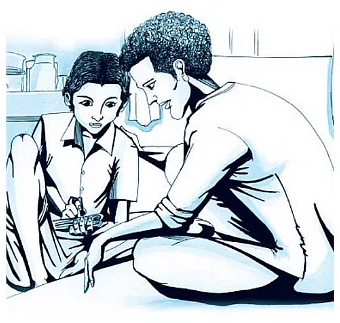
Q4. Why did Hari Singh not go to his friend's house or a hotel just after he missed the train?
Ans: Hari Singh did not visit his friend's house or a hotel after missing the train because he had no friends and wanted to avoid drawing attention to himself. He believed that staying at one of the small hotels near the station would make him curious to others. Additionally, the only person he truly knew was the man he had robbed, which added to his reluctance to seek help.
Q5. Why was it difficult for Hari Singh to rob Anil?
Ans: The task of robbing Anil was difficult for Hari Singh because of Anil's trusting nature. Hari Singh believed that stealing from a greedy person was easier, as they could afford the loss. However, robbing a careless person was also unappealing, as they might not even realise they had been robbed, which diminished the thrill of the act. Anil's trust made the robbery less rewarding.
Q6. Why did Hari Singh tell lies about cooking?
Ans: Hari Singh claimed he could cook, but the meal he prepared that night was so awful that Anil gave it to a stray dog and told him to leave. Despite this, Anil found it amusing and later patted Hari on the head, assuring him he would teach him to cook.
Q7. Why was the thief able to steal from Anil easily?
Ans: Anil's trusting nature made him an easy target for Hari Singh. He was somewhat careless and gullible, which allowed Hari to rob him without much effort. Anil's lack of suspicion and his belief in others contributed to the ease of the theft.
Q8. Why did Hari Singh feel bad after stealing the money?
Ans: Hari Singh felt guilty after stealing the money because he had betrayed Anil's trust. Anil had shown him kindness by teaching him how to cook and helping him learn to read and write. When Hari stole the money, his conscience troubled him, as he realised he had broken the bond of trust that Anil had placed in him.
Q9. What are the different reactions of the people when they are robbed?
Ans: According to Hari Singh, people react differently when they are robbed. A greedy man often feels fear, while a rich man may express anger. In contrast, a poor man tends to accept the situation. However, a trusting person like Anil would feel sadness, not for the loss of money, but for the loss of trust.
Q10. Why did Anil decide to pay Hari Singh regularly?
Ans: Anil decided to pay Hari Singh regularly because he wanted to support him after making some money. He handed Hari a fifty-rupee note as payment for his services and expressed his intention to pay him consistently from then on. Anil was aware of Hari's past and aimed to prevent him from being tempted to steal again due to financial need.
Q11. Describe Hari Singh, the young and successful thief.
Ans: Hari Singh was a fifteen-year-old boy who had already become quite skilled in the art of thievery. He was adept at identifying potential victims and used his intelligence to get close to them. Even while learning to read and write, his primary thought was how to use this knowledge to enhance his thieving abilities.
Q12. Why did Anil hire Hari Singh?
Ans: Anil hired Hari Singh because Hari expressed a desire to work for him. When Anil mentioned he could not pay, Hari asked if he could be fed. Anil then inquired if Hari could cook, to which Hari falsely claimed he could. Anil agreed to take him on, suggesting that if Hari could cook, he might be able to feed him.
Q13. How did Hari Singh realize that Anil knew about his theft?
Ans: Anil handed Hari Singh a fifty-rupee note in the morning, which was still damp from the rain. He mentioned that they would start learning to write full sentences together, accompanied by a smile. This interaction made Hari Singh realise that Anil was aware of his theft.
Q14. What was Anil's job? What did he usually do with the money he earned?
Ans: Anil was a writer who contributed articles to magazines. He did not have a steady income; instead, he earned money irregularly. Whenever he received some money, he would often go out to celebrate.
Q15. How did Hari think Anil would react when he discovered the theft? Why did he think so?
Ans: Hari Singh believed that when Anil discovered the theft, his face would reveal a hint of sadness. This reaction would not stem from the loss of money, but rather from the loss of trust in Hari Singh.
Long Answer Questions: The Thief's Story
Q1. Anil plays a major role in the transformation of Hari Singh. Comment on the statement by highlighting the values possessed by Anil, which touched Hari's heart and made him return to his honest ways of earning his livelihood.
Ans: Anil was a kind and trusting man who provided Hari Singh with an opportunity to change his life. Despite being a struggling writer with no stable income, Anil offered Hari food, shelter, and education. He taught him to read and write, which profoundly impacted Hari, who had spent most of his life as a thief. After stealing Anil's money, Hari felt a deep sense of guilt and realised that earning an honest living was far more fulfilling than stealing. Anil's generosity moved Hari, prompting him to return the stolen money. Even after discovering the theft, Anil chose not to confront Hari. Instead, he continued to treat him with trust and kindness, demonstrating how compassion can lead to positive change.
Q2. How did Hari Singh come into contact with Anil? He breached Anil's trust in him, but why did Anil not only forgive him but also promise to pay him regularly?
Ans: Hari Singh met Anil at a wrestling match where he pretended to be a cook. Although he lied about his cooking skills, Anil saw through the deception and decided to teach him how to cook, read, and write. Despite this opportunity, Hari succumbed to his old habits and stole Rs. 600 from Anil. Realising his mistake, he returned the money and resolved to live honestly. Anil, recognising Hari's internal struggle, chose not to punish him. Instead, he handed Hari a fifty-rupee note and promised him regular payments, believing that trust and forgiveness could inspire genuine change.
Q3. 'I couldn't cook his meals, run to the bazaar or learn to write whole sentences anymore.' Hari Singh could not at once come out of the idea of working for Anil. Do you think he accepted the joy of earning money by following the path of honesty? Explain the values highlighted through Hari's character.
Ans: Initially, Hari Singh saw Anil as an easy target for theft. However, as he spent time with Anil, he developed an emotional bond. Despite his temptation to steal, Hari began to appreciate Anil's kindness and trust, making it hard for him to betray him. After stealing money, he was overwhelmed with guilt and ultimately chose to return it. This act marked a significant change in his perspective, leading him to realise that earning money through honesty was far more rewarding. Hari's journey illustrates important values such as self-reflection, gratitude, and the significance of education. His decision to return the stolen money reflects his desire to change and highlights that, with the right influence, even someone with a troubled past can embrace the path of honesty.
Q4. 'He was the most trusting person I had ever met.' Justify Hari Singh's statement about his benefactor, Anil. Did he breach Anil's trust?
Ans: Hari Singh described Anil as the most trusting person he had ever met because Anil never doubted him, even when he was aware that Hari was taking small amounts of money from the grocery shopping. Anil even entrusted Hari with the key to his house, demonstrating his complete trust. However, Hari Singh did breach this trust by stealing Rs. 600. Despite this act, the weight of his guilt and the recognition of Anil's kindness compelled Hari to return the money. Instead of confronting him, Anil forgave Hari without saying a word. This illustrates that Anil's trust and forgiveness were crucial in helping Hari change for the better.
Q5. How did Hari Singh happen to stay with Anil? How did he stay with Anil before he tried to rob him?
Ans: Hari Singh met Anil at a wrestling match and falsely claimed he could cook to secure a job. Although Anil soon realised that Hari lacked cooking skills, he chose to teach him and allowed him to stay. During his time with Anil, Hari ran errands, made tea, and learned to read and write. This daily interaction fostered a strong bond of trust between them. However, old habits resurfaced, leading Hari to steal Rs. 600 from Anil. Despite his intention to rob him, Anil's trust made it difficult for Hari to go through with the theft. Ultimately, he returned the money, opting for a life of honesty instead.
Q6. If you were Anil, would you have pardoned the thief? If Yes/No, why?
Ans: Yes, if I were Anil, I would have pardoned Hari Singh, just as he did. Anil recognised that punishing Hari would not lead to positive change; instead, offering him trust and guidance could make a difference. By not confronting Hari about the theft and rewarding his return with a fifty-rupee note, Anil reinforced the idea that honesty and redemption are attainable. This approach allowed Hari to appreciate the value of integrity and education. Had Anil chosen to punish him, Hari might have continued his life as a thief. However, through forgiveness, he was given the opportunity to grow.
Q7. Give a character sketch of Anil. Did he know all about the theft? If so, why did he keep Hari Singh again to work for him?
Ans: Anil was a kind, generous, and trusting man. As a struggling writer, he lived a simple life but always maintained a helpful attitude. He took in Hari Singh, a dishonest thief, and taught him essential skills like cooking, reading, and writing. Although Anil suspected the theft, he chose not to confront Hari. Instead, he believed in forgiveness and understood that scolding Hari would only push him further into crime. By keeping Hari and even rewarding him with a fifty-rupee note, Anil demonstrated his belief in redemption and his understanding of human nature. This act of forgiveness helped Hari recognise the value of trust and honesty.
Q8. What does Hari Singh's decision to return the stolen money suggest about his transformation?
Ans: Hari Singh's decision to return the stolen money reflects a significant change in his character. Initially motivated by greed and the excitement of theft, his time spent with Anil, who showed him kindness and trust, led to a profound realisation. Hari came to understand that money earned through honest means was far more rewarding than stolen wealth. By returning the money, he demonstrated that even someone with a history of theft could transform when influenced by compassion and positive guidance.
Q9. How does the setting of the story contribute to its theme of trust and redemption?
Ans: The setting of the story, centred around Anil's modest home, significantly contributes to the themes of trust and redemption. Anil's simple lifestyle and his willingness to teach Hari highlight the value of personal growth over material wealth. The peaceful and humble environment stands in stark contrast to Hari's past as a thief, creating a space that fosters reflection and self-improvement. Moreover, the absence of formal punishment in favour of redemption illustrates the transformative power of trust in a supportive setting. Anil's calm and forgiving nature allows Hari to reconsider his choices, ultimately leading him towards a path of redemption.
Q10. Describe the sequence of events that took place after Hari Singh stole the money. Evaluate Hari Singh as a thief and as a human being.
Ans: After Hari Singh stole the money, he initially felt a mix of excitement and guilt. He had planned to escape to Lucknow with the stolen cash, but as he sat in the rain, he began to reflect on his actions. The reality of his situation set in; he realised he could no longer enjoy the simple pleasures of life, like cooking for Anil or learning to write. The thrill of theft quickly turned into regret. As a thief, Hari Singh was skilled but also deeply conflicted. He understood that stealing was wrong, yet he justified his actions by thinking that Anil would waste the money. This rationalisation reveals a lack of moral grounding, indicating that he viewed theft as a means to an end rather than a crime. However, his internal struggle suggests that he was not entirely devoid of conscience. In terms of his character as a human being, Hari Singh displayed a complex mix of vulnerability and ambition. Despite his criminal actions, he was drawn to Anil's kindness and the possibility of a better life through education. His decision to return the money at the end of the story highlights a significant moment of growth. It shows that he valued trust and friendship more than the money he had stolen, indicating a potential for change and redemption. Ultimately, Hari Singh embodies the struggle between right and wrong. His journey reflects the challenges faced by those who find themselves in difficult circumstances, suggesting that even a thief can possess the capacity for goodness and change.
NCERT Solutions: The Thief's Story
Read and Find Out (Page 8)
Q1: Who does 'I' refer to in this story?
Ans: 'I' refers to the narrator, Hari Singh, a fifteen-year-old thief.
Q2: What is he "a fairly successful hand" at?
Ans: He is "a fairly successful hand" at stealing. This means he is an experienced thief who is quick and skilful at his work and often manages to avoid being caught.
Q3: What does he get from Anil in return for his work?
Ans: Anil could not pay Hari a regular wage, so they agreed that Hari would cook and in return Anil would feed him. When Hari proved unable to cook, Anil taught him to cook and then taught him to write his name. He promised to teach Hari to write whole sentences and to add numbers. In addition, when Hari went out to buy daily supplies he managed to make a small profit of about one rupee a day.

| Get additional INR 200 off today with EDUREV200 coupon. | Avail Offer |
Read and Find Out (Page 10)
Q1. How does the thief think Anil will react to the theft?
Ans: The thief thought that if Anil discovered the theft, his face would show a touch of sadness. That sadness, he believed, would be for the loss of trust rather than for the money.
Q2. What does he say about the different reactions of people when they are robbed?
Ans: Hari observed different reactions among people who were robbed: a greedy person would feel frightened or ashamed, a rich person would react with anger, and a poor person would accept the loss calmly.
Q3. Does Anil realise that he has been robbed?
Ans: Yes. Anil realised that his money had been taken because the notes were wet from the rain the previous night. He did not accuse Hari, however, and later gave him a fifty-rupee note, promising to pay him regularly.
Also watch: The Thief's Story |
Think about It (Page 13)
Q1. What are Hari Singh's reactions to the prospect of receiving an education? Do they change over time? (Hint: compare, for example, the thought: "I knew that once I could write like an educated man there would be no limit to what I could achieve" with these later thoughts: 'Whole sentences, I knew, could one day bring me more than a few hundred rupees. It was a simple matter to steal - and sometimes just as simple to be caught. But to be a really big man, a clever and respected man, was something else.") What makes him return to Anil?
Ans: At first, Hari believed that learning to read and write would open many doors for him and make him powerful and respected. He thought that being able to write like an educated man would let him achieve much more than petty theft. Although clever and experienced in stealing-he even changed his name regularly to avoid detection-Hari's view changes after he actually steals Anil's bundle of notes. His conscience troubles him on the way to boarding the train, and the memory of Anil's kindness makes him feel guilty. That guilt and the realisation of what education and trust could offer lead him to return the money and go back to Anil.
Q2. Why does not Anil hand the thief over to the police? Do you think most people would have done so? In what ways is Anil different from such employers?
Ans: Anil did not hand Hari over to the police because he understood Hari's circumstances and recognised that kindness and instruction might change him. As a struggling writer with an irregular income, Anil was sympathetic and patient; he had already fed Hari, taught him to cook and to write, and had overlooked small thefts. Many other people might have reported Hari to the police, but Anil chose compassion and trust, believing that Hari's return and remorse were signs that he could learn and reform.
| Attention! Sale expiring soon, act now & get EduRev Infinity at 40% off! | Claim Offer |
Talk about It
Q1. Do you think people like Anil and Hari Singh are found only in fiction, or are there such people in real life?
Ans: People like Anil and Hari Singh do exist in real life. Although such examples may be less common now, there are still individuals who offer help, teaching and kindness to those in need, and there are young people who, by circumstance rather than nature, turn to crime but can change when treated with respect and given support.
Q2. Do you think it is a significant detail in the story that Anil is a struggling writer? Does this explain his behaviour in any way?
Ans: Yes, it's clear from the story that Anil was a struggling writer. He led a simple life with an irregular income, spending money only when he could afford it. Anil made money occasionally-sometimes borrowing one week and lending the next. He often worried about when his next cheque would come, but once it arrived, he would celebrate with friends. Hari noticed that Anil couldn't pay him a salary because he didn't have a steady income. Despite earning little, Anil never mistreated Hari and was always kind and considerate towards him.
Q3. Have you met anyone like Hari Singh? Can you think and imagine the circumstances that can turn a fifteen-year-old boy into a thief?
Ans: I have not met anyone exactly like Hari Singh, but such cases occur. Poverty, lack of education, family pressure, hunger, or the need to support younger siblings can push a young boy towards theft. Social neglect and absence of positive guidance are other factors that may lead a child into crime.
Q4. Where is the story set? (You can get clues from the names of the persons and places mentioned in it.) Which language or languages are spoken in these places? Do you think the characters in the story spoke to each other in English?
Ans: The setting appears to be in Uttar Pradesh, as indicated by names such as the Lucknow Express and the Jamuna Sweet Shop. The principal language spoken in these places would be Hindi, and it is unlikely that the characters spoke to each other in English.
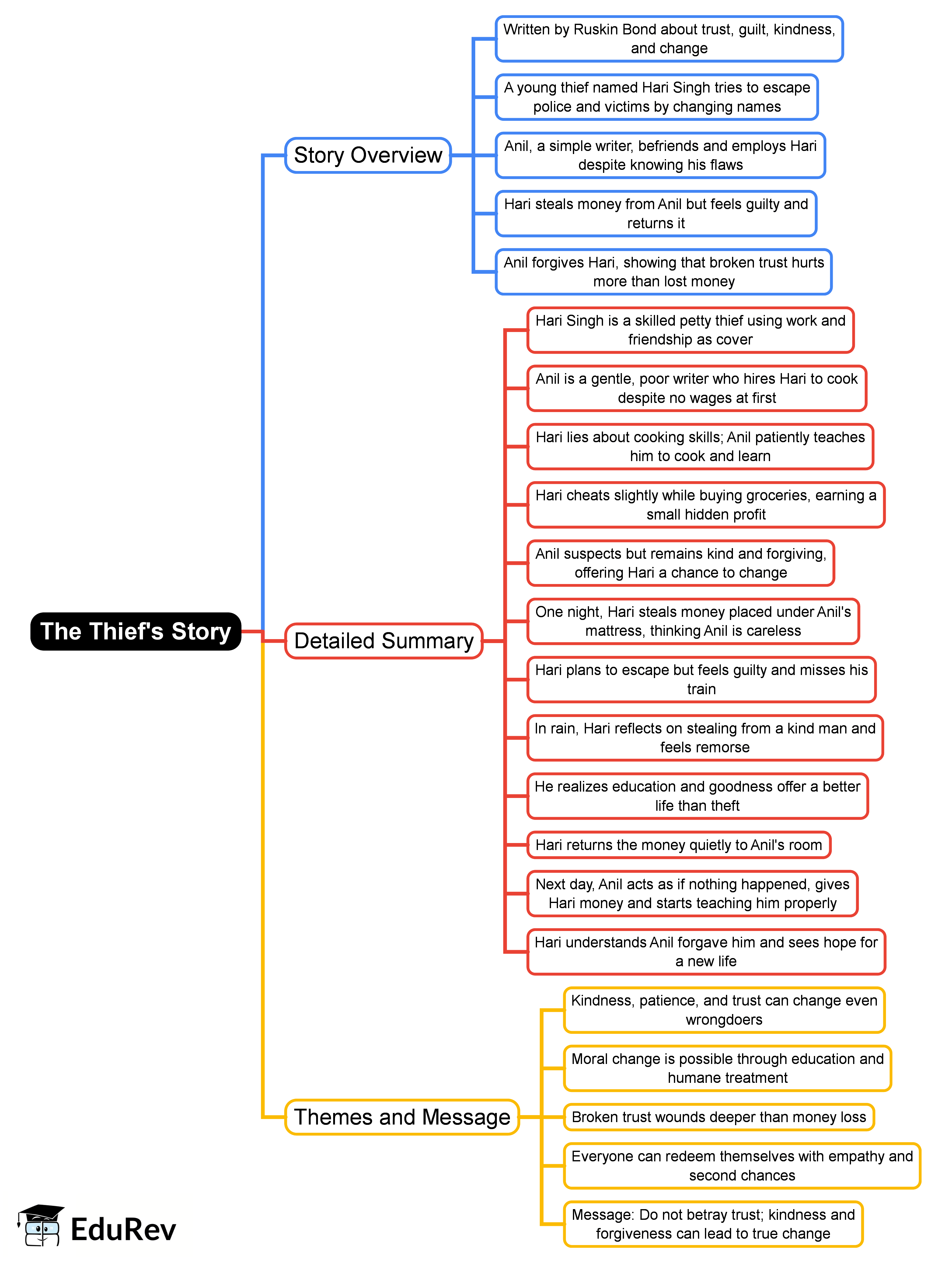
Mind Map: The Thief's Story
Character Sketch: The Thief's Story
Character Sketch of Anil
Anil is a kind, simple, and easy-going young man, around 25 years old. He is tall and lean, with a deep interest in sports, especially wrestling. Though he earns money in small amounts and leads a modest life, he remains generous and patient. Anil's generosity is evident in the way he welcomed Hari into his home despite not being able to afford a cook. He not only offered Hari shelter but also took the time to teach him how to cook, read, write, and do arithmetic. He even showed Hari how to write his name and promised to help him learn to write full sentences and add numbers. Anil's trust in people is remarkable-he knew Hari was stealing small sums of money but chose not to confront him, believing that trust and kindness could help change a person. His forgiving nature shone through when Hari attempted to steal a large amount of money; instead of getting angry, Anil remained calm and compassionate, showing that he is genuinely good-hearted and believes in the potential for goodness in others.
Keywords for Anil: Kind, simple, generous, trusting, forgiving, teacher, patient, empathetic
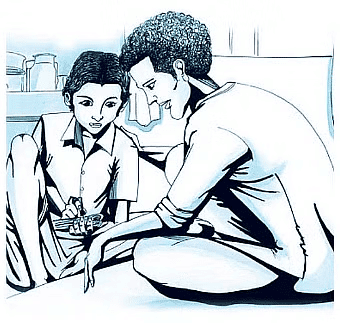
Character Sketch of Hari
Hari Singh is just 15 years old, an experienced and fairly successful hand who knows how to change names and hide his identity to stay out of trouble. He is clever, resourceful, and street-smart, yet he longs for a better life. Hari is deceptive, as seen when he cheats Anil while buying groceries. However, he has a strong aspiration to learn and be educated; he believes that once he can write like an educated man, there would be no limit to what he could achieve. After stealing a large sum of money from Anil, Hari feels guilty and regretful. He realises that by stealing, he has lost his chance at a better future, which leads him to reflect deeply on his choices. He remembers Anil's face when he discovered the theft, which showed only a hint of sadness-not for the money lost, but for the trust broken. In a bold move, Hari returns the stolen money, proving he is brave and motivated to change. His character teaches us that even those who have done wrong can improve when shown kindness and understanding. Hari's story illustrates how trust and kindness from someone like Anil can make a huge difference in a person's life. He knows that mastering whole sentences could one day earn him more than just a few hundred rupees.
Keywords for Hari: Clever, thief, deceptive, regretful, wants education, reflective, brave, wants change

: