

Previous Year Questions 2025
Q1: Read the following extract and answer the questions:
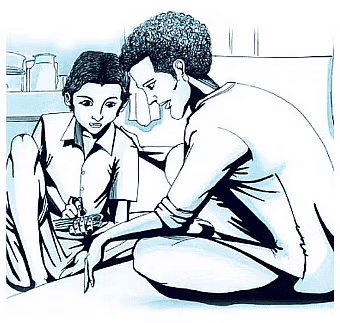
"Later, he patted me on the head and said never mind, he'd teach me to cook. He also taught me to write my name and said he would soon teach me to write whole sentences and to add numbers. I was grateful. I knew that once I could write like an educated man there would be no limit to what I could achieve. It was quite pleasant working for Anil. I made the tea in the morning and then would take my time buying the day's supplies, usually making a profit of about a rupee a day. I think he knew I made a little money this way but he did not seem to mind."
(i) What does the following line tell us about the character of Anil?
"I think he knew I made a little money this way but he did not seem to mind." (1 Mark)
Ans: Anil is shown as kind, forgiving and trusting. By not objecting to the small profit Hari made while buying supplies, he overlooks a minor wrongdoing and treats Hari with patience and understanding. This behaviour shows that Anil values trust and a person's growth more than strict accounting of small losses.
(ii) Which of the following best describes the realization Hari Singh had while working for Anil? (1 Mark)
(a) that he would become a rich person one day
(b) that Anil was a very intelligent master but a miser
(c) that he would be able to accomplish a lot if he gets educated
(d) that Anil made a lot of money from his job
Ans: (c) that he would be able to accomplish a lot if he gets educated
Explanation: Hari realises that learning to write and become educated would open many opportunities for him. He believes that acquiring literacy and some skills would allow him to achieve far more than petty theft, so education appears as the key to a better future.
(iii) What did Anil promise to teach Hari Singh, and how did Hari Singh feel about the opportunity to learn? Answer in about 40 words. (2 Marks)
Ans: Anil promised to teach Hari to cook, to write whole sentences and to add numbers. Hari felt grateful and hopeful; he believed that becoming literate would let him achieve much more, and he valued the chance to learn as a way out of his old life.
(iv) Fill in the blank with the correct word from the brackets.
The narrator earned extra money by making a/an _____________ (profit/investment) of about a rupee a day. (1 Mark)
Ans: a profit
Q2: Anil's acceptance and forgiveness of the thief demonstrates empathy and generosity. Elaborate. (Answer in 100-120 words) (6 Marks)
Ans: Anil's acceptance and forgiveness show deep empathy and generosity. Although he suspects Hari of wrongdoing, Anil does not accuse or punish him; instead he quietly trusts him, teaches him practical skills and offers regular payment. This trusting attitude gives Hari a chance to change. By valuing the person over the act, Anil encourages moral growth rather than revenge. His compassion makes Hari realise the worth of honesty and the opportunity that education represents. Anil's behaviour-gentle guidance, silent forgiveness and faith in another person-becomes the main reason Hari decides to return the money and aspire to a better life.
Q3: How and when did Hari Singh meet Anil? Why did Hari Singh lie that he knew how to cook? (Answer in 100-120 words) (6 Marks)
Ans: Hari met Anil at a wrestling match, where he noticed Anil's simple, trusting nature and thought him an easy target. He offered to work for him and lied about knowing how to cook to secure a job and shelter. The lie was a means to an end: Hari wanted access to Anil's home so that he could find opportunities to steal. His deception arose from habit and necessity as a professional thief. Later, Anil's kindness and the chance to learn begin to change Hari, revealing the contrast between his initial opportunism and eventual conscience.
Q4: How did Anil bring about a change in Hari Singh? (Answer in 100-120 words)
Ans: Anil changed Hari by showing trust, patience and simple acts of teaching. He gave Hari work, offered to teach him to cook and to read and write, and paid him without harshness. When Anil silently handed Hari the wet note instead of accusing him, it sent a clear message of trust. This unspoken faith made Hari feel guilty and valued at once. The combination of practical lessons, steady kindness and forgiveness stirred Hari's conscience and made him choose to return the money and aspire to honesty and learning rather than continue stealing.
Q5: Hari's character evolves from being deceitful and opportunistic to remorseful and seeking redemption. Describe how his decision to return the money signifies a moral awakening in him and a newfound appreciation for Anil's kindness and mentorship. (Answer in 100-120 words) (6 Marks)
Ans: Hari's return of the stolen money marks a clear moral change. Initially he justifies theft as necessary, but Anil's consistent trust and willingness to teach awaken his conscience. Facing the thought of losing Anil's respect and the chance to learn, Hari realises that the long-term value of trust and education outweighs a short-lived gain. Returning the money shows he now values Anil's goodness and the mentor-pupil relationship. This act of repentance is the first visible step in Hari's move from opportunism toward a desire for honest living and self-improvement.
Q6: How do Anil's initial reaction to Hari Singh's cooking and his subsequent actions reflect Anil's evolving relationship with Hari Singh? (Answer in 40-50 words) (3 Marks)
Ans: Anil's gentle response to Hari's poor cooking-offering to teach him-shows patience and care. Later, by teaching literacy and overlooking small thefts, Anil builds trust and mentorship. These actions deepen their bond and encourage Hari's moral change.
Q7: Why did Hari Singh choose to go back to Anil in the end? (Answer in 100-120 words) (6 Marks)
Ans: Hari returned because Anil's kindness and trust had stirred his conscience. He realised he had robbed a man who had treated him well and offered him a chance to learn. The thought of losing the opportunity for education and Anil's goodwill made Hari feel deep remorse. Rather than escape with stolen money, he chose to come back, return the notes and accept responsibility. Anil's non-judgmental manner reassured Hari that he could change, and this hope for redemption and a better life was stronger than any short-term gain from theft.
Q8: How was Hari Singh's 'appealing smile' at the end different from similar smiles of his on earlier occasions? (Answer in about 40-50 words) (3 Marks)
Ans: Hari's final appealing smile is sincere and spontaneous, unlike his earlier smiles which were manipulative and used to deceive. This smile comes from genuine gratitude and inner change; it reflects his remorse and his desire to be truthful rather than to trick someone.
Q9: What makes Hari Singh describe Anil as the most trusting person he had ever met? (Answer in about 40-50 words) (3 Marks)
Ans: Hari calls Anil the most trusting because Anil overlooks small wrongs, gives him freedom and teaching, and even returns to him without accusation after suspecting theft. Anil's silent faith and forgiveness show an unusual level of trust that deeply affects Hari.
Q10: What led the narrator to believe that 'friends were more trouble than help'? (Answer in about 40-50 words) (3 Marks)
Ans: Hari had earlier experience of friendships that brought complications or betrayals, so he learned to rely on himself and keep distance. His life as a thief made close ties risky, leading him to conclude that friends often cause more trouble than real help.
Q11: Read the following extract and answer the questions:
There was a fifty rupee note between his fingers. My heart sank. I thought I had been discovered. \"I made some money yesterday,\" he explained. \"Now you'll be paid regularly.\" My spirits rose. But when 1 took the note, I saw it was still wet from the night's rain. Today we'll start writing sentences,\" he said.
He knew. But neither his lips nor his eyes showed anything.
(i) In the context of the given extract: What was the feeling UNLIKELY to have been on seeing 'a fifty rupee note between his fingers'? (1 Mark)
(a) joyous
(b) sad
(c) unhappy
(d) worried
Ans: (b) sad
Explanation: On seeing the note, feelings such as excitement, relief or worry are more likely because of the opportunity to steal or fear of discovery. Sadness is the least likely immediate reaction in this context of temptation and fear.
(ii) How does the prospect of being paid regularly affect the narrator's motivation and hope for the future? (Answer in about 40 words) (2 marks)
Ans: The promise of regular payment gives Hari a sense of security and legitimate income. It raises his hopes for steady work, supports his wish to learn to write and leads him to see education as a realistic route to a better life.
(iii) Fill in the blank with the correct word from the bracket:
The person spoken about did not let the narrator realise that his act of stealing was caught. It reflects the ___________ (nobility / dishonesty) of his character. (1 Mark)
Ans: nobility
Explanation: By not accusing Hari and instead continuing to treat him kindly, Anil shows noble, generous behaviour; he chooses forgiveness and guidance over punishment.
(iv) Compare the meanings of the expressions:
"My heart sank", and "My spirits rose". (1 mark)
Ans: "My heart sank" means a sudden feeling of fear, guilt or disappointment, while "My spirits rose" means a sudden feeling of relief or hope. In this extract, the first expresses panic at being discovered and the second shows relief and renewed optimism when Anil promises regular payment.
Q12: According to a popular quote - 'Kindness is stronger than iron bars'. Anil did not hand the thief over to the police. In what way did Anil's act of wisdom and forgiveness transform Hari Singh? (Answer in about 40-50 words) (3 marks)
Ans: Anil's wisdom and forgiveness-by not reporting Hari-awakened Hari's conscience. Instead of punishment, Hari received trust and a chance to learn, which moved him to return the money and choose honesty. This kindness set him on a path towards reform.
Previous Year Questions 2024
Q1: Read the given extracts and answer the questions:
I went back to the bazaar and sat down in the shelter of the clock tower. The clock showed midnight. I felt for the notes. They were damp from the rain.
Anil's Money. In the morning he would probably have given me two or three rupees to go to the cinema, but now I had it all.
I couldn't cook his meals, run to the bazaar, or learn to write whole sentences any more.
I had forgotten about them in the excitement of the theft. Whole sentences, I knew, could one day bring me more than a few hundred rupees. It was a simple matter to steal- and sometimes just as simple to be caught. (CBSE 2024)
(i) Which of the following is NOT a reason why Hari Singh thinks he would not be able to write whole sentences ?
(a) Anil would not be there to teach him.
(b) He had robbed Anil and left.
(c) He would not go back to Anil to learn.
(d) He had no money to take admission in school.
Ans: (d) He had no money to take admission in school.
Explanation: Hari's worry is specifically that he has left Anil, who was going to teach him; he believes that without Anil he cannot learn whole sentences. He does not mention lack of school fees as the reason, so (d) is not one of his given reasons.
(ii) Why is it fair to say that Hari Singh's tone, when he says "I couldn't cook his meals, run to the bazaar or learn to write whole sentences any more," is filled with remorse and regret? Answer in about 40 words.
Ans: Hari recognises that his theft has ruined the steady life and learning opportunities Anil offered. He realises the small gain from stealing is far less than the loss of trust, work and future education, so his tone expresses regret and sorrow.
(ii) What do you infer about Hari Singh from this statement?
"Whole sentences, I knew, could one day bring me more than a few hundred rupees."
Ans: Hari understands that literacy and education could lead to better, long-term earnings and a more respectable life. He is ambitious enough to see that honest skills could bring greater rewards than petty thefts.
(iv) State True or False with reference to the given extract.
The reason Hari Singh was filled with a feeling of guilt was because Anil trusted him.
Ans: True
Explanation: Hari feels guilty because he has betrayed a man who showed him unusual trust and kindness. Realising he robbed someone who trusted him deeply brings on his sense of guilt.
Q2: Hari Singh says - "He knew it but neither his lips nor his eyes showed anything."
Anil successfully addressed the situation by not addressing it at all. Elaborate based on your reading of The Thief's Story. (CBSE 2024)
Ans: When Anil silently handed Hari the wet money, it made clear that he suspected the theft but chose not to accuse him. This non-confrontational response communicated trust and a desire to give Hari a chance. The silent message affected Hari more deeply than a scolding would have: it provoked remorse and a wish to prove himself worthy of Anil's faith. In this way, Anil's quiet approach encouraged Hari to change his behaviour without humiliation or punishment.
Q3: Imagine that Hari Singh from 'The Thief's Story' by Ruskin Bond, writes a diary entry, exploring the theme of human values and relations that are essential in life and can transform a person in the context of his own experience. Write this diary entry as Hari Singh. (CBSE 2024)
Ans: Dear Diary,
Today I feel as if something in me has woken up. For years I lived by taking what I could and trusting no one. But Anil-simple, kind and patient-took me in and taught me small things. I tried to steal from him, and yet when he suspected nothing, he did not shout or hand me to the police. Instead he kept faith. That trust cut deeper than any punishment could. I have returned the notes and I want to learn to read and write. I have begun to understand that kindness, trust and forgiveness change a person more surely than fear ever can.
Yours,
Hari Singh
Previous Year Questions 2023
Q4: What was the thief's reaction when he took Anil's money? (CBSE 2023)
Ans: After taking the money he crawled out quickly and ran along the road, holding the notes by the string of his pyjamas. Later he slowed to walk and counted the notes, imagining a week of luxury with that sum. His behaviour shows excitement at the theft mixed with self-indulgent fantasies.

Q5: Why did the thief smile without any effect towards the end of the story? (CBSE 2023)
Ans: The thief's final smile was natural and from the heart, unlike his earlier calculated smiles meant to charm and deceive. Because it came from genuine feeling-gratitude and repentance-it had no manipulative effect on Anil and was described as "without any effect".
Q6: What does he say about the different reactions of people when they are robbed? (CBSE 2023)
Ans: From his experience, he noticed patterns: greedy people show fear, the rich show anger and the poor accept the loss. These observations reflect how a person's attitude to loss is shaped by their character and circumstances.
Q7: How did Hari Singh justify to himself his stealing Anil's money? (CBSE 2023)
Ans: Hari told himself that Anil would waste money on friends and that Anil had not been paying him a salary, so he felt entitled to take something. These rationalisations helped him reduce his guilt at the time of the theft.
Q8: Trust and compassion can reform a person. Justify this statement in the light of the lesson 'The Thief's Story'. (CBSE 2023)
Ans: Ruskin Bond's 'The Thief's Story' shows how trust and compassion can reform a person. Anil's patient kindness-giving Hari work, teaching him and not accusing him-made Hari feel valued and guilty about his theft. That trust gave Hari a reason to repent and return the money. Instead of punishment, Anil's faith offered a chance to change, proving that humane treatment and forgiveness can lead to lasting moral change.
Q9: Why does Anil not hand over Hari Singh to the police? (CBSE 2023)
Ans: Anil refrains from calling the police because he senses potential for change in Hari and prefers to give him a chance to reform. He believes that punishment would destroy the possibility of improvement; his choice to forgive is meant to encourage honesty and growth.
Previous Year Questions 2022
Q10: Fiction writers prefer creating grey characters rather than black and white. Analyse this in detail, with reference to both the characters of The Thief's Story. (2022-23)Ans: Both main characters are grey rather than wholly good or bad. Hari Singh is a thief who lies and steals, yet he is capable of conscience, regret and change. Anil is kind and trusting but also careless with money and rather naive. Their mixed traits make them believable and create moral tension: Hari's capacity to reform is shown against Anil's forgiving nature. Grey characters allow readers to understand motives and transformation, rather than forcing a simple moral judgement.
Previous Year Questions 2021
Q11: After cooking a bad meal and told to go away, Hari stayed on as he :(a) needed a job.
(b) needed shelter.
(c) wanted to steal something.
(d) found Anil to be very simple. (Term I, 2021-22)
Ans: (c) wanted to steal something.
Explanation: Hari stayed because he hoped to exploit Anil's trusting nature and eventually steal from him. His intention to deceive rather than genuine need explains why he remained after being told to go away.
Q12: On what condition did Anil employ Hari Singh? How did Hari Singh fail in his job? (2021 C)
Ans: Anil employed Hari on the condition that if Hari could cook, he would be given food and shelter. Hari failed by lying about his cooking ability and later by stealing money from Anil instead of performing his duties honestly.
Q13: It was quite pleasant working for Anil as:
(a) he was quite rich
(b) he never complained
(c) he was a very simple person
(d) he could be easily fooled (CBSE Term-1 2021)
Ans: (d) he could be easily fooled
Explanation: Hari found working for Anil pleasant because Anil's trusting nature and simplicity made him easy to deceive and exploit. Anil's lack of suspicion gave Hari comfort and opportunity.
 | Attention! Sale expiring soon, act now & get EduRev Infinity at 40% off! | Claim Offer |
Previous Year Questions 2020
Q14: Hari Singh is both a thief and a human being. Comment. (2020 C)Ans: Hari Singh behaves as a thief-he lies and steals to survive-but he is also human, capable of feeling guilt, remorse and gratitude. His decision to return the money and to stay with Anil to learn shows his humane side, proving that even a person with bad habits can possess compassion and the capacity for change.
Q15: Why does Anil not hand Hari Singh over to the police? (2020)
Ans: Anil does not involve the police because he senses Hari's potential for reform and believes punishment would ruin any chance of change. By forgiving him, Anil hopes to encourage honesty and give Hari an opportunity to mend his ways.
Q16: In which queer way did Anil make a living? (2020)
Ans: Anil's finances were irregular: he would borrow one week and lend the next, worry about the next paycheck and then spend it quickly. He also earned some money by writing for magazines. This unpredictable pattern of earning and spending is described as a peculiar way of making a living.
Q17: What made Hari Singh come back to Anil? (Answer the following questions in 40-50 words) (CBSE 2020)
Ans: Hari returned because he felt deep remorse for robbing a man who had treated him kindly and trusted him. Anil's goodness and the chance to learn gave Hari a reason to repent and to choose the possibility of an honest life over running away.
Previous Year Questions 2018
Q18: In which queer way did Anil make a living? (The Thief's Story) (CBSE 2018)Ans: Anil's income came in fits and starts: he would borrow money one week and lend the next, worry about earnings and then spend whatever arrived. He also wrote for magazines to earn. This irregular pattern is described as a queer or peculiar way of making a living.
Previous Year Questions 2016
Q19: Did Hari like working for Anil? Give reasons in support of your answer. (Answer the following questions in 40-50 words) (CBSE 2016)Ans: Yes. Hari enjoyed working for Anil because the work was light-making tea and buying supplies-and Anil's trusting nature let Hari take his time. In the process, Hari also managed to make about a rupee for himself, which added to his comfort.
: