

About the Poet
John Berryman was an American poet and scholar associated with the confessional school of poetry. He studied at South Kent School, Columbia University and the University of Cambridge. At the age of twelve, he suffered a deep personal loss when his father committed suicide outside his window; this event had a lasting effect on his life and work. After his mother remarried, he adopted his stepfather's surname. Berryman's major work is The Dream Songs, and he received important literary honours, including the Pulitzer Prize for Poetry and the National Book Award for Poetry.
 John Berryman
Key Points of the Poem
- The poem concentrates on the universal theme of loss, illustrated by the simple incident of a boy losing his ball.
- The boy's visible grief stands for the depth of emotion that accompanies losing something of personal value; the ball symbolises happier, innocent times.
- A small payment or a replacement (a dime or another ball) is shown to be worthless in easing the true pain of loss.
- The incident marks a first lesson in responsibility and in the realities of owning possessions; it is a coming-of-age moment for the child.
- The poem illustrates that loss is part of the human condition; learning to face loss calmly and to recover is an important life skill.
- The poet stresses that material compensation cannot restore the past or replace memory - money is external and cannot buy back what the heart remembers.

 | Get additional INR 200 off today with EDUREV200 coupon. | Avail Offer |
Detailed Summary
What is the boy now, who has lost his ball, What, what is he to do? I saw it go Merrily bouncing, down the street, and then Merrily over - there it is in the water! No use to say 'O there are other balls':
The opening lines describe a simple, everyday scene: a ball bouncing merrily along the street and then falling into the water. The speaker watches this happen and asks, with urgent concern, what the boy who has lost his ball can do now. The poem immediately refuses the easy consolation that there are other balls; this lost ball carries a personal and emotional value that cannot be replaced by a substitute.
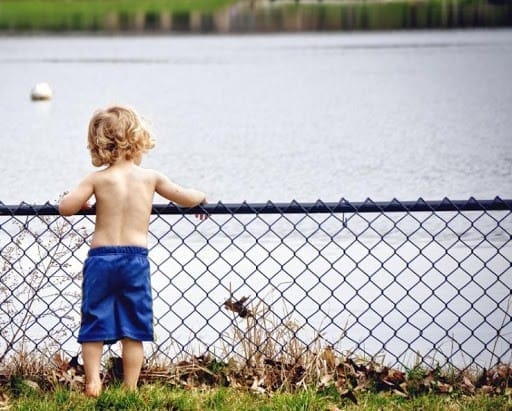
An ultimate shaking grief fixes the boy As he stands rigid, trembling, staring down All his young days into the harbour where His ball went. I would not intrude on him; A dime, another ball, is worthless.
The boy's reaction is described as a physical and inward shock - an "ultimate shaking grief". He is frozen, trembling, and staring down at the harbour as if the vanished ball contains his past play and the pattern of his early life. The speaker chooses not to intrude with platitudes or to offer a trivial replacement. The line "A dime, another ball, is worthless" stresses that monetary or material substitution cannot recover what was lost emotionally.
Now He senses first responsibility In a world of possessions. People will take Balls, balls will be lost always, little boy. And no one buys a ball back. Money is external
In the third stanza, the boy experiences a first awareness of responsibility: he realises that possessions can be lost and that other people may take or cause loss. This is a lesson about the nature of the world of objects and ownership. The poem generalises from the incident: losing things is inevitable, and nobody can literally buy back the past. "Money is external" underlines the idea that money belongs to the outer world and cannot restore inner memories or feelings.
He is learning, well behind his desperate eyes, The epistemology of loss, how to stand up Knowing what every man must one day know And most know many days, how to stand up.
The final stanza gives a name to the inward lesson the boy is acquiring: the "epistemology of loss" - a way of knowing or understanding loss. The boy learns how to recover, how to "stand up" after a painful experience. The poet presents this as a universal truth: every person must learn this repeatedly throughout life. The phrase "well behind his desperate eyes" shows that learning is taking place quietly, in the child's interior, even when he appears only to be stunned by grief.

Also read: Short Answer Questions: The Ball Poem |
Theme and Message
Theme
- The poem is a coming-of-age piece that explores the experience of loss and the emergence of maturity through a small, ordinary event.
- It shows how simple events - such as losing a toy - can trigger profound emotional responses and teach lasting lessons about life, ownership and responsibility.
- The poem contrasts material replacement with emotional value: some losses cannot be remedied by buying or replacing an object.
- It stresses the importance of learning to cope with losses that money cannot heal and the need to move forward in life with courage and understanding.
Message
- The central message is that loss is inevitable and that patience, courage and the ability to recover are essential human qualities.
- Through the small incident, the poem communicates a broader life lesson: people must accept losses, learn from them, and continue living with resilience and understanding.
 | Attention! Sale expiring soon, act now & get EduRev Infinity at 40% off! | Claim Offer |
Literary Devices
- Symbolism - The ball represents the boy's innocence, joy, play and personal memories; it stands as a symbol for anything that a person values and later loses.
- Repetition - The repetition of words like "What, what" or "balls, balls" heightens urgency and emphasis.
- Anaphora - Repetition at the beginning of successive phrases or lines creates a questioning or emphatic tone (for example, "What is the boy to do?").
- Alliteration - Repetition of initial consonant sounds adds rhythm and emphasis, for example, in phrases like "balls, balls" and "buys a ball back".
- Asyndeton - Omission of conjunctions gives a compressed, forceful effect, as in "A dime, another ball, is worthless".
- Rhetorical question - Questions such as "What is he to do?" are used to involve the reader and underline the speaker's concern rather than to solicit an answer.
- Imagery - Vivid visual images (for example, "Merrily bouncing down the street") help the reader picture the scene and feel the loss.
- Personification - The ball is described with human qualities ("merrily bouncing"), which strengthens the reader's emotional connection to the object.
- Metaphor - The ball functions metaphorically for all kinds of losses - of things, time and innocence - that people must accept.
- Transferred epithet - An adjective is applied to a related noun to intensify feeling, for example, "desperate eyes" (the eyes reflect the boy's desperation).
Also read: Short Answer Questions: The Ball Poem |
Difficult Words
- Merrily: cheerfully; in a happy manner.
- Bouncing: moving by rebounding; jumping up and down.
- Grief: deep sorrow, especially at loss.
- Rigid: stiff or fixed in position; not easily moved.
- Trembling: shaking because of strong emotion or fear.
- Harbour: a place on the coast where vessels may shelter; here it refers to the water into which the ball fell.
- Intrude: to interfere or interrupt; to enter where one is not wanted.
- Dime: a ten-cent coin in the United States; used here to indicate a small amount of money.
- Worthless: having no value in replacing what is lost; unable to restore emotional or personal loss.
- Possessions: things owned; material goods.
- External: outside or separate from inner feelings - here meaning money or material things that cannot affect inner emotional loss.
- Desperate: feeling hopeless or driven to extreme measures; showing despair.
- Epistemology: the theory or study of knowledge; the poet uses this term to mean a way of knowing or understanding loss (from Greek episteme, meaning "knowledge").
Short Answer Questions: The Ball Poem
Q1: What do you think the poet means by the following lines?
People will take Balls,
balls will be lost always, little boy.
And no one buys a ball back.
Ans: Through these lines, the poet conveys that loss is an inevitable part of human life, and everyone must learn to accept it. The underlying message is that an individual must take responsibility for their losses rather than expecting someone else to compensate for them, as some things are irreplaceable once lost.
Q2: Why is it important for everyone to experience loss to stand up after it?
Ans: Loss is an essential aspect of human life that helps individuals learn how to deal with emotional pain and emerge stronger from such situations. Experiencing a loss helps a person to truly value their possessions and teaches them the crucial lesson of moving forward in life after losing something they deeply cherish.
Q3: What does the poet mean by "epistemology of loss"?
OR
How important is the learning of "epistemology of loss" for the boy?
Ans: The poet uses the phrase "epistemology of loss" to refer to understanding the true nature of loss and learning how to cope with the resulting grief. It acts as the young boy's first major lesson in realising that losing cherished things is a natural part of life. He must learn to emotionally accept such losses and stand up again, instead of expecting someone to replace what is forever gone.
Q4: What does 'in the world of possessions' mean?
Ans: The phrase implies that we live in a materialistic world where people own various things and form deep attachments to them, yet losing such items is completely inevitable. The poet highlights that the young boy is gradually beginning to understand this harsh reality and is learning to accept that worldly possessions cannot be held onto forever.
Q5: How can the boy stand up again? What every man must know one day?
Ans: The boy has to understand the epistemology of loss, which involves comprehending the knowledge and true nature of losing something dear. This is not a problem restricted to the boy alone, as every person must realise sooner or later that it is entirely useless to weep over the loss of their dearest childhood days. One should move ahead by forgetting such inevitable losses, as life can only be lived fully by continuously moving forward.
Q6: Express your views on the title of the poem, "The Ball Poem".
Ans: The title initially suggests a very simple poem about a boy and his ball, but it actually explores something much deeper and philosophical. Through the physical loss of a small everyday object, the poet presents the larger idea of dealing with emotional grief and developing a sense of responsibility. Thus, the title is deceptively simple, yet it effectively introduces a powerful message about learning to face the inevitable losses in human life.
Q7: What is the theme of the poem - 'The Ball Poem'?
Ans: The central theme highlights that in this materialistic world, we will inevitably lose things that we deeply love and are emotionally attached to. We must not feel permanently disheartened, dejected, or desperate when faced with such situations. Instead, we must try to stand up and bear the loss through self-understanding, exactly as the young boy who lost his beloved ball was trying to learn.
Q8: A ball is an easily available, inexpensive thing. Then, why is the boy so sad to lose it?
Ans: There is no doubt that a ball is an easily available and highly inexpensive item, but the specific ball the boy has lost is incredibly valuable to him. His precious memories of younger childhood days are deeply associated with it because he had been playing with that very ball for a long time. It was not an ordinary object but a uniquely special possession for him, and no other new ball could ever take its place. Therefore, he is deeply saddened to lose it.
Q9: What shows that the ball was valuable for the boy?
Ans: The fact that the ball was extremely valuable to the boy is quite obvious from the way he reacts heavily after losing it. He was completely shocked, remained fixed to the ground like a statue, and trembled with immense grief while constantly staring at the exact place where the ball had fallen. All these intense reactions clearly show that he loved his possession deeply and it held great emotional value for him.
Q10: Why did the poet not console the boy?
Ans: The poet deliberately did not console the boy for two main reasons. Firstly, the boy was entirely too shocked and grief-stricken to listen to any comforting words or sensible advice. Secondly, the poet observed that the boy was actively trying to stand up and bear the loss on his own through a process of self-understanding, which is a much more reflective and lasting lesson. Consequently, any external consoling from the poet or anyone else would not be truly effective in his personal growth.
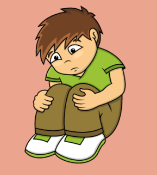
Q11: Explain the line, "And no one buys a ball back. Money is external".
Ans: This particular line signifies that no one can ever buy back something that is lost forever, meaning no one can buy the boy the exact same ball that he has just lost. Money is merely an external thing and serves only as a medium for possessing physical items. However, even immense wealth cannot compensate for the deep emotional sense of loss and the precious memories suffered by a person.
Q12: Why does the poet say, "Balls will be lost always"?
Ans: Here, balls serve as a powerful symbol for a person's worldly possessions. We naturally love our belongings, and some things are far dearer to us than others. However, nothing is truly permanent in life, and we will inevitably lose our cherished things at some point. When this happens, we suffer from a profound sense of loss, an experience shared by absolutely everyone in life. That is exactly why the poet states that balls will always be lost.
Q13: What is the main idea of the poem?
Ans: The main idea revolves around the profound sense of loss in human life. Experiencing loss is an unavoidable fact of life, and the sooner a person learns to tolerate it, the better their life becomes. When we lose something for the very first time, we naturally feel very sad, but we eventually learn to live with that loss. In this context, the boy loses his beloved ball and becomes deeply saddened. Although the poet can easily buy him another ball, he actively chooses not to do so. Instead, he wants the young boy to independently learn the bitter truth of life that everyone must eventually suffer the loss of something they hold dear.
Q14: How did the poet witness the whole scene of the boy losing his ball?
Ans: The poet closely observed the young boy happily playing with his ball. While he was actively engaged in playing, the ball merrily bounced down the street. Suddenly, the most unexpected event occurred. After rolling down the street and taking a few more lively bounces, the ball ultimately fell down into the deep water of the harbour below, leaving the boy completely stunned.
Q15: How did the boy react after his ball fell into the water of the harbour?
Ans: The sudden falling of the ball into the water resulted in a completely unexpected loss for the boy. He was thoroughly shaken by the event and could not even move a single step. He stood there firmly fixed to the ground like a rigid statue. He continuously stared at the exact point where his beloved ball had sunk into the harbour. It genuinely seemed as if he was deeply reminiscing about his innocent childhood days, which had now disappeared forever just like the lost ball.
Q16: Does the lost ball stand for the metaphor of the boy's lost childhood? How?
Ans: Yes, the boy has physically lost his ball after it fell down into the dark harbour, never to be found again. However, through the powerful metaphor of this lost ball, the poet essentially wants to highlight a much bigger loss in life, which is the inevitable loss of one's childhood. Just like the lost ball, the innocent childhood days which the boy cherishes deeply have been lost forever. This profound realisation is exactly what makes his current loss feel so inconsolable.
Q17: Why does the poet say: 'No use to say 'O there are other balls'?
Ans: The poet explicitly says this because the boy is not simply upset about losing a random object; rather, he is deeply grieving over a specific ball that is closely connected with his personal childhood memories. A brand new ball can never truly replace the sentimental value of the one he has just lost, just as no amount of material wealth can ever bring back the lost, precious moments of his past.
Q18: Why doesn't the poet want to intrude on 'him'? What does he consider the safest course?
Ans: The poet deliberately does not want to intrude on the inconsolable boy because there is absolutely no gain in telling him that the lost ball costs almost nothing. Although he could easily buy a new ball for just a dime, the poet considers stepping back to be the safest course. Instead of sermonising or offering cheap comfort, the poet leaves it entirely up to the boy to independently develop a new sense of responsibility, which will ultimately help him in bearing such unavoidable losses in the future.
Q19: What is the general rule of this 'world of possessions'? Why is money 'external'?
Ans: In this materialistic world of possessions, getting and losing things is a completely natural cycle. Many boys before him have bought and eventually lost their balls, and this inevitable process will go on forever. Furthermore, money is considered strictly 'external' because it has its own distinct limitations. No amount of financial wealth can ever buy back the same ball that has been lost forever, nor can it compensate for profound emotional losses, such as the permanent loss of one's innocent childhood days.
Q20: What is the message that John Berryman gives to the readers in 'The Ball poem'?
Ans: Through this poem, John Berryman clearly conveys that both gain and loss are entirely natural parts of human life. Everyone must eventually learn how to bravely face loss and accept the harsh reality that certain beloved things, once gone, can never be recovered. The poet strongly encourages readers to fully understand the true nature of loss, take responsibility for their emotions, and continuously move forward in life with strength and maturity.
Long Answer Questions: The Ball Poem
Q1: Should the boy be allowed to grieve for his ball? If his loss is irreparable or irretrievable then how should one handle it? What lessons can be learnt?
Ans: Yes. The boy should be allowed to grieve for his ball because he had formed a real emotional attachment to it over time and the ball carried many personal memories for him. When someone is working through sorrow, it is usually unhelpful to intrude or distract them, because interruption can break their inward process of understanding and make them more upset. The most lasting recovery tends to come from self-consolation and self-understanding rather than from another person trying to fix the feeling for them. From this experience we learn that loss is a natural part of life, that emotional attachments cannot be replaced simply by money, and that learning to accept and move on is an important step in growing up.
Q2: Why does the poet say, 'I would not intrude on him?' Why doesn't he offer him money to buy another ball?
Ans: The poet says, "I would not intrude on him," because he understands that the boy needs time and privacy to come to terms with his loss. To interrupt the boy would stop his inward reflection and might only increase his distress. The poet does not offer money because a new ball cannot replace the memories and personal value of the lost one; offering money would miss the real need, which is for the boy to feel and accept what has been lost rather than to be placated by a material substitute.
Q3: How did the boy really react to the loss of the ball or was he fearful of something or someone ? Can our attention be directed toward his family and other people?
Ans: The boy was not afraid of anyone; he was deeply upset by the loss. He stood still, shocked and fixed to the spot, staring at the place where the ball had fallen, and he trembled with grief. His family was probably not seriously affected, since a ball is inexpensive and can be bought again, but that does not lessen the boy's pain because his suffering came from emotional attachment and memories. This shows that material replacements cannot always heal inner feelings, and that self-consolation and self-understanding are more lasting than external attempts to soothe someone.
Q4: How is the lost ball, the metaphor of the lost childhood of the boy? Why doesn't the poet want to 'intrude on' the boy by offering him money to buy another ball?
Ans: The lost ball acts as a metaphor for the boy's lost childhood because it represents something simple, innocent and irreplaceable from his past. As the ball bounces and disappears into the harbour, it symbolises how familiar pleasures and ordinary childhood moments are taken away and cannot be regained. Outwardly the loss may seem trivial because any new ball can be bought, but inwardly it stands for the loss of days and experiences that cannot be restored. For this reason the poet does not want to intrude or offer money: he recognises that the boy must learn this lesson for himself and come to understand the nature of loss without being placated by others.
Q5: What is the epistemology of loss in this world of possessions? How has the child learned to stand up in life?
Ans: Gain and loss are part of the same natural cycle of life. The boy's grief is intense because the ball is connected with many memories; it is not merely a toy but a symbol of his childhood. In a world where possessions are often valued for their price, this incident shows that money has limits: it can buy objects but it cannot buy back time or the feelings that have gone. The child learns to stand up in life by first grieving, then understanding and accepting what has happened, and finally moving forward. Such inner acceptance and the ability to carry on help a person grow stronger after suffering a loss.
Q6: Why is it important for everyone to experience loss and to stand up after it?
Ans: Everyone meets loss at some point, whether it is the death of a loved one, the end of a friendship, or the loss of something they cherish. Attachment makes such losses painful, but facing and recovering from loss is an essential part of growing up. If we keep brooding over a loss, it can harm our mental health and prevent us from living fully. It is therefore important to allow oneself to grieve for a short time, to understand and accept what has happened, and then to let go and move on. Learning to stand up after loss builds emotional resilience and helps a person face future challenges with greater strength.
Q7: Have you ever lost something you liked very much? Write a paragraph describing how you felt then and saying whether-and how-you got over your loss.
Ans: Last year our dog Tommy went missing and the whole family felt distraught, but I was especially attached to him because I cared for him every day and he accompanied me on my morning walks. When Tommy could not be found in any of the usual places, I felt desperate, lost my appetite and stopped going for walks. Over time I tried to reconcile myself with the situation by concentrating on my studies, although I still missed him constantly. One day, while visiting a friend in another locality, I recognised Tommy tied in someone else's yard. The people said he had lost his way and they were looking after him. I thanked them and brought Tommy home, feeling relieved and grateful. That experience taught me the importance of patience and hope when dealing with loss.
NCERT Solutions: The Ball Poem
Q1: Why does the poet say, "I would not intrude on him"? Why doesn't he offer him money to buy another ball?
Ans: The poet says that he would not intrude on the boy because he does not want to interfere with the child's private moment of learning and self-realisation. He allows the boy to feel the grief and understand the nature of loss independently, rather than rescuing him. Furthermore, the poet does not offer money to buy another ball because a mere replacement would not undo the deep emotional attachment the boy has lost. Giving money would make the experience of loss meaningless and prevent the young boy from learning his first lesson of responsibility and the true value of his possessions.
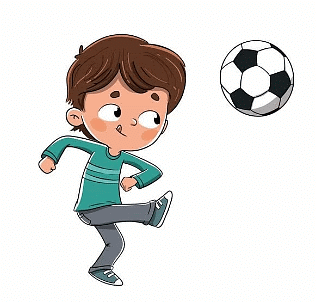
Q2: "... staring down/All his young days into the harbour where/His ball went..." Do you think the boy has had the ball for a long time? Is it linked to memories of days when he played with it?
Ans: Yes, the boy has had the ball for a very long time. The given lines clearly suggest that the ball is deeply linked to many of the boy's past playtimes and happy childhood memories. By staring down the harbour where his ball went, he is looking back at all the innocent days when he played with it. The sudden loss of the ball reminds him that those precious moments are gone forever and cannot be recovered. Although he may get new toys in the future and make new memories, the exact emotions and days attached to this specific ball are lost permanently.
Q3: What does "in the world of possessions" mean?
Ans: The phrase 'in the world of possessions' refers to a materialistic world where people highly value and collect physical things. It highlights a society where ownership matters deeply to individuals. In this context, losing the ball introduces the young boy to the harsh reality of life. It gives him an early and essential lesson about losing beloved things in a highly material world, teaching him that worldly possessions are temporary and cannot be held onto forever.
Q4: Do you think the boy has lost anything earlier? Pick out the words that suggest the answer.
Ans: No, it seems that the boy has never experienced any kind of loss before this incident. This fact is highly evident from the poet's words, 'He senses first responsibility in a world of possessions'. This powerful line clearly shows that losing the ball is his very first experience of loss, and it forces him to understand his responsibility in a highly materialistic world.
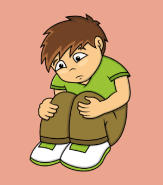
Q5: What does the poet say the boy is learning from the loss of the ball? Try to explain this in your own words.
Ans: The poet conveys that the boy is learning the harsh realities of life from the sudden loss of his ball. He experiences deep grief and begins to understand the true nature of loss, realising that some losses are final and simply cannot be undone. Through this incident, he also senses his first real responsibility, understanding that material things are temporary. Above all, he learns how to stand up after a loss, to accept reality, and to move forward confidently, which is a crucial step in the process of growing up.
Q6: Have you ever lost something you liked very much? Write a paragraph describing how you felt then, and saying whether - and how - you got over your loss.
Ans: Yes, I once lost something I loved deeply. I lost my beloved pet dog in a tragic accident when he was just five years old. We were playing happily in the garden, and suddenly his ball rolled out onto the busy road. He ran after it and was unfortunately hit by a speeding car. I was completely devastated, feeling entirely shocked and helpless at that moment. I cried for days and found it extremely difficult to accept the painful loss. Gradually, with the immense support of my family and by cherishing the happy times we shared, I began to heal. I still miss him terribly, but I learned to safely keep his fond memories in my heart and to bravely move forward in life.
Worksheet Solutions: The Ball Poem
Q.1. Why does the poet say, 'I would not intrude on him?' Why doesn't he offer him money to buy another ball?
Ans: The poet does not want to interrupt the boy because the boy needs space to come to terms with his loss by himself. If someone interferes, the boy's chain of thoughts and his process of understanding will be broken, and that can make him more upset. The poet respects the boy's need for this quiet, inward grieving.
The poet also does not offer money because a replacement ball cannot replace the one the boy loved. The lost ball has personal memories and value for the boy, so another ball would not take its place or soothe the loss.
Q.2. "... staring down/All his young days into the harbour where/His ball went ..." Do you think the boy has had the ball for a long time? Is it linked to the memories of days when he played with it?
Ans: Yes. The lines show that the boy is looking back over his past, which suggests that he has had the ball for a long time. His long, fixed gaze into the harbour is a sign that it symbolises his childhood and innocence, so losing it feels like losing a part of himself and happy times spent playing with it.
Q.3. Should the boy be allowed to grieve for his ball? If his loss is irreparable or irretrievable then how should one handle it? What lessons can be learnt?
Ans: The boy should be allowed to grieve because the ball clearly meant a lot to him and was part of his childhood. Allowing him to feel and work through his sadness helps him learn to accept loss.
If a loss is irretrievable, the healthiest way to handle it is by accepting the reality of the loss, remembering the good aspects, and gradually learning to move on. This process teaches resilience, the ability to cope with pain, and the understanding that some things cannot be replaced by money or by rushing the grieving process. Some losses cannot be compensated with money.
Q.4. How did the boy really react to the loss of the ball or was he fearful of something or someone........? Can our attention be directed toward his family and other people? Are there any lessons to be learnt?
Ans: (i) The boy was not fearful of anyone; he was deeply upset and shocked by the loss. He stood still, staring at the harbour where his ball had fallen and trembled with grief. His reaction shows genuine sorrow rather than fear.
(ii) The loss teaches that money and external comforts cannot restore personal attachments or past experiences. The lesson is that emotional losses teach responsibility, maturity and the ability to let go. The boy's family may not be materially harmed by losing a ball, but the experience helps the boy grow emotionally and prepares him for greater losses he may face in life.
Q.5. What does the poet say the boy is learning from the loss of the ball? Try to explain this in your own words?
Ans: The poet suggests that the boy is learning a hard but important truth about life: losses happen, and one must learn to accept them and carry on. Through this small loss the boy learns maturity, responsibility and the need to face pain without clinging to what is gone. Everyone experiences this in his/ her life when they lose either something or someone. This harsh reality that lost things never come back make people strong enough to live their life by accepting this truth of life.
Q6. Do you think the boy has lost anything earlier? Pick out the words that suggest the answer?
Ans: No, the boy has not lost anything earlier. The phrase "now he senses his first responsibility" indicates that this is his first experience of loss and the first time he feels this kind of duty to himself in facing it.
Q.7. What does "in the world of possessions" mean?
Ans: "In the world of possessions" refers to the material world full of things people own. It points to a life centred on belongings and comforts, where objects are valued for the pleasure or convenience they give rather than for emotional meaning.
Q.8. Why did the boy feel so sad at the loss of his ball?
Ans: The boy felt so sad because the ball had been with him for a long time and was linked to many memories of play and childhood. The sudden loss made him realise that something he loved and identified with was gone, the ball will never come back, and he reacted with deep sorrow-standing motionless and staring where the ball had disappeared.
Q.9. Why is it important for everyone to experience loss and to stand up after it?
Ans: Experiencing loss and learning to recover from it builds strength and character. Dealing with loss teaches acceptance, resilience and the skill of moving forward despite pain.One needs to stay strong no matter how much it hurts inside. These lessons help a person cope with future difficulties and grow emotionally, rather than remaining dependent on what is gone.
: