

Previous Year Questions 2026
Question 1. Explain why time is probably one of the most valuable possessions that one intensely regrets losing.
(The Ball Poem)
Answer:
- time symbolises memories/childhood/ball
- time once lost cannot be recovered
- one must take responsibility
- accepting loss is a part of growing up
Chapter: Poem - The Ball Poem
Question 2. How does the line 'people will take balls, balls will be lost always', justify that material losses are necessary for emotional growth and to understand the harsh realities of life ? (The Ball Poem) [3 marks]
Answer: Through this line, the poet symbolizes materialistic things through the ball. The boy's loss of his ball teaches him that material gains cannot substitute emotional losses and that one must learn to stand up and fight the circumstances. The inevitability of loss is a reality of life, and by experiencing it, the boy learns the epistemology of loss, becoming more responsible and emotionally mature. Material losses, therefore, make one understand the harsh realities of life and are necessary for emotional growth.
Chapter : Poem - The Ball Poem
Question 3. Read the given extract and answer the questions : [5 marks]
A dime, another ball, is worthless. Now He senses first responsibility In a world of possessions. People will take Balls, balls will be lost always, little boy. And no one buys a ball back. Money is external He is learning, well behind his desperate eyes, The epistemology of loss, how to stand up Knowing what every man must one day know And most know many days, how to stand up.
(The Ball Poem)
(i) Comment on the portrayal of the character of the boy in the given extract. [2 marks]
Answer: The boy is portrayed as transfixed and deeply dejected at losing his ball. He undergoes a gradual emotional transformation in this extract, moving from innocence and carelessness to a first awareness of responsibility and loss. His desperate eyes reveal the pain he feels, but the poet also shows that he is beginning to understand that loss is inevitable and that one must learn to stand up and face it. This marks the boy's transition from childhood innocence to a deeper, more mature understanding of the world.
Chapter : Poem - The Ball Poem
Question 4. Read the following extract and answer the questions : [5 marks]
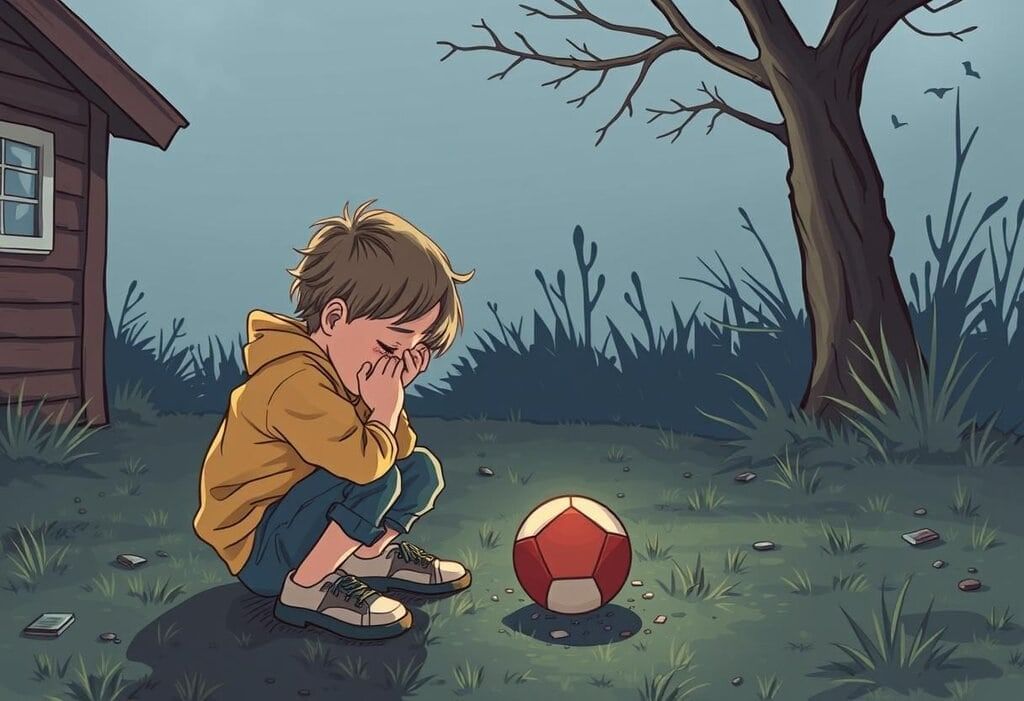
What, what is the boy now
who has lost his ball.
What, what is he to do.
I saw it go Merrily bouncing, down the street and then
Merrily over - there it is in the water !"
No use to say 'O there are other balls'.
(The Ball Poem by John Berryman)
Question 5. (A)(i) What does the repetition of the word "merrily" suggest in the context of the ball's movement ? [1 mark]
Answer: The repetition of "merrily" suggests the bouncing of the ball was playful and carefree, symbolizing the happiness and innocence of childhood. It highlights the joyful energy of the ball as it rolled away, contrasting sharply with the grief and loss that follows its disappearance into the water.
Chapter : Poem - The Ball Poem
(ii) How does this moment contrast the mood of the poem before and after the ball falls into the water ? (Answer in about 40 words) [2 marks]
Answer: Before the ball falls into the water, the mood is happy and playful - the ball merrily bounces down the street, suggesting childhood joy and carefree innocence. After the ball falls into the water, the mood shifts to sadness and gloom, as the boy is left helpless and overwhelmed by his first real experience of loss.
Chapter : Poem - The Ball Poem
(iii) Fill in the blank with the correct word from the bracket : [1 mark]
The poet uses the ball as a symbol of the boy's _______. (childhood/adventure)
Answer: childhood
Chapter : Poem - The Ball Poem
(iv) The line, 'No use to say, oh there are other balls' signifies : [1 mark]
(A) Words of consolation are inappropriate.
(B) The boy must be left alone and play with other toys.
(C) The boy should not be left alone.
(D) No ball will be as expensive as the one the boy has lost.
Answer: (A) Words of consolation are inappropriate.
Chapter : Poem - The Ball Poem
Previous Year Questions 2025
Q1: In 'The Ball Poem', Berryman explores the themes of loss, growing up, and transformation. Mandela also experienced loss of freedom and suffering along with his countrymen during his growing years on the basis of his race and colour.
Compare and contrast the commonality of themes in both the texts. (Answer in 100-120 words) (6 Marks)
Ans: In "The Ball Poem", the poet shows loss as a personal experience of a young boy who loses his ball. This loss teaches him an important lesson about responsibility and helps him grow up emotionally. The ball represents his childhood and innocence. In "Nelson Mandela: Long Walk to Freedom", Mandela faces a different kind of loss-loss of freedom and equality due to racial discrimination. His struggle is not personal but collective, shared by his people. While the boy learns to accept small losses in life, Mandela's suffering makes him stronger and determined to fight for justice. Thus, both texts show that loss, whether small or big, helps a person grow, become strong, and understand life better.
Q2: How does "The Ball Poem" by John Berryman explore the theme of loss and its profound impact on an individual's emotional state and perception of the world? (Answer in 40-50 words) (3 Marks)
Ans: In "The Ball Poem", the loss of the ball represents the end of childhood innocence. The boy's deep sorrow shows how loss alters emotions and outlook. This event teaches him that loss is part of life and helps him grow mentally and take responsibility.
Q3: Why did the poet not console the grief-stricken boy when he lost the ball? (Answer in 40-50 words) (3 Marks)
Ans: The poet does not console the boy because he understands that simple comforts would not replace the lost ball or the lesson it carries. He lets the boy grieve so that the child can learn to face loss and develop emotional strength and responsibility on his own.
Q4: The loss of the ball is a lesson to the boy. Elaborate. (Answer in 40-50 words) (3 Marks)
Ans: The boy realises that possessions can be lost and cannot always be replaced. This painful experience teaches him to accept loss, to value what he has, and to begin taking responsibility for his actions. It marks an early step towards maturity.
Q5: What does the poet mean by the phrase 'And no one buys a ball back'? (Answer in 40-50 words) (3 Marks)
Ans: By saying "And no one buys a ball back," the poet means that certain losses cannot be undone with money. Material replacement cannot restore the emotional value or the unique experience lost. The line underlines the permanence of some losses.
Q6: Explore the theme of loss as it is depicted in both the "Ball Poem" and "The Sermon at Benares" highlighting the inevitable nature of this aspect in life? (100-120 words) (6 marks)
Ans: Both "The Ball Poem" and "The Sermon at Benares" teach that loss is unavoidable and central to human life. In Berryman's poem, the boy's lost ball symbolises the gradual loss of childhood and the emotional lessons that follow; he must learn to stand up after disappointment. In the sermon, Lord Buddha speaks of death and impermanence as universal truths and urges acceptance and detachment to overcome suffering. While Berryman focuses on personal, emotional growth from loss, the sermon frames loss as a path to spiritual insight. Both texts conclude that accepting loss leads to inner strength, clarity and peace.
Q7: "The Ball Poem" deals with the undertones of loss and responsibility. How is the poem very relatable to our lives and what important message/s do we learn from it? (Answer in about 40-50 words, 3 marks)
Ans: "The Ball Poem" is relatable because everyone faces loss at some point. The boy's reaction mirrors common grief and learning. The poem teaches that loss is inevitable but helps us grow, accept reality, and take responsibility for dealing with life's challenges calmly and with courage.
 | Get additional INR 200 off today with EDUREV200 coupon. | Avail Offer |
Previous Year Questions 2024
Q1: Read the extract given below and answer the questions that follow: (CBSE 2024)In a world of possessions. People will take
Balls, balls will be lost always, little boy.
And no one buys a ball back. Money is external
He is learning, well behind his desperate eyes,
The epistemology of loss, how to stand up
Knowing what every man must one day know
And most know many days, how to stand up.
(A) Fill in the blank with one word. When the speaker says "People will take balls, Balls will be lost always, little boy", his tone is ______.
Ans: resigned
The speaker's tone reflects a sense of resignation towards loss, indicating that it is an unavoidable part of life.
This is evident in the following points:
- The phrase "balls will be lost always" suggests a constant cycle of loss.
- The speaker acknowledges that no one buys back a lost ball, highlighting the inevitability of loss.
- His tone conveys a deep understanding of the nature of loss and the need to accept it.
This acceptance is a crucial lesson for the boy, teaching him how to cope with loss as he grows.
(B) The poet says that money is external. What inference can be drawn from this statement? Answer in about 40 words.
Ans: The phrase "money is external" means that material wealth exists outside our inner feelings and cannot replace emotional loss. The poet implies that sentimental value and personal experience cannot be restored by money; emotional wounds need understanding and time, not material compensation.
(C) Which of the following best describes the speaker's attitude towards material possessions?
(a) indifferent
(b) emotional
(c) casual
(d) respectful
Ans: (a)
Explanation: The speaker shows detachment from material possessions. By calling money "external" and another ball "worthless", the poet highlights that emotional value matters more than material things, reflecting an indifferent attitude towards possessions.
(D) Identify the poetic device used in "And no one buys a ball back''.
Ans: Alliteration.
Explanation: The repetition of the initial consonant sound in "buys" and "ball" creates alliteration, which emphasises the idea that some things cannot be regained.
Q2: You have been chosen to address the school assembly, to speak on the epistemology of loss and the resilience of the human spirit during times of crisis. Prepare the speech draft, with reference to the commonality of themes in The Ball Poem' by John Berryman and 'From the Diary of Anne Frank'. (CBSE 2024)
You may begin this way :
Good morning everyone.
Today, I'd like to discuss two pieces of literature that offer a powerful insight into how to deal with loss and the resilience of the human spirit required during times of crisis.
You may end this way:
To conclude, I'd like to say that _______
Thank you.
Ans:
Good morning everyone.
Today, I would like to talk about how literature teaches us to face loss and remain resilient. In John Berryman's "The Ball Poem", a boy's grief over a lost ball shows how personal loss helps build responsibility and emotional strength. In From the Diary of Anne Frank, Anne records fear, loneliness and hope while hiding during the war; her writing shows courage and faith in humanity despite great suffering. Both pieces show that loss, whether small or tragic, can deepen our understanding and sharpen our spirit. By accepting pain and learning from it, we grow stronger and more compassionate.
To conclude, I would like to say that we must not be defeated by loss but learn from it and help others to do the same.
Thank you.
Previous Year Questions 2023
Read the following extracts and answer the questions that follow:Q3: What is the boy now, who has lost his ball,
What, what is he to do? I saw it go
Merrily bouncing, down the street and then
Merrily over-there it is in the water!
No use to say 'O there are other balls': (2023)
(i) What does the expression 'what, what is he to do' denote?
(a) loss of the ball
(b) ask the poet for another ball
(c) boy's grief over the loss of the ball
(d) go down the street
Ans: (c)
Explanation: The repeated question "what, what is he to do?" expresses the boy's confused grief and helplessness after the loss; it highlights his emotional distress rather than a desire to get another ball.
(ii) State whether the following statement is True or False:
The poet was delighted to watch the ball bouncing down the street into the water.
Ans: False
Explanation: The poet is not delighted; he feels sympathy for the boy and understands the sadness and sense of loss that the boy experiences when the ball is lost.
(iii) The poet repeats the word 'what' in order to
Ans: emphasise the boy's confusion and distress.
Explanation: The repetition draws attention to the speaker's concern and the boy's helpless state, making his sorrow feel immediate and intense.
(iv) There is no use to say 'O there are other balls' indicates that the poet feels that it would be ________ to console the boy
(a) helpful
(b) futile
(c) easy
(d) shameful
Ans: (b)
Explanation: Telling the boy there are other balls would be futile because it would not replace the particular loss and emotional attachment he has suffered.
(v) Which feeling is expressed in the line 'What is the boy now, who has lost his ball'?
(a) regret
(b) cheer
(c) despair
(d) thrill
Ans: (c)
Explanation: The line conveys despair as the boy faces the finality of his loss and appears unsure how to recover from it emotionally.
Also read: NCERT Solutions: The Ball Poem |
Previous Year Questions 2021
Q4: After losing his ball, the boy: (Term I, 2021-22)(a) become sad.
(b) felt angry.
(c) learnt a lesson.
(d) went for another ball.
Ans: (a)
Explanation:
The boy's immediate reaction is grief and sadness at losing his ball. This emotional response later leads to learning an important lesson about responsibility and acceptance of loss.
Q5: '....... I would not in tru d e on him;
A dime, another ball, is worthless. Now
He senses first responsibility
In a world of possessions. People will take Balls,
balls will be lost always, little boy.
And no one buys a ball back.' (2021C)
(i) Who is 'him'?
Ans: 'Him' refers to the little boy who has lost his ball.
(ii) Why won't 'I' intrude on 'him'?
Ans: The speaker will not intrude because he wants the boy to feel and learn from his loss; interference would prevent the boy's emotional growth.
(iii) 'I' seems to be________ Why does no one buy a ball back?
Ans: sensible.
Explanation: The speaker understands that replacing the ball would not restore what was lost emotionally, and so he behaves sensibly by allowing the boy to grieve and learn.
(iv) Why does no one buy a ball back?
Ans: Because the emotional attachment and the particular experience connected with the lost ball cannot be purchased or restored with money.
(v) Which word is opposite in meaning to the word 'worthless'?
Ans: valuable
 | Attention! Sale expiring soon, act now & get EduRev Infinity at 40% off! | Claim Offer |
Previous Year Questions 2020
Q6: 'His ball went. I would not intrude on him;A dime, another ball, is worthless. Now
He senses first responsibility
In a world of possessions.' (2020C)
(i) The loss of the ball will help the child to understand his________
Ans: first responsibility
(ii) Giving another ball to the child is ________
Ans: worthless
(iii) The boy is sad because________
Ans: he lost his ball
(iv) The ball is called worthless because it costs only ______.
Ans: a dime
Previous Year Questions 2018
Q7: 'He senses first responsibility'- What responsibility is referred to here? (The Ball Poem). (2018)Ans: The responsibility referred to is the boy's duty to take care of his belongings and to accept the consequences when things are lost. Through this loss he learns to be careful, to face pain without constant consolation, and to grow emotionally rather than remain helpless.
Also read: NCERT Solutions: The Ball Poem |
Previous Year Questions 2016
Q8: Write the sum and substance of the poem "The Ball Poem". (Answer the following questions in 40-50 words) (CBSE 2016)
Ans: John Berryman's poem teaches how to cope with loss and move on. The boy's lost ball becomes a lesson in responsibility and emotional growth. The poem stresses that loss is inevitable, but people must accept it bravely and continue living without letting grief halt their progress.
: