

Case Based Questions: Life Processes
Q1: Read the source below and answer the questions that follow:
Mohan and Rajat were discussing how different organisms obtain nutrition. Mohan argued that plants make their own food, while Rajat explained that not all organisms can do this. Rajat gave examples of fungi that decompose food externally and some animals that directly depend on plants for survival. They also discussed the process of digestion in humans and how food is broken down into simpler forms.
(a) What is the main difference between autotrophic and heterotrophic nutrition? (1 Mark)
(b) How does Amoeba obtain its food? Describe the process. (2 Marks)
(c) Compare the nutrition in Amoeba with that in human beings. (1 Mark)
OR
(c) How is digestion in humans different from digestion in fungi? (1 Mark)
Ans:
(a) Autotrophic nutrition is when an organism makes its own food from simple inorganic substances (for example carbon dioxide and water) using light energy or chemical energy; green plants are common autotrophs. Heterotrophic nutrition is when organisms obtain ready-made organic food by feeding on other organisms or their products; animals, fungi and many bacteria are heterotrophs.
(b) Amoeba obtains food by a process called phagocytosis:
- The Amoeba extends parts of its cell membrane called pseudopodia to surround the food particle.
- The food is enclosed in a food vacuole.
- Digestive enzymes enter the vacuole and break the food into simpler substances.
- These digested products are absorbed into the cytoplasm and undigested remains are expelled.
- Amoeba is unicellular and performs intracellular digestion inside food vacuoles.
- Humans are multicellular with a specialised alimentary canal where digestion is mostly extracellular (in the gut) and then nutrients are absorbed into the blood for transport to cells.
(c) Digestion in fungi differs from humans because fungi release enzymes outside their bodies to digest food externally and then absorb the dissolved nutrients, whereas humans digest food internally in the alimentary canal and absorb nutrients into the bloodstream.
Q2: Read the source below and answer the questions that follow:
During a science experiment, Riya placed two potted plants in different conditions. One was kept in complete darkness, while the other was exposed to sunlight. After three days, she tested both plants for starch presence using iodine solution and observed a color change only in the plant exposed to sunlight. She wanted to understand why this happened.
(a) What is the role of chlorophyll in photosynthesis? (1 Mark)
(b) Describe the process of photosynthesis and its three main steps. (2 Marks)
(c) Why did the plant kept in darkness not show a positive starch test? (1 Mark)
OR
(c) Explain why stomata are essential for photosynthesis. (1 Mark)
Ans:
(a) Chlorophyll is a green pigment in the chloroplasts that captures sunlight energy and converts it into the chemical energy required to form glucose from carbon dioxide and water.
(b) Photosynthesis occurs in three main steps:
- Absorption of light: Chlorophyll absorbs sunlight energy.
- Light reactions: Light energy is used to split water molecules, producing oxygen and energy-rich molecules.
- Dar reactions (carbon fixation): Carbon dioxide is reduced using the energy from the previous step to form carbohydrates (such as glucose), which can be stored as starch.
OR
(c)Stomata are tiny pores on leaves that allow carbon dioxide to enter and oxygen to exit the leaf; this gas exchange is essential for photosynthesis and also helps control water loss through transpiration.
 | Get additional INR 200 off today with EDUREV200 coupon. | Avail Offer |
Q3: Read the source below and answer the questions that follow:
Anjali and Varun were discussing the importance of respiration. Anjali said respiration provides energy, while Varun argued that not all respiration requires oxygen. To demonstrate this, their teacher conducted an experiment using yeast and sugar solution. The lime water turned milky, indicating CO₂ production, proving anaerobic respiration.
(a) What is the basic difference between aerobic and anaerobic respiration? (1 Mark)
(b) Explain the process of respiration in human muscles during heavy exercise. (2 Marks)
(c) What are the products of anaerobic respiration in yeast? (1 Mark)
OR
(c) How does the energy released in aerobic respiration compare to anaerobic respiration? (1 Mark)
Ans:
(a) Aerobic respiration requires oxygen and produces carbon dioxide, water and a large amount of energy; anaerobic respiration occurs without oxygen and produces less energy along with different end products depending on the organism.
(b) During heavy exercise:
- Muscle cells may not get enough oxygen for the energy demand.
- They begin anaerobic respiration, breaking down glucose into lactic acid and a small amount of energy to keep muscles working for a short time.
- Lactic acid accumulation causes muscle fatigue and pain; when oxygen supply returns, lactic acid is converted back to carbon dioxide and water.
OR
(c) Aerobic respiration yields much more energy than anaerobic respiration; aerobic breakdown of one glucose molecule gives a large number of energy units (commonly stated as about 38 ATP) while anaerobic respiration yields only about 2 ATP per glucose molecule.
Q4: Read the source below and answer the questions that follow:
A scientist conducted an experiment to compare the transport systems in plants and animals. He observed how water moves through a plant's xylem and how blood circulates in the human body. He noted that in humans, blood is pumped by the heart, while in plants, water is pulled up due to transpiration.
(a) What is the main function of the xylem in plants? (1 Mark)
(b) Explain the double circulation of blood in human beings. (2 Marks)
(c) How does transpiration help in the movement of water in plants? (1 Mark)
OR
(c) Why is it necessary to separate oxygenated and deoxygenated blood in mammals and birds? (1 Mark)
Ans:
(a) Xylem conducts water and dissolved minerals absorbed by roots upwards to the stem and leaves.
(b) Double circulation means blood passes through the heart twice in one complete circuit of the body. The two linked circuits are:
- Pulmonary circulation: Right ventricle → pulmonary artery → lungs (blood gets oxygenated) → pulmonary vein → left atrium.
- Systemic circulation: Left ventricle → aorta → body tissues (oxygen is delivered) → veins → right atrium.
(c) Transpiration from leaves creates a continuous pull (suction) in the xylem that draws water upward from the roots; cohesion and adhesion of water molecules help maintain an unbroken water column.
OR
(c) Separation of oxygenated and deoxygenated blood in birds and mammals ensures a continuously high supply of oxygen to tissues, which is necessary to meet their high metabolic (energy) demands.
Also watch: What are Life Processes |
Q5: Read the source below and answer the questions that follow:
During a science lecture, the teacher explained how excretion removes waste materials from the body. She described the role of nephrons in the kidney and how urine is formed. She also mentioned how plants remove waste through transpiration, vacuoles, and leaf shedding.
(a) What is the primary function of nephrons in human kidneys? (1 Mark)
(b) How is urine produced in human beings? (2 Marks)
(c) How do plants get rid of their waste materials? (1 Mark)
OR
(c) What is the role of transpiration in plant excretion? (1 Mark)
Ans:
(a) Nephrons are the functional units of the kidney; they filter blood to remove metabolic wastes and help regulate water and salt balance.
(b) Urine formation involves three main processes in the nephrons:
- Filtration: Blood is filtered in the glomerulus; water and small solutes (including waste) pass into the renal tubule.
- Selective reabsorption: Useful substances (glucose, some salts, water) are reabsorbed back into the blood from the tubules according to the body's needs.
- Secretion and concentration: Additional waste and excess ions are secreted into tubules; the final fluid, urine, is collected and passed to the bladder for storage.
OR
(c) Transpiration helps plant excretion by removing excess water and dissolved substances from leaves; this process also assists in temperature control and the upward movement of water that can carry away soluble wastes.
Q6: Read the source below and answer the questions that follow:
During a biology class, Ananya's teacher explained how blood circulates in the human body. She mentioned that the heart pumps oxygen-rich blood to different parts of the body and collects carbon dioxide-rich blood to send it to the lungs for purification. Ananya was curious about why the heart has four chambers and how it ensures continuous circulation.
(a) What is the function of valves in the human heart? (1 Mark)
(b) Explain the role of the left ventricle and right ventricle in blood circulation. (2 Marks)
(c) How does the heart prevent the mixing of oxygenated and deoxygenated blood? (1 Mark)
OR
(c) What would happen if the heart's ventricles were not able to contract properly? (1 Mark)
Ans:
(a) Valves in the heart ensure that blood flows in one direction and prevent backflow when the heart relaxes between beats.
(b) The ventricles have distinct roles:
- Left ventricle: Pumps oxygen-rich blood into the aorta and then to the whole body; it has thick muscular walls to generate high pressure.
- Right ventricle: Pumps oxygen-poor blood into the pulmonary artery and to the lungs for oxygenation; it works at lower pressure than the left ventricle.
OR
(c) If the ventricles could not contract properly, the heart would fail to pump sufficient blood, causing reduced oxygen delivery to tissues, fatigue and potentially dangerous conditions such as fluid build-up and organ failure.
 | Attention! Sale expiring soon, act now & get EduRev Infinity at 40% off! | Claim Offer |
Q7: Read the source below and answer the questions that follow:
Sanya and her friends were running during their sports practice. After some time, they noticed that they were breathing heavily. Their coach explained that during physical activity, the body requires more oxygen to generate energy, leading to an increased breathing rate.
(a) What is the function of alveoli in the human respiratory system? (1 Mark)
(b) Why do we breathe faster during exercise? (2 Marks)
(c) How does the exchange of gases occur in alveoli? (1 Mark)
OR
(c) Why do aquatic organisms breathe faster than terrestrial organisms? (1 Mark)
Ans:
(a) Alveoli are tiny air sacs in the lungs that provide a large surface area and very thin walls for efficient exchange of oxygen and carbon dioxide between the air and blood.
(b) During exercise muscles need more oxygen to produce extra energy and produce more carbon dioxide as waste. To meet this increased demand:
- Breathing rate and depth increase to bring more oxygen into the lungs and remove carbon dioxide faster.
- Heart rate also rises to transport oxygen to muscles and carry carbon dioxide away.
OR
(c) Aquatic organisms often appear to breathe faster because oxygen concentration and diffusion in water are lower and slower than in air, so they must ventilate more frequently or use special respiratory structures to obtain enough oxygen.
Q8: Read the source below and answer the questions that follow:
Rahul observed that water moves from the roots of a plant to its leaves. His teacher explained that plants have a specialized transport system that helps in the movement of water and food. She also demonstrated that when a plant loses water through its leaves, more water is pulled up from the roots.
(a) Which tissue in plants is responsible for the transport of water? (1 Mark)
(b) How does transpiration help in the upward movement of water in plants? (2 Marks)
(c) What is the role of root pressure in water transport? (1 Mark)
OR
(c) How does phloem transport food in plants? (1 Mark)
Ans:
(a) Xylem is the tissue specialised for upward transport of water and dissolved minerals from roots to stems and leaves.
(b) Transpiration helps water move upward as follows:
- Water evaporates from the leaf surfaces through stomata (transpiration).
- This creates a pull (transpiration pull) on the continuous column of water in the xylem.
- Cohesion between water molecules and adhesion to xylem walls help maintain the water column, allowing water to be drawn up from the roots to the leaves.
OR
(c) Phloem transports food (mainly sugars) from sources (leaves) to sinks (roots, growing tissues) by a process called translocation, which involves loading sucrose into sieve tubes, water following by osmosis and movement of the fluid towards regions where sucrose is removed.
Also watch: What are Life Processes |
Q9: Read the source below and answer the questions that follow:
Priya was watching a medical show where a patient had kidney failure and required dialysis. She was curious to learn how kidneys function and why dialysis is needed when they fail. Her biology teacher explained that kidneys remove nitrogenous wastes from the blood and maintain water balance.
(a) What is the role of nephrons in the excretory system? (1 Mark)
(b) How does the process of dialysis help in kidney failure? (2 Marks)
(c) Why is urine formation important in human beings? (1 Mark)
OR
(c) What happens if excess water is not removed from the body? (1 Mark)
Ans:
(a) Nephrons filter the blood to remove nitrogenous wastes and help regulate the volume and composition of body fluids by selective reabsorption and secretion.
(b) Dialysis substitutes for failed kidneys by passing the patient's blood along a semipermeable membrane opposite a dialysis fluid:
- Wastes such as urea and excess salts diffuse from blood into the dialysis fluid across the membrane.
- Useful substances are retained or returned to the blood, and the cleaned blood is returned to the patient.
(c) Formation of urine removes toxic nitrogenous wastes and helps maintain water and electrolyte balance in the body, which is essential for normal cell function.
OR
(c) If excess water is not removed, it can cause swelling (oedema), raise blood pressure and stress the heart and kidneys, potentially leading to serious health problems.
Q10: Read the source below and answer the questions that follow:
During an experiment, Rohit observed that yeast produced bubbles when added to sugar solution. His teacher explained that this was due to anaerobic respiration, where glucose breaks down without oxygen, releasing energy and carbon dioxide.
(a) What are the two types of respiration? (1 Mark)
(b) How does anaerobic respiration occur in yeast? (2 Marks)
(c) Why do muscle cells sometimes switch to anaerobic respiration? (1 Mark)
OR
(c) Which type of respiration produces more energy: aerobic or anaerobic? (1 Mark)
Ans:
(a) The two types of respiration are aerobic respiration (requires oxygen) and anaerobic respiration (occurs without oxygen).
(b) In yeast, anaerobic respiration (fermentation) proceeds as follows:
- Glucose is partially broken down to produce small amounts of energy.
- The end products are ethanol and carbon dioxide; the bubbles observed are CO₂ being released.
OR
(c) Aerobic respiration produces far more energy per glucose molecule than anaerobic respiration (aerobic yields many more energy units, commonly quoted as about 38 ATP compared to about 2 ATP from anaerobic processes).
Transportation in Human Beings: Circulatory System & The Human Heart
Human Circulatory System
The human circulatory system is a network of the heart, blood and blood vessels that circulates fluid throughout the body. Its primary roles are transport of nutrients, gases and hormones to tissues, removal of metabolic wastes for excretion, distribution of heat to maintain temperature, and contribution to the body's defence and repair mechanisms.
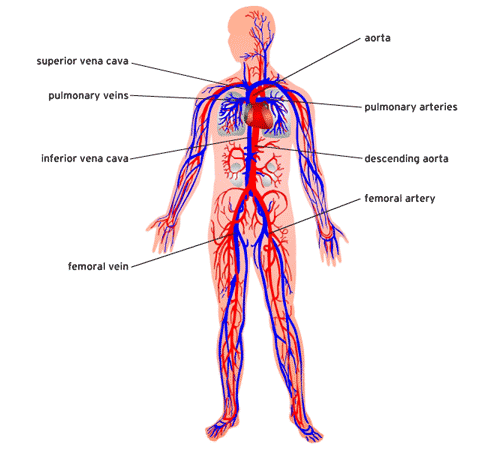
The circulatory system also collects metabolic wastes and toxins from cells and tissues so that these can be purified or expelled from the body by organs such as the kidneys, lungs and liver.
Organs of the Circulatory System
The main components of the human circulatory system are
- Heart
- Blood
- Blood vessels (arteries, veins and capillaries)
- It transports these vital elements through a network of arteries, veins, and capillaries.
- The heart pumps blood, which contains these nutrients, throughout the body.
- This ensures that all the cells and tissues receive the necessary components for their proper functioning.
- Without the circulatory system, the body would not be able to deliver these essential elements efficiently, leading to various health issues.
- Therefore, the correct answer is Option B: To provide essential nutrients to the body.
Heart
The heart is a muscular organ that pumps blood through the circulation. Typical structural and gross features for a healthy adult human heart are:
- Size - approximately 5 × 3.5 inches (which is about the size of our fist.)
- Colour - pink (when fresh and healthy)
- Shape - roughly conical
- Weight - about 300 g (average adult)
- Position - in the chest (thoracic) cavity, slightly to the left of the midline, between the lungs
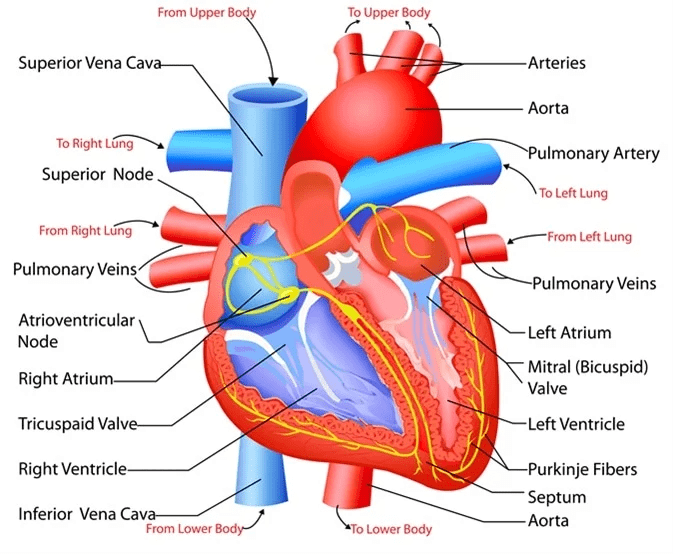 Structure of Human Heart
- The heart is divided internally into four chambers: two upper chambers called atria (auricles) and two lower chambers called ventricles.
- Its function is to allow blood to flow from the left auricle to the left ventricle.
- When the left auricle contracts, the mitral valve opens, allowing oxygenated blood from the pulmonary veins to enter the left ventricle.
- Once the left ventricle is filled with blood, it contracts and the mitral valve closes to prevent blood from flowing back into the auricle.
- The contraction of the left ventricle then forces the blood through the aortic valve and into the aorta, which distributes the oxygenated blood to the rest of the body.
- Therefore, the mitral valve plays a crucial role in ensuring the one-way flow of blood from the left auricle to the left ventricle, allowing for efficient circulation throughout the body.
Internal structure of the heart
Right atrium (Right auricle)
- The right atrium receives deoxygenated blood from the body through the superior vena cava (from head, neck and upper limbs), the inferior vena cava (from the trunk and lower limbs) and the coronary sinus (which drains the heart muscle).
- Blood passes from the right atrium into the right ventricle through the tricuspid valve (atrioventricular valve with three cusps) which prevents backflow when the ventricle contracts.
Right ventricle
- The right ventricle pumps deoxygenated blood into the pulmonary artery through the pulmonary semilunar valve.
- The pulmonary artery divides into right and left pulmonary arteries, carrying blood to the lungs where gas exchange (oxygen uptake and carbon dioxide release) occurs in pulmonary capillaries.
Left atrium (Left auricle)
- The left atrium receives oxygenated blood from the lungs by four pulmonary veins (two from each lung).
- Blood passes from the left atrium into the left ventricle through the mitral (bicuspid) valve, which prevents backflow during ventricular contraction.
Left ventricle
- The left ventricle pumps oxygen-rich blood into the aorta through the aortic semilunar valve.
- The left ventricle has the thickest muscular wall because it must generate high pressure to send blood through the systemic circulation to all body tissues.
| Get additional INR 200 off today with EDUREV200 coupon. | Avail Offer |
Working of the heart
- The heart functions as a double pump. The right side receives deoxygenated blood and pumps it to the lungs (pulmonary circulation); the left side receives oxygenated blood from the lungs and pumps it to the rest of the body (systemic circulation).
- Oxygenated blood enters the left atrium from the lungs via the pulmonary veins.
- Deoxygenated blood from the body returns to the right atrium via the superior and inferior vena cavae.
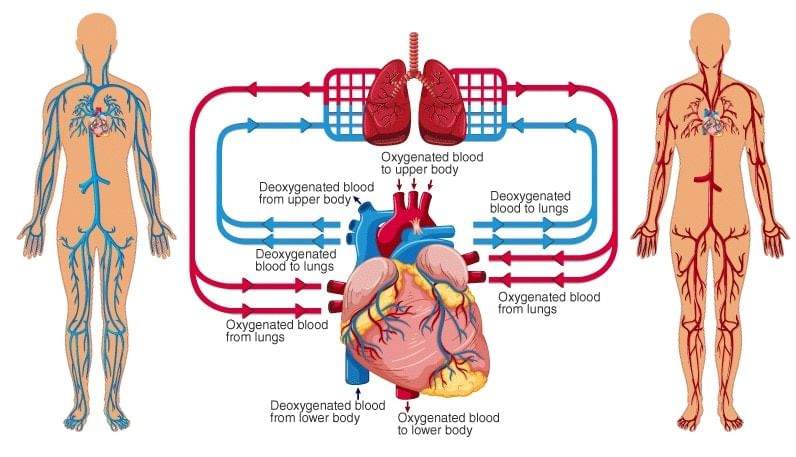
- Both atria contract together to move blood into the ventricles; then both ventricles contract together to send blood out of the heart. Valves between the atria and ventricles prevent backflow into the atria during ventricular contraction.
- When ventricles contract, semilunar valves open and blood is forced into the pulmonary artery (from the right ventricle) and into the aorta (from the left ventricle).
- Blood sent to the lungs via the pulmonary arteries is reoxygenated; oxygenated blood returns to the left atrium and is pumped into systemic circulation by the left ventricle.
- It ensures that these crucial elements are transported efficiently to support the functioning of different bodily processes.
- This is achieved through the network of arteries, veins, and capillaries, with the heart pumping blood to circulate these substances.
- Without the circulatory system, the body would not receive the necessary components for its proper functioning.
- Therefore, the primary function of the human circulatory system is to provide essential nutrients, minerals, and hormones to various parts of the body.
Heartbeat and cardiac cycle
- Heartbeat is the rhythmic sequence of contraction and relaxation of heart chambers. The cardiac cycle comprises systole (contraction) and diastole (relaxation).
- The average resting heartbeat in adults is about 72 beats per minute, though it varies with age, fitness and activity.
- Systole refers to contraction of atria or ventricles that pumps blood out; diastole refers to the relaxation phase when chambers fill with blood.
- The coordinated contraction is governed by the heart's electrical conduction system: the sinoatrial (SA) node (natural pacemaker) initiates impulses, the atrioventricular (AV) node conducts them to the ventricles, and the Bundle of His with Purkinje fibres distribute the impulse to ventricular muscle, ensuring a coordinated beat.
Functioning of the human heart - Process of blood circulation
Oxygen-rich blood flow (Systemic circulation)
- Oxygen-rich blood from the lungs enters the left atrium, the thin-walled upper left chamber.
- The left atrium relaxes while filling and then contracts to push blood into the left ventricle, the lower left chamber.
- The left ventricle contracts with strong force to pump oxygenated blood into the aorta, from where arteries distribute it to body tissues.
Deoxygenated blood flow (Pulmonary circulation)
- Deoxygenated blood carrying carbon dioxide from tissues returns to the right atrium, the upper right chamber.
- The right atrium relaxes to collect blood and then contracts to transfer it into the right ventricle, the lower right chamber.
- The right ventricle contracts and sends blood through the pulmonary artery to the lungs, where it releases carbon dioxide and picks up oxygen before returning to the left atrium.
Also read: Cheat Sheet: Life Processes |
Other circulation: Coronary circulation and double circulation
- Coronary circulation supplies the heart muscle (myocardium) itself via coronary arteries and drains via cardiac veins into the coronary sinus and right atrium.
- Double circulation means blood passes twice through the heart during one complete circuit of the body - once through pulmonary circulation and once through systemic circulation - enabling efficient separation of oxygenated and deoxygenated blood and higher blood pressure for systemic flow.
Blood
Blood is a fluid connective tissue that transports substances and helps maintain internal balance. It consists of a liquid part called plasma and formed elements called blood corpuscles (red blood cells, white blood cells and platelets).
Composition of blood
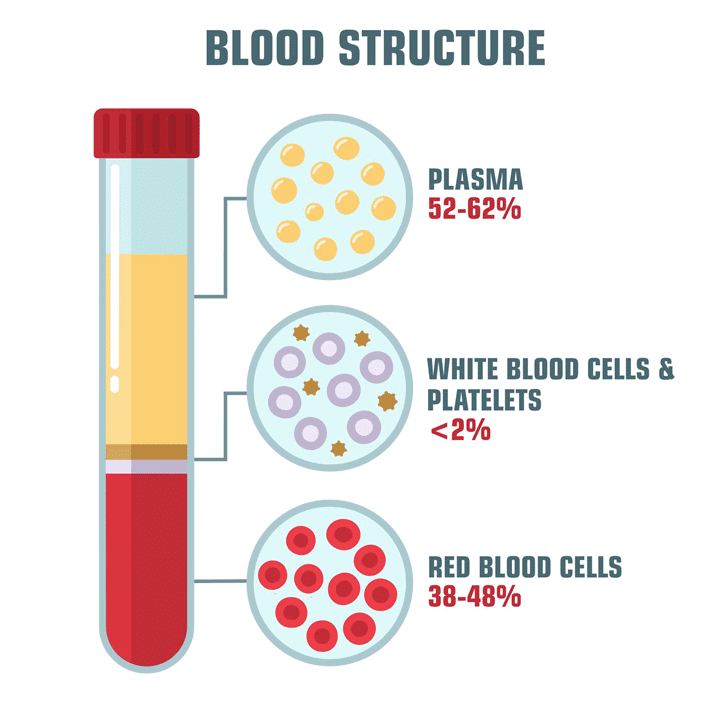
Blood comprises a liquid portion and solid elements:
- Liquid part - blood plasma
- Solid part - blood corpuscles (RBCs, WBCs and platelets)
| Attention! Sale expiring soon, act now & get EduRev Infinity at 40% off! | Claim Offer |
Plasma
- Plasma constitutes about 55% of blood volume.
- Plasma is 90-92% water; the remaining 8-10% consists of dissolved proteins, salts, nutrients, wastes, gases and hormones.
- Plasma is a pale yellow, viscous fluid that contains proteins such as albumin, globulins, prothrombin and fibrinogen, along with inorganic salts and dissolved substances.
Functions of plasma
- Transport of nutrients, respiratory gases, excretory products and hormones.
- Plasma proteins such as prothrombin and fibrinogen are essential for blood clotting at sites of injury.
- Globulins act as antibodies providing immunity against pathogens.
- Plasma carries minerals (iron, copper) and maintains osmotic balance.
- It delivers essential nutrients, minerals, and hormones to various parts of the body.
- It also collects metabolic waste and toxins from cells and tissues to be eliminated from the body.
- Therefore, the correct answer is option D, as all of the above functions are performed by the circulatory system.
Blood corpuscles (formed elements)
- Blood corpuscles together form about 45% of blood volume.
- Red blood corpuscles (RBCs; erythrocytes)
- White blood corpuscles (WBCs; leucocytes)
- Platelets (thrombocytes)
Comparative study of blood corpuscles
| Characters | RBCs | WBCs | Platelets | |
|---|---|---|---|---|
| 1 | Shape | Circular, biconcave | Rounded, irregular | Rounded or oval fragments |
| 2 | Size (diameter in μm) | 7-8 (smaller than WBCs) | 12-20 (larger than RBCs) | 2-5 (smallest) |
| 3 | Number (per mm³) | ~5.5 million in males, ~4.5 million in females | 8,000-11,000 | 150,000-450,000 (1.5-4.5 lakhs) |
| 4 | Colour | Red (due to haemoglobin) | Colourless | Colourless |
| 5 | Structure | Non-nucleated in mature human RBCs; lack most organelles | Contain nucleus and organelles | Cell fragments without nucleus |
| 6 | Life span | ~120 days | 1-7 days (varies by type) | 2-5 days |
| 7 | Functions | Transport oxygen and small amount of CO₂ | Defence against infection, phagocytosis, immune responses | Help in blood clotting |
 | Test: Respiration - 1 | Start Test |
Functions of blood
- Transportation of oxygen from lungs to tissues.
- Transport of carbon dioxide from tissues to lungs.
- Transport of excretory products (e.g. urea) from tissues to kidneys for removal.
- Transport of digested food from the small intestine to body tissues.
- Distribution of hormones and enzymes to target organs.
- Formation of clots to prevent blood loss at sites of injury.
- Distribution of heat and maintenance of body temperature.
- Protection against infection and contribution to wound healing through the action of WBCs and antibodies.
Blood vessels
Three main types of blood vessels are found in the human body:
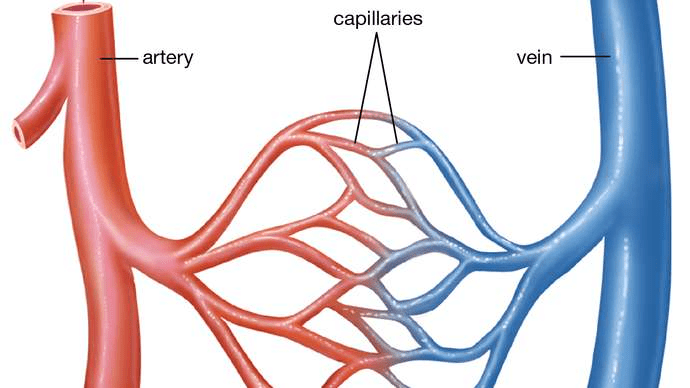
- Arteries - vessels that carry blood away from the heart to organs and tissues.
- Veins - vessels that return blood from organs and tissues to the heart.
- Capillaries - the smallest vessels with walls one cell thick where exchange of gases, nutrients and wastes occurs between blood and tissues.
The major differences among these vessels are summarised below.
| S. No. | Features | Arteries | Veins | Capillaries |
|---|---|---|---|---|
| 1 | Direction of blood flow | Carry blood away from the heart | Bring blood towards the heart | Connect arterioles and venules; site of exchange |
| 2 | Kind of blood | Usually oxygenated (except pulmonary artery) | Usually deoxygenated (except pulmonary vein) | Blood changes from oxygenated to deoxygenated across capillary beds |
| 3 | Blood pressure | High | Low | Extremely low |
| 4 | Blood flow | Rapid with pulse/jerk | Smoother, steady flow | Very slow to allow exchange |
| 5 | Lumen | Narrow | Wide | Very small |
| 6 | Valves | Absent | Present (to prevent backflow in limbs) | Absent |
| 7 | Location | Mostly deep | Often superficial | Form networks in all tissues and organs |
Lymph and the lymphatic system
- Lymph (tissue fluid) is a clear, colourless fluid that derives from plasma when it leaks out of capillaries into the spaces between cells.
- Plasma, proteins and a few blood cells that escape from capillaries form the tissue fluid; most of it returns to the circulation via the lymphatic capillaries.
- Lymphatic capillaries merge into larger lymph vessels which ultimately drain into veins, returning lymph to the bloodstream.
- Lymph carries digested fats from the intestine to the blood, helps maintain fluid balance by draining excess extracellular fluid, and contributes to immune defence by transporting lymphocytes and filtering pathogens through lymph nodes.
Cheat Sheet
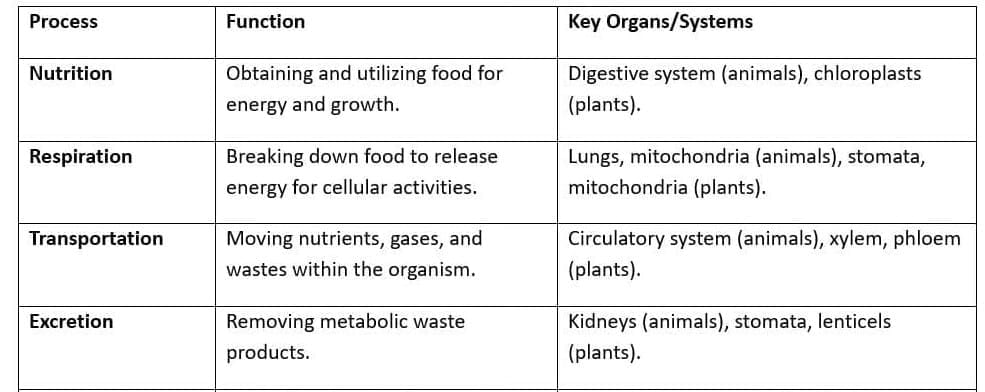
Overview of Life Processes
| Get additional INR 200 off today with EDUREV200 coupon. | Avail Offer |
Nutrition
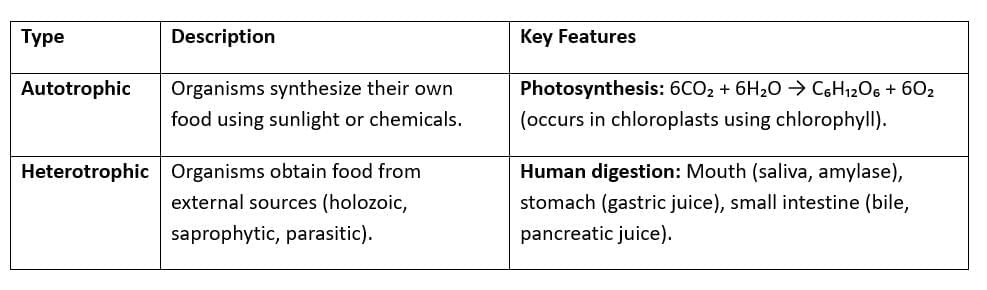
- Photosynthesis: Occurs in plant chloroplasts; produces glucose, oxygen; factors include light, CO₂, water.
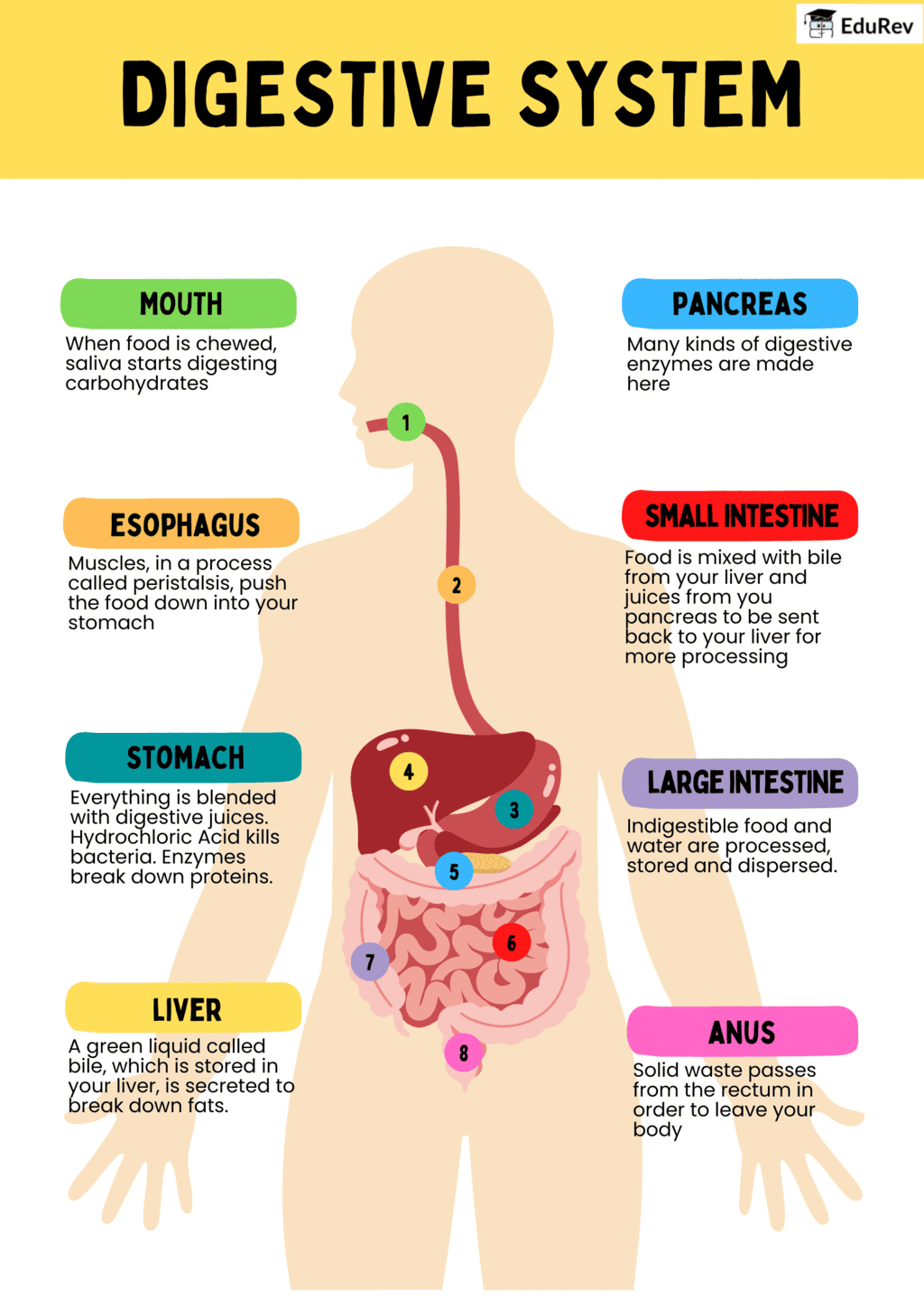
- Human Digestive System: Breaks down carbohydrates (amylase), proteins (pepsin, trypsin), fats (lipase); small intestine absorbs nutrients.
- Nutritional Disorders: Malnutrition, obesity due to imbalanced diet.
Also read: Visual Worksheet: Digestive System Antatomy |
Respiration
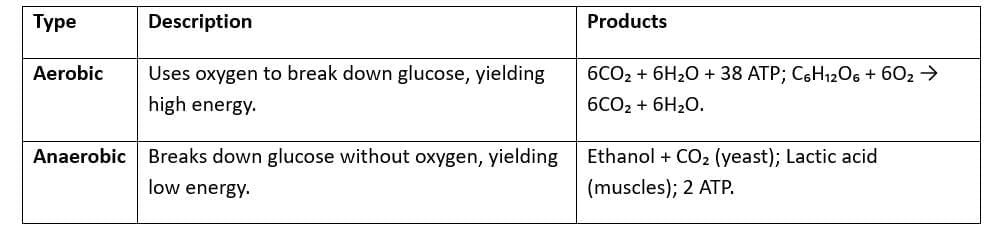
- Human Respiration: Involves nasal cavity, trachea, lungs; alveoli facilitate gas exchange (O₂ in, CO₂ out).
- Plant Respiration: Occurs in mitochondria; uses glucose, releases CO₂; occurs day and night.
- Energy Role: ATP powers cellular processes (e.g., muscle contraction, active transport).
Transportation
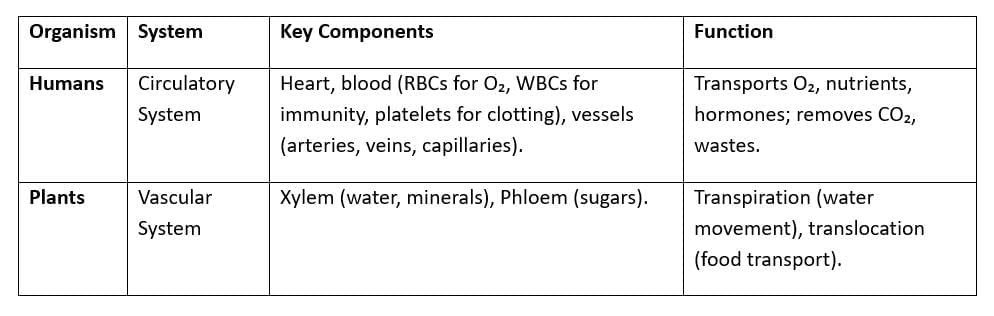
- Human Circulation: Double circulation; pulmonary (lungs for oxygenation), systemic (body); heart has four chambers.
- Plant Transport: Xylem moves water via transpiration pull; phloem translocates sugars via pressure flow.
- Blood Components: Plasma (water, proteins), hemoglobin in RBCs binds O₂.
| Attention! Sale expiring soon, act now & get EduRev Infinity at 40% off! | Claim Offer |
Excretion
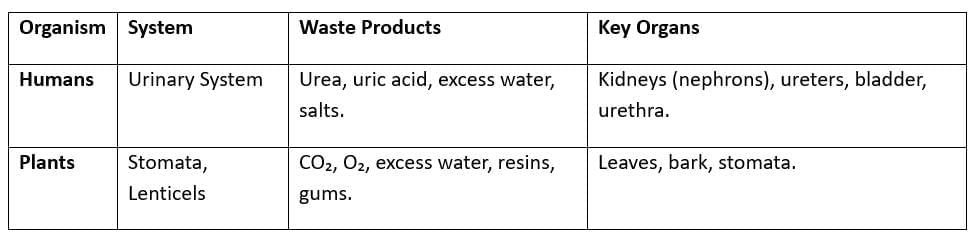
- Human Excretion: Nephrons filter blood, reabsorb water/nutrients, form urine; kidneys regulate water, electrolyte balance.
- Plant Excretion: CO₂, O₂ via stomata; wastes stored in leaves, shed as litter.
- Excretory Disorders: Kidney stones, uremia due to kidney failure.
Also read: Visual Worksheet: Digestive System Antatomy |
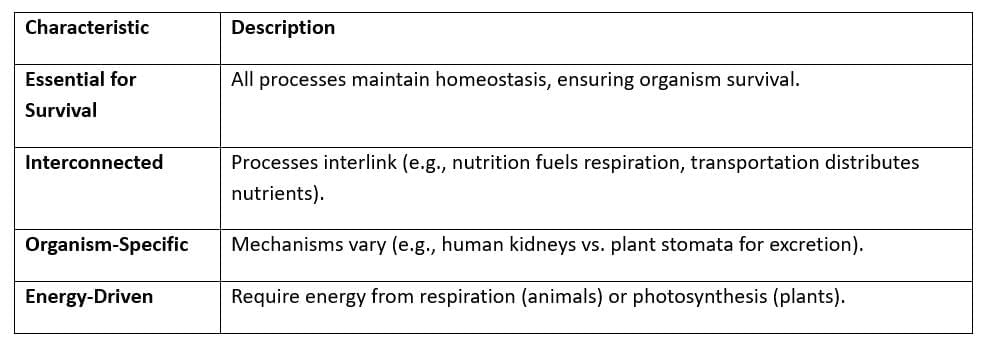
Key Characteristics of Life Processes
NCERT Based Activity
Activity 5.1: Demonstrating that Chlorophyll is Essential for Photosynthesis
Procedure
- Take a potted plant with variegated leaves (for example, a money plant or croton) so that the same leaf has both green and non-green areas.
- Keep the plant in a dark room for three days to deplete stored starch in the leaves.
- Expose the plant to sunlight for about six hours.
- Pluck a leaf and mark the green (chlorophyll-containing) areas with a marker and trace the leaf on paper to record the original pattern.
- Boil the leaf in water for a few minutes to soften the tissues and stop metabolic activity.
- Place the leaf in a beaker containing alcohol (ethanol) and heat the beaker in a water bath until the alcohol boils; this decolourises the leaf by removing chlorophyll.
- Rinse the leaf in warm water to soften any remaining alcohol and then place a few drops of dilute iodine solution on the leaf to test for starch.
Observations
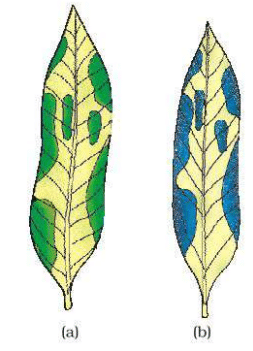
- After boiling in alcohol the leaf becomes pale or colourless as chlorophyll has been extracted; the alcohol turns green because it dissolved chlorophyll.
- On adding iodine, the areas that were originally green (and marked) turn blue-black, showing the presence of starch. The non-green areas remain pale or light brown, showing little or no starch.
Explanation
- Chlorophyll is the green pigment in leaves that captures light energy required for photosynthesis. Photosynthesis uses light energy to convert carbon dioxide and water into glucose. Excess glucose is stored as starch in chlorophyll-containing areas.
- The iodine test detects starch because iodine forms a blue-black complex with starch molecules (amylose). Areas without chlorophyll cannot carry out photosynthesis and therefore do not accumulate starch.
Conclusion
- Starch is produced only in the green parts of the leaf that contain chlorophyll. This confirms that chlorophyll is essential for photosynthesis because it absorbs sunlight needed to form glucose (stored as starch).
Activity 5.2: Demonstrating that Carbon Dioxide is Essential for Photosynthesis
Procedure
- Take two healthy potted plants of similar size and keep them in a dark room for three days to reduce stored starch.
- Place each plant on a glass plate. Place a watch-glass containing potassium hydroxide (KOH) next to one plant; KOH absorbs carbon dioxide from the air.
- Cover each plant with a separate bell-jar and seal the base of each jar to the glass plate with petroleum jelly (Vaseline) to make the setup airtight.
- Keep both assemblies in sunlight for about two hours.
- Pluck a leaf from each plant and perform the iodine test for starch (boil in water, decolourise in alcohol, and treat with iodine) and compare the results.
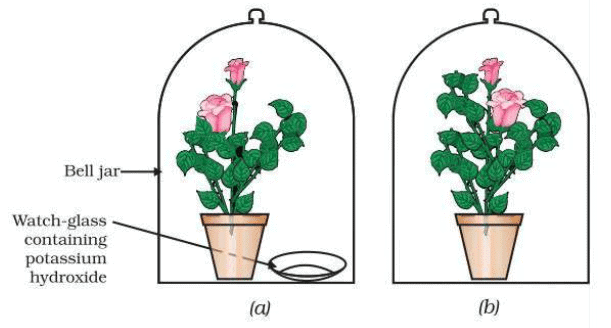
Observations
- The leaf from the plant without KOH (exposed to atmospheric CO₂) turns blue-black with iodine, indicating starch formation.
- The leaf from the plant kept with KOH (CO₂ absorbed) remains pale or light brown with iodine, indicating little or no starch.
Explanation
- Potassium hydroxide (KOH) reacts with and removes carbon dioxide from the air inside the bell-jar, so the plant under that jar has no CO₂ available for photosynthesis.
- Photosynthesis requires carbon dioxide as a raw material. Without CO₂, the plant cannot produce glucose and hence cannot form starch.
Conclusion
- Carbon dioxide is essential for photosynthesis. Plants with access to CO₂ produce starch; plants deprived of CO₂ do not.
| Get additional INR 200 off today with EDUREV200 coupon. | Avail Offer |
Activity 5.3: Investigating the Action of Saliva on Starch
Procedure
- Prepare two test tubes (A and B) each containing 1 mL of 1% starch solution.
- Add 1 mL of fresh saliva to test tube A; leave test tube B as a control (no saliva).
- Allow both tubes to stand undisturbed for 20-30 minutes at room temperature.
- Add a few drops of dilute iodine solution to each test tube and observe any colour change.
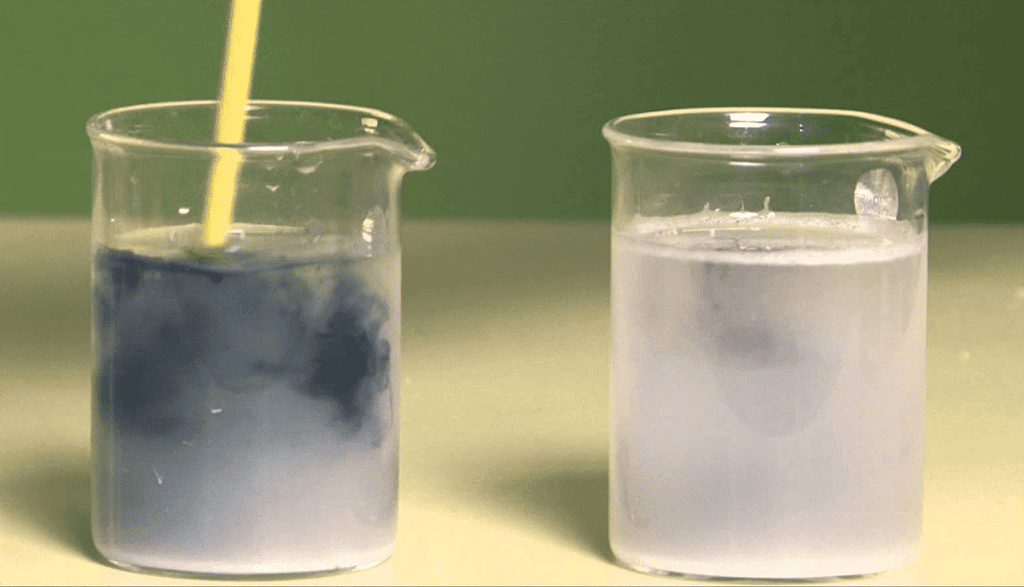
Observations
- Test tube A (with saliva) shows little or no blue-black colour with iodine (remains faint or light), indicating that most starch has been broken down.
- Test tube B (no saliva) turns blue-black with iodine, indicating the presence of undigested starch.
Explanation
- Human saliva contains the enzyme salivary amylase (ptyalin), which catalyses the hydrolysis of starch into simpler sugars such as maltose.
- When starch is broken down, it no longer gives a blue-black colour with iodine; hence the tube with saliva shows reduced or no colour change.
Conclusion
- Saliva contains an enzyme that initiates carbohydrate digestion in the mouth by breaking down starch into simpler sugars. The disappearance of the iodine-starch colour confirms starch digestion by saliva.
Activity 5.4: Comparing the Amount of Carbon Dioxide in Exhaled Air
Procedure
- Prepare fresh lime water (a clear solution of calcium hydroxide).
- Blow air gently through a straw into the lime water and note the time taken for the solution to become milky.
- In another test tube with fresh lime water, pass ambient air (from the room) through the solution using a syringe or pichkari and note the time taken for any milky appearance.
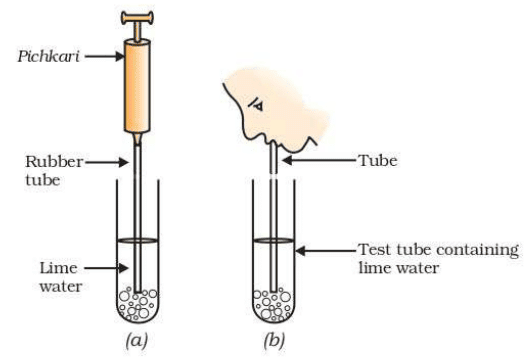
Observations
- The lime water turns milky much faster when exhaled air is blown through it (often within a few seconds) compared with ambient air passed through by syringe (which may take much longer or show little change).
Explanation
- Exhaled air contains a higher concentration of carbon dioxide (CO₂) produced by cellular respiration in the body.
- CO₂ reacts with calcium hydroxide in lime water to form calcium carbonate, a white precipitate, which makes the solution appear milky: Ca(OH)₂ + CO₂ → CaCO₃ + H₂O.
Conclusion
- Human exhaled air has more carbon dioxide than ambient air. This demonstrates that respiration produces CO₂ as a waste product.
Also watch: Different Types of Life Processes |
Activity 5.5: Investigating the Products of Fermentation in Yeast
Procedure
- Mix fruit juice or a sugar solution with baker's yeast in a test tube and fit the tube with a one-holed cork.
- Attach a bent glass tube through the cork so that the free end of the bent tube is dipped into a test tube containing freshly prepared lime water.
- Leave the setup at room temperature and observe any changes in the lime water; note the time taken for change.
Observations
- After some time the lime water turns milky, indicating the release of carbon dioxide gas from the yeast culture.
Explanation
- Yeast cells can perform anaerobic respiration (fermentation) in the absence of oxygen. During fermentation glucose is converted into ethanol and carbon dioxide:
- Glucose → Ethanol + Carbon dioxide (C₆H₁₂O₆ → 2 C₂H₅OH + 2 CO₂)
Conclusion
- Fermentation by yeast produces ethanol and carbon dioxide. The formation of calcium carbonate in lime water confirms CO₂ is a product of fermentation.
Activity 5.6: Observing the Breathing Mechanism in Fish
Procedure
- Observe fish in an aquarium and note the opening and closing movements of their mouths and the opercula (gill covers).
- Check whether the movements of the mouth and operculum are coordinated (usually they are).
- Count how many times the fish opens and closes its mouth in one minute and compare with a human breathing rate measured per minute.
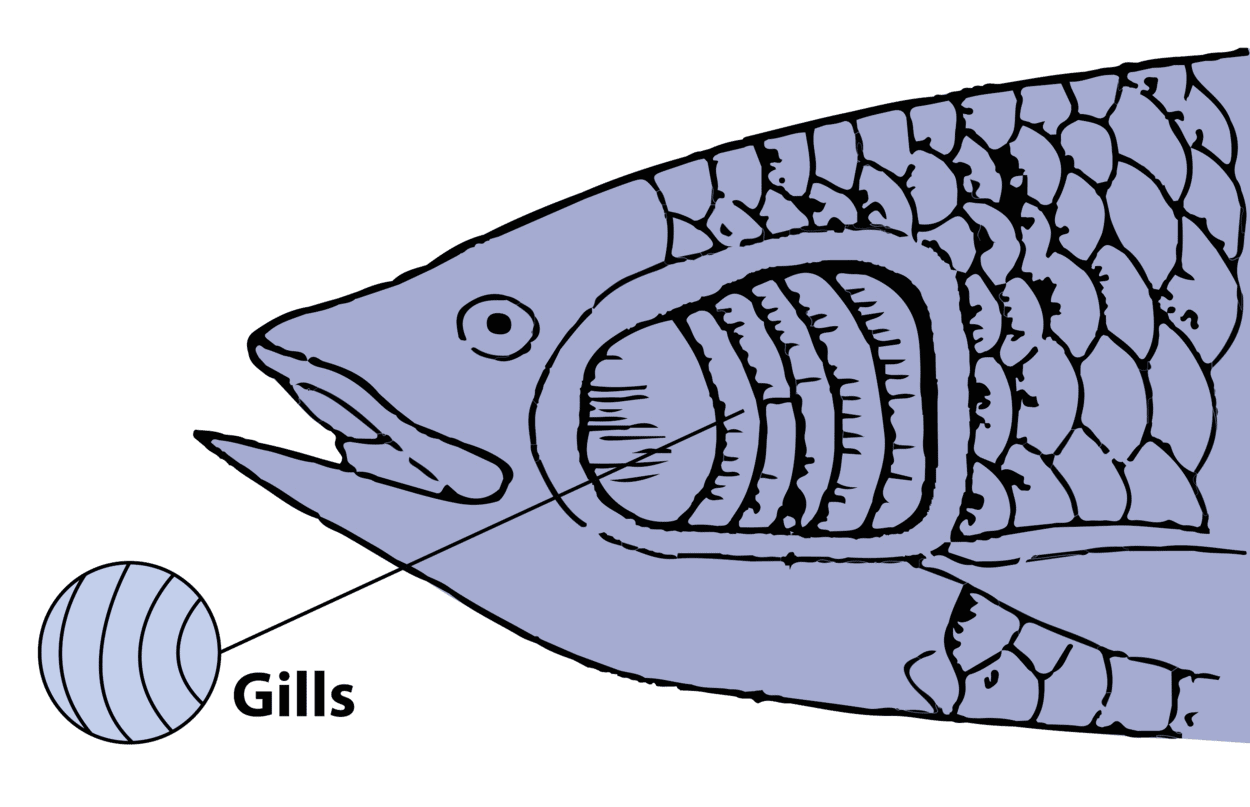
Observations
- The fish's mouth and opercula open and close in a coordinated manner so that water enters the mouth and exits over the gills.
- Many fish may open and close their mouths rapidly (for example, 50-100 times per minute), which is substantially higher than the typical human breathing rate (about 12-20 breaths per minute).
Explanation
- Fish extract dissolved oxygen from water using gills. Water flows over gill filaments where oxygen diffuses into blood and carbon dioxide diffuses out.
- Because dissolved oxygen concentration in water is lower than in air, fish often maintain a higher water flow rate (reflected in rapid mouth and operculum movements) to meet their oxygen needs.
Conclusion
- Fish breathe by passing water over gills; coordinated mouth and operculum movements ensure continuous water flow and efficient gas exchange.
| Attention! Sale expiring soon, act now & get EduRev Infinity at 40% off! | Claim Offer |
Activity 5.7: Investigating Haemoglobin Content in Humans and Animals
Procedure
- Visit a health centre to record the normal haemoglobin ranges reported for humans, noting differences between children, adults, men, and women.
- Visit a veterinary clinic to obtain the normal haemoglobin range for an animal such as a buffalo or cow, noting differences for calves, males, and females if available.
- Compare and discuss reasons for observed differences in haemoglobin levels between humans and animals and among different age or sex groups.
Observations
- Humans: Typical haemoglobin ranges (approximate):
- Men: 13.5-17.5 g/dL
- Women: 12.0-15.5 g/dL
- Children: 11.0-13.0 g/dL (varies with age)
- Animals (e.g., buffalo/cow): Typical range: ~10.0-15.0 g/dL (varies by species, age and sex). Calves may have slightly lower values.
- Human males generally show higher haemoglobin values than females due to hormonal influences (testosterone promotes red blood cell production) and physiological differences such as menstruation in females.
Explanation
- Haemoglobin is the iron-containing pigment in red blood cells that binds and transports oxygen. Its concentration varies with metabolic rate, body size, age, sex and health status.
- Animals with different activity levels, metabolic demands and body sizes will have haemoglobin levels suited to their oxygen transport needs.
Conclusion
- Haemoglobin levels differ between species and within species (age and sex) according to physiological requirements. Human males typically have higher haemoglobin than females; animals such as cows show slightly different typical ranges reflecting their metabolic demands.
Activity 5.8: Demonstrating Transpiration in Plants
Procedure
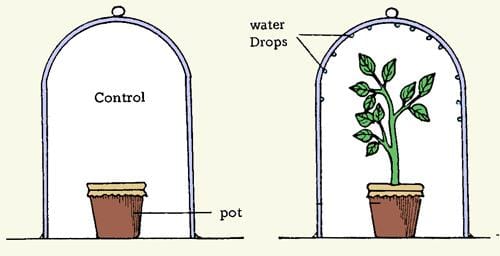
- Take two small pots containing equal amounts of soil. Plant a small potted plant in one pot; place a bare stick of similar height in the other pot.
- Cover the soil surface in both pots with a plastic sheet to prevent evaporation directly from the soil.
- Cover each whole setup (plant and stick) with a transparent plastic sheet or polythene and place both in bright sunlight for 30 minutes.
- Observe the inner surfaces of the plastic covers for water droplets.
Observations
- The plastic covering the plant shows numerous water droplets on its inner surface, indicating moisture loss from the plant.
- The plastic covering the stick shows little or no water droplets because there is no transpiration from a stick.
Explanation
- Transpiration is the loss of water vapour from plant surfaces (mainly leaves) through openings called stomata. Water absorbed by roots moves upwards through xylem vessels and evaporates from mesophyll cells into the atmosphere via stomata.
- Water droplets on the plastic are condensed transpired vapour. Covering the soil removes evaporation from the soil as a variable, isolating water loss from the plant itself.
Conclusion
- Plants lose water by transpiration through their leaves. Transpiration helps in the upward movement of water and dissolved minerals and also cools the plant.
Also watch: Different Types of Life Processes |
Designing an Experiment to Demonstrate Sunlight is Essential for Photosynthesis
Procedure
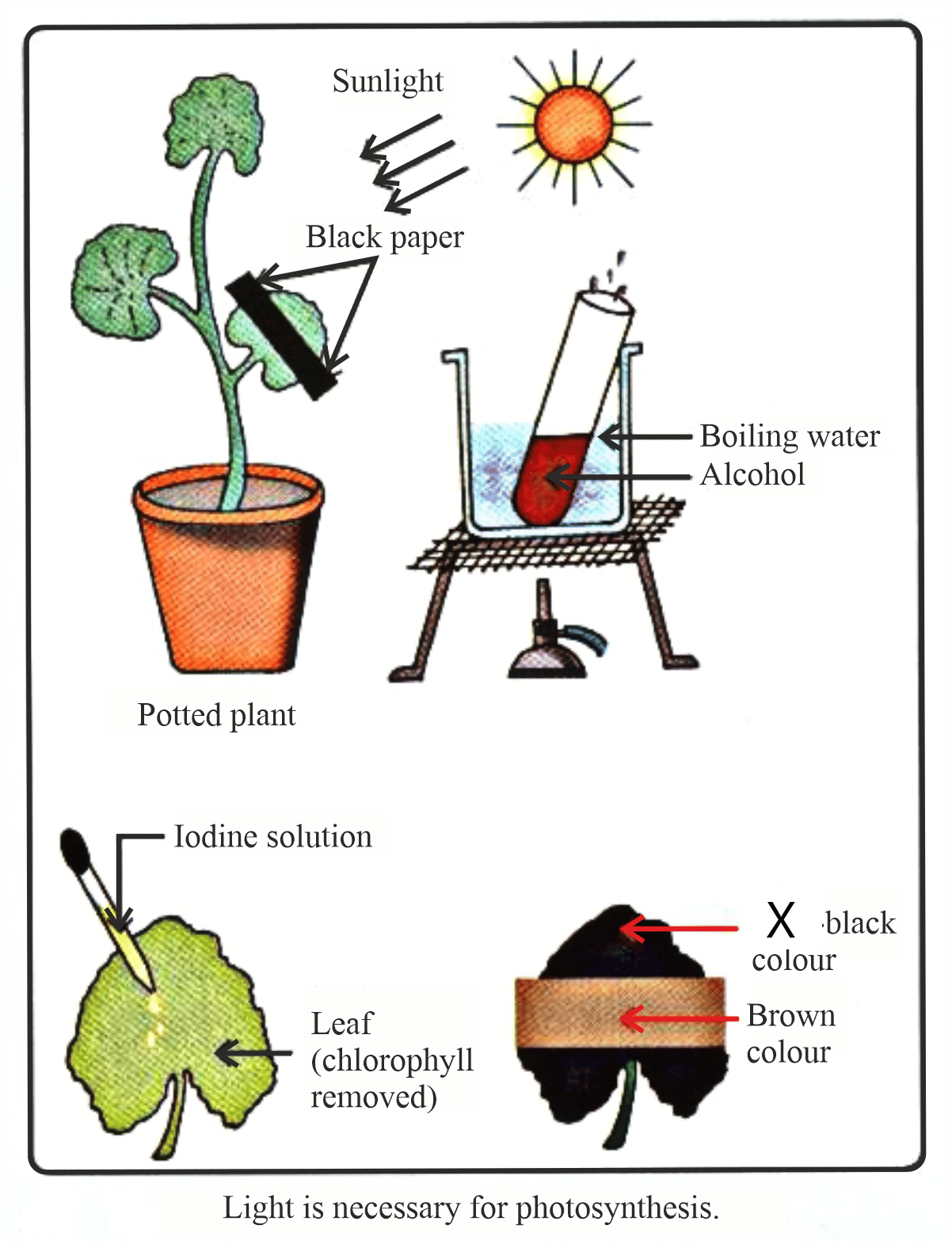
- Take two healthy potted plants of similar size and keep them in the dark for three days to deplete starch reserves.
- Place one plant in bright sunlight and keep the other in complete darkness (for example, in a dark room or covered with an opaque box) for 6-8 hours.
- Pluck a leaf from each plant and carry out the iodine test for starch: boil the leaves in water, decolourise in alcohol by heating in a water bath, rinse and then add dilute iodine solution.
Expected Observations
- The leaf from the plant kept in sunlight will turn blue-black with iodine, showing starch formation.
- The leaf from the plant kept in darkness will remain pale or light brown with iodine, indicating little or no starch formation.
Explanation and Conclusion
- Sunlight provides the energy required for the light reactions of photosynthesis. Without light, the plant cannot produce glucose and therefore cannot synthesise and store starch.
- This experiment demonstrates that sunlight is essential for photosynthesis, because only leaves exposed to light produce and store detectable amounts of starch.
Infographics: Digestive System
Assignment:
A. Multiple Choice Questions (MCQs)
Q1: What is the primary function of the alveoli in the lungs?
(a) To produce oxygen
(b) To absorb water
(c) To exchange gases
(d) To filter blood
Ans: (c) To exchange gases
The alveoli are responsible for the exchange of oxygen and carbon dioxide between the air and the blood in the lungs.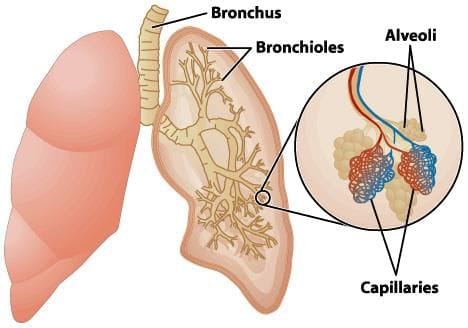
Q2: Which of the following processes is involved in autotrophic nutrition?
(a) Absorption of complex food materials
(b) Breakdown of glucose in the cytoplasm
(c) Synthesis of carbohydrates from CO2 and water
(d) Breakdown of proteins into amino acids
Ans: (c) Synthesis of carbohydrates from CO2 and water
Autotrophic nutrition involves the process of photosynthesis, where plants convert carbon dioxide and water into carbohydrates using sunlight.
Q3: What is the role of guard cells in plants?
(a) To regulate the opening and closing of stomata
(b) To absorb water from the soil
(c) To perform photosynthesis
(d) To store food
Ans: (a) To regulate the opening and closing of stomata
Guard cells control the opening and closing of stomatal pores, regulating gas exchange and water loss in plants.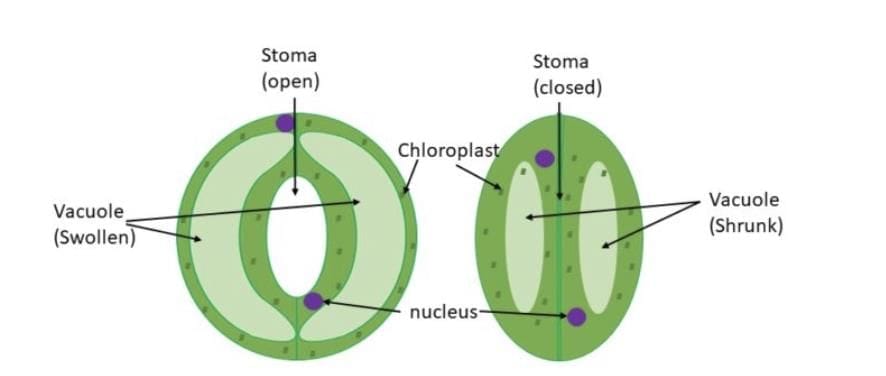
Q4: Which of the following is a waste product of aerobic respiration?
(a) Oxygen
(b) Glucose
(c) Carbon dioxide and water
(d) Lactic acid
Ans: (c) Carbon dioxide and water
Aerobic respiration breaks down glucose with oxygen to produce carbon dioxide, water, and a large amount of energy in the form of ATP.
Q5: What is the main function of the human heart?
(a) To produce oxygen
(b) To pump blood throughout the body
(c) To digest food
(d) To filter waste
Ans: (b) To pump blood throughout the body
The heart's primary function is to pump oxygenated blood to various organs and tissues, and deoxygenated blood to the lungs.
B. Short Question/Answer (Q&A)
Q1: What is the role of enzymes in the digestion process?
Ans: Enzymes are biological catalysts that speed up the breakdown of complex food molecules into simpler substances, allowing the body to absorb nutrients effectively.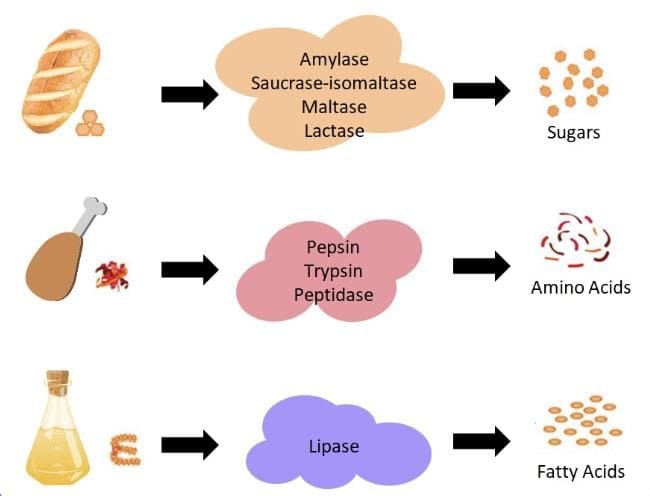
Q2: How does the respiratory system in human beings help in gas exchange?
Ans: The respiratory system facilitates gas exchange by taking in oxygen through the lungs and expelling carbon dioxide from the body. Oxygen enters the blood in the alveoli, and carbon dioxide is removed during exhalation.
Q3: Explain the importance of chlorophyll in photosynthesis.
Ans: Chlorophyll absorbs sunlight, which is essential for the process of photosynthesis. It helps convert light energy into chemical energy, which plants use to make their food from carbon dioxide and water.
Q4: What is the function of the kidneys in human beings?
Ans: The kidneys filter waste products, such as urea and excess salts, from the blood to form urine, which is then excreted from the body. They also regulate water and electrolyte balance.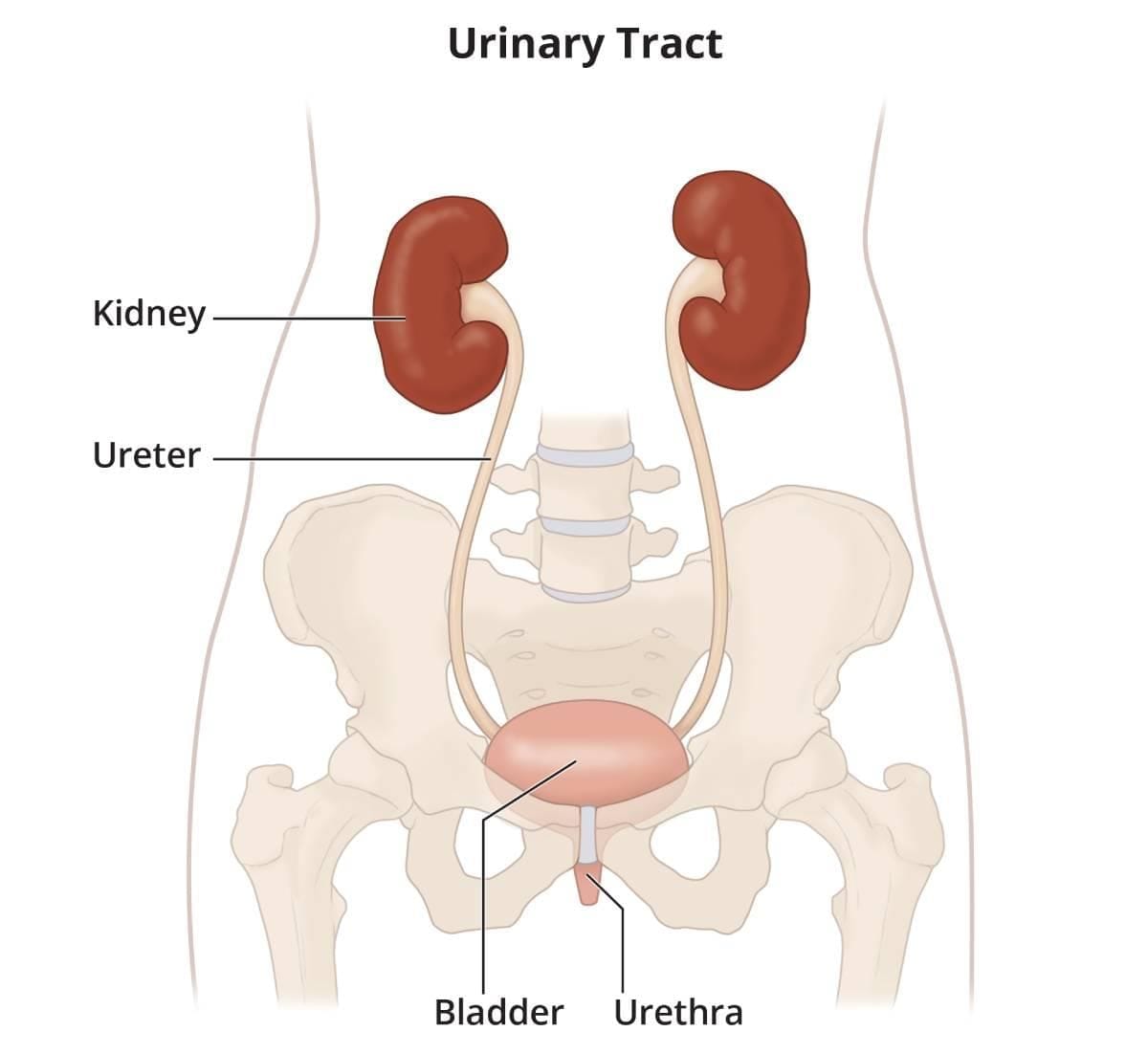
Q5: Describe the process of transpiration in plants.
Ans: Transpiration is the process where water is lost as vapor from the aerial parts of plants, primarily through the stomata. It helps in the movement of water and minerals from the roots to the leaves and also aids in temperature regulation.

Get additional INR 200 off today with EDUREV200 coupon. Avail Offer
| Get additional INR 200 off today with EDUREV200 coupon. | Avail Offer |
C. Activity-Based Questions
Q1: After conducting the starch test on a variegated leaf, what conclusions can you draw about the role of chlorophyll in photosynthesis?
Ans: The starch test shows that only the green areas of the leaf, where chlorophyll is present, are able to produce starch through photosynthesis. This confirms that chlorophyll is essential for the process of photosynthesis.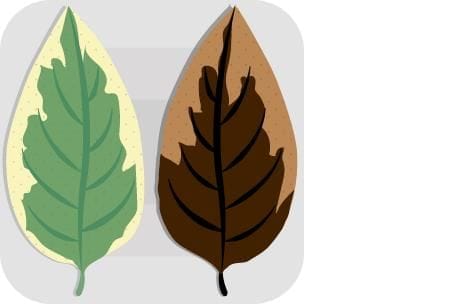
Q2: Explain the results of the experiment involving potassium hydroxide and its effect on photosynthesis in plants.
Ans: The plant in the bell jar with potassium hydroxide showed less starch production compared to the plant without potassium hydroxide, as potassium hydroxide absorbs carbon dioxide, preventing photosynthesis from occurring.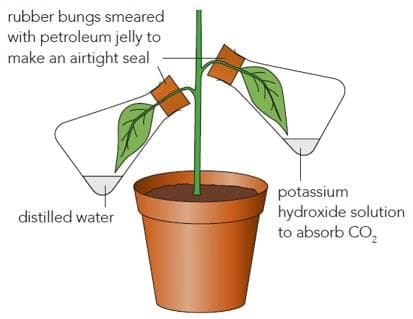 This experiment demonstrates the importance of carbon dioxide in photosynthesis.
Also read: Practice Questions: Transportation in Plants |
D. Research-Based Question
Q1: Research and explain the role of haemoglobin in human blood by analysing its function in oxygen and carbon dioxide transport. Why is haemoglobin essential for efficient respiration, and what physiological changes occur in the body when its level becomes deficient?
Ans: Haemoglobin is an iron-containing respiratory pigment present in red blood cells. It has a high affinity for oxygen, enabling it to pick up oxygen in the lungs (where oxygen concentration is high) and release it in body tissues (where oxygen concentration is low).
This property ensures continuous aerobic respiration in cells. Haemoglobin also assists in transporting carbon dioxide, as part of it binds with CO₂ to form carbamino-haemoglobin, which is carried back to the lungs for exhalation.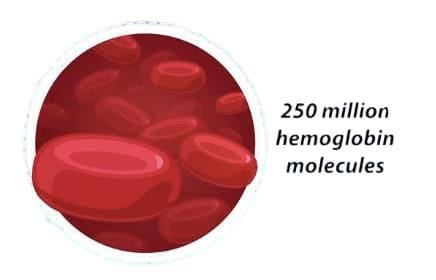
Deficiency of haemoglobin reduces the blood's oxygen-carrying capacity, leading to a condition called anaemia. Physiological effects include fatigue, pale skin, shortness of breath, dizziness, and reduced stamina because body cells receive less oxygen, lowering energy production through respiration. In severe cases, prolonged oxygen deficiency may affect organ function.
| Attention! Sale expiring soon, act now & get EduRev Infinity at 40% off! | Claim Offer |
E. Think & Explain
Q1: Imagine you are a plant. How would you get the energy you need to survive, and what processes would take place inside you to provide the energy required for growth and reproduction?
Ans: As a plant, I get the energy I need to survive through a process called photosynthesis. Here's how it works:
Absorbing Sunlight: I take in sunlight through my leaves, which contain a green pigment called chlorophyll. Chlorophyll helps me absorb light energy from the sun.
Making Food: With the help of chlorophyll, I convert carbon dioxide from the air and water from the soil into glucose (a type of sugar) using the energy from the sunlight. This process is called photosynthesis. The chemical reaction looks like this:
6CO₂ + 6H₂O + light energy → C₆H₁₂O₆ (glucose) + 6O₂
Storing and Using Energy: The glucose I produce is used as a source of energy. Some of it is used immediately for growth, reproduction, and carrying out basic life functions. Any extra glucose is stored in my roots, stems, or fruits for future use.
Respiration: I also carry out respiration, a process where I break down the glucose to release energy. During respiration, oxygen is used to break down glucose, and the energy released is used for various life processes like growth, repair, and reproduction. The process is as follows:
C₆H₁₂O₆ + 6O₂ → 6CO₂ + 6H₂O + energy (ATP)
This energy helps me perform vital functions such as growing taller, producing flowers and fruits, and maintaining my overall health.
| Test: Respiration - 2 | Start Test |
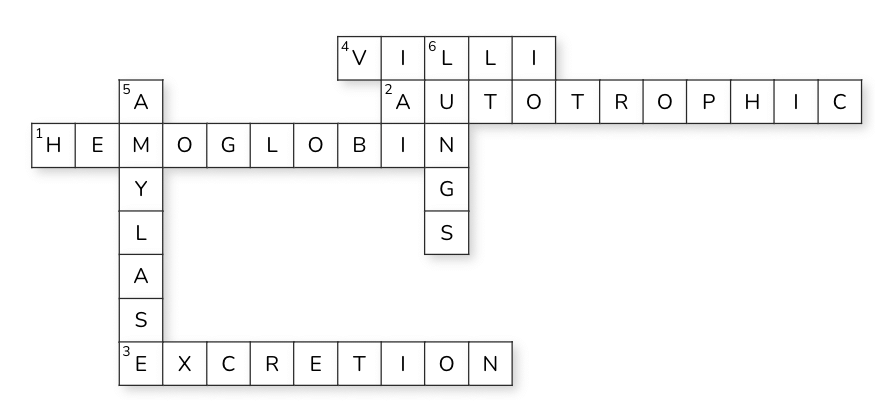
F. Crossword Puzzle
Q: Fill in the Crossword with the correct answers using the following hints.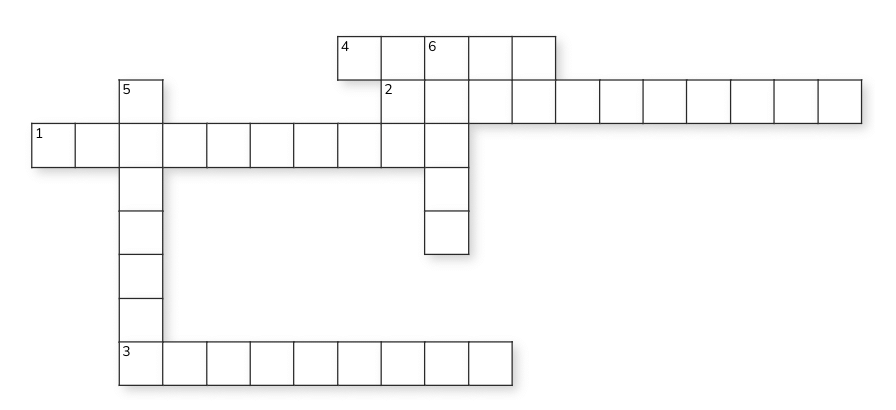
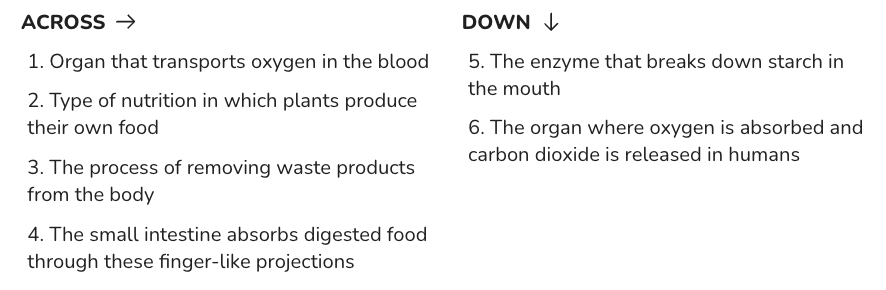
Ans:
Lab Manual: CO2 is Released During Respiration
Objective
To show that carbon dioxide (CO2) is released during the process of respiration.
Theory and Principle
Respiration is a biochemical process by which organisms obtain energy by oxidising organic molecules. It is a catabolic process because large molecules are broken down into smaller units with the release of energy that is stored mainly as ATP (adenosine triphosphate). Respiration in living organisms occurs in two principal forms:
- Aerobic respiration
- Anaerobic respiration
Aerobic Respiration
Aerobic respiration takes place in the presence of oxygen. Glucose (or other carbohydrates) is completely oxidised to produce carbon dioxide, water and a relatively large amount of energy (ATP).
The overall reaction for aerobic respiration is represented below:

Anaerobic Respiration (Fermentation)
Anaerobic respiration occurs when oxygen is absent or insufficient. Incomplete oxidation of glucose takes place and products such as ethanol (in yeast) or lactic acid (in muscle) are formed along with a small amount of energy and carbon dioxide (in some types of fermentation).
An example equation for alcoholic fermentation is shown:

In this experiment actively respiring material is required. Germinating gram seeds are used because germination involves rapid metabolic activity and high rates of respiration. The CO2 released by the germinating seeds can be detected by two reliable methods:
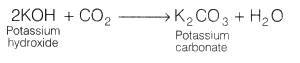
- Absorption of CO2 by potassium hydroxide (KOH), forming potassium carbonate (K2CO3) and water, which reduces the gas pressure inside the container.
- Change in appearance of lime water (or change of colour of an acid-base indicator) when CO2 dissolves in water to form carbonic acid; lime water turns milky due to formation of calcium carbonate.
Chemical equations involved:
- Absorption by KOH: 2KOH + CO2 → K2CO3 + H2O
- Reaction with lime water (Ca(OH)2): CO2 + Ca(OH)2 → CaCO3 (white precipitate) + H2O
| Get additional INR 200 off today with EDUREV200 coupon. | Avail Offer |
Method 1
Materials Required
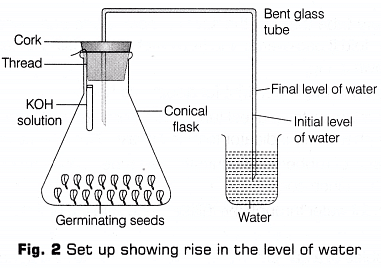
- Conical flask
- Soaked and germinating seeds of gram (30-40 seeds)
- Freshly prepared 20% KOH (potassium hydroxide) solution in a small test tube
- Vaseline (petroleum jelly)
- U-shaped delivery tube (a tube bent twice at right angles)
- Moist cloth, cotton, wool or blotting paper
- Water and a beaker
- Thread to suspend the KOH tube
- Rubber cork with one hole
- Clamp and stand (optional) and a marker to mark initial water level
Procedure
- Soak about 30-40 gram seeds in water and allow them to germinate by keeping them on moist cotton, wool or blotting paper for 2-5 days. Germinating seeds show a whitish outgrowth (radicle).
- Transfer the germinating seeds into a dry conical flask and add a few drops of water to keep them moist.
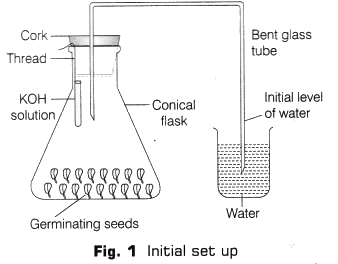
- Prepare a fresh 20% solution of KOH in a small test tube and suspend this tube inside the conical flask above the seeds using a thread. Ensure the KOH tube does not touch the seeds.
- Close the mouth of the conical flask using a rubber cork with one hole. Pass one end of the U-shaped delivery tube through the hole so that the other end is immersed in a beaker containing water.
- Seal all joints and the cork with a thin smear of vaseline to make the apparatus airtight.
- Mark the initial level of water in the delivery tube and leave the setup undisturbed for 1-2 hours.
- After the period, observe the level of water in the U-shaped delivery tube and record any change.
Observations
- After about 1-2 hours the level of water in the delivery tube immersed in the beaker rises above the initial marked level.
- The rise in water level is due to removal of CO2 by KOH. The seeds respire and release CO2; when KOH absorbs CO2 the amount of gas inside the flask decreases, producing a partial vacuum and causing water to be drawn into the flask through the delivery tube.
Also read: Lab Manual: Light is Necessary for Photosynthesis |
Method 2
Materials Required
- Germinating gram seeds (about 20)
- Boiling tube or similar gas-tight container
- Lime water (or phenol red indicator solution as an alternative)
- Vaseline (petroleum jelly)
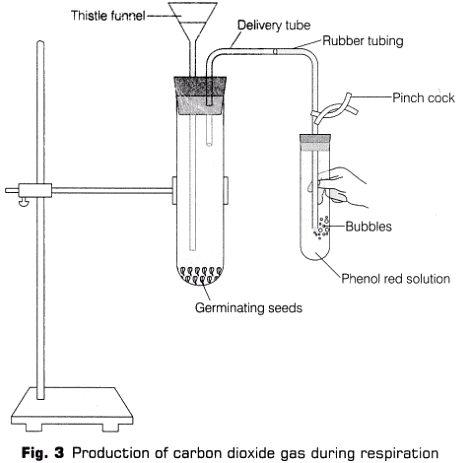
- Thistle funnel
- Delivery tube and rubber tubing
- Rubber cork with two holes
- Clamp and stand
- Test tube for indicator
Procedure
- Place about twenty germinating seeds in a boiling tube containing a small quantity of water so that the seeds remain moist.
- Fit a rubber cork with two bores to the mouth of the boiling tube and seal the junctions with vaseline to make the set-up airtight.
- Insert a thistle funnel through one bore so that its lower end dips in the water inside the tube. The funnel allows addition of water without opening the setup.
- Pass a delivery tube through the second bore and attach rubber tubing to its free end. Make a loop and fit a pinch-cock (or clamp) to control gas flow. Fix the boiling tube on a stand if available.
- Place the setup in bright light or at room temperature for about one hour to allow active respiration.
- Prepare the indicator: take about 1 mL of water in a test tube and add two drops of phenol red indicator; note the initial colour (phenol red is pink/red in neutral/alkaline solution and yellow in acidic).
- Dip the free end of the rubber tubing into the test tube containing the indicator and open the pinch-cock to allow gas to bubble into the indicator.
- Pour a few millilitres of water through the thistle funnel into the boiling tube to displace the air and drive any evolved gas through the delivery tube into the indicator solution.
- Observe bubbles of gas entering the indicator solution, shake the indicator test tube and note any colour change.
Observations
When the gas evolved by germinating seeds passes into the phenol red indicator, the indicator changes from pink (neutral/alkaline) to pale yellow (acidic). This indicates the presence of an acidic gas - carbon dioxide - dissolving in water to form carbonic acid, which lowers the pH.
Result
The germinating seeds of gram perform active respiration and release CO2. This is confirmed by:
- The rise in the water level in the U-shaped delivery tube in Method 1 due to absorption of CO2 by KOH and the resulting pressure change.
- The change in colour of phenol red indicator from pink to pale yellow (or the turning milky of lime water) in Method 2 when CO2 is bubbled through.
Thus respiration in germinating seeds releases carbon dioxide.
| Attention! Sale expiring soon, act now & get EduRev Infinity at 40% off! | Claim Offer |
Precautions and Safety
- Germinating seeds must be kept moist throughout the experiment to maintain active respiration.
- Ensure all joints and seals are airtight so that gas does not leak from the apparatus; use vaseline sparingly to seal corks and tube connections.
- Prepare the KOH solution fresh and handle it with care; KOH is corrosive and can cause chemical burns. Use gloves and eye protection and avoid skin contact.
- The end of the delivery tube in the beaker (Method 1) or in the indicator test tube (Method 2) should remain completely immersed to avoid drawing in air or losing gas.
- Lime water should be freshly prepared and handled carefully to avoid contamination; discard chemical wastes according to school laboratory rules.
- Do not open the apparatus suddenly; allow pressure to equalise before dismantling to avoid splashing of reagents.
Also read: Lab Manual: Light is Necessary for Photosynthesis |
Notes and Explanation
The experiment demonstrates respiration in plant material (germinating seeds). Germination requires energy to support growth, so the rate of cellular respiration is high. In an enclosed container the CO2 produced would normally accumulate, but in Method 1 the CO2 is chemically removed by KOH. This removal reduces the total gas volume (or partial pressure) inside the container, so external water is drawn into the flask through the delivery tube; the change in water level is therefore indirect evidence of CO2 production. In Method 2 the CO2 is passed into an indicator; the acid produced by dissolved CO2 causes the colour change, giving a direct chemical indication of CO2.
Both methods are simple, reliable and recommended for school laboratory demonstration of the release of carbon dioxide during respiration.
: