

About the Poet
Robin McMaugh Klein, born on February 28, 1936, in Kempsey, Australia, is known as a children's author who infused depth into her poems. Despite starting with odd jobs like being a tea lady and nurse, she found her passion for writing early, publishing her first poem at sixteen. Winning the Literature Board Grant in 1989 spurred her to publish around twenty books, including the acclaimed "Amanda." Her works, such as "Hating Alison Ashley" and "Came Back to Show you I Could Fly," received awards and were adapted into movies, achieving bestseller status in Australia

Key Points of the Poem
- The poem depicts Amanda enduring her mother's constant criticism for various faults like nail-biting and laziness.
- Amanda daydreams of escaping into the serene life of a mermaid or the solitary existence of Rapunzel.
- Her mother's reprimands extend to chores, diet, and behavior, leaving Amanda feeling suffocated.
- She imagines freedom as an orphan, longing for the simplicity of footprints in the sand.
- However, the mother's persistent nagging eventually crushes Amanda's spirit, leaving her unable to find solace even in her dreams
Try yourself: What is the main theme of Robin Klein's poem?
The poem "Amanda!" highlights how Amanda is constantly instructed, corrected, and warned by an adult (most likely her mother). This continuous nagging creates a restrictive and suffocating environment for her. To escape from this pressure, Amanda retreats into her imagination-imagining herself as a mermaid, an orphan, or Rapunzel-where she feels free.
 | Get additional INR 200 off today with EDUREV200 coupon. | Avail Offer |
Detailed Summary
Don't bite your nails, Amanda !
Don't hunch your shoulders, Amanda !
Stop that slouching and sit up straight,
Amanda !
In this stanza, Amanda is receiving criticism, from her mother, for habits like nail-biting and slouching with her shoulders bent. The instructions are delivered in a stern manner, lacking any warmth or friendliness, which leaves Amanda feeling confused and disconnected. The tone of the instructions feels harsh and authoritative, making it difficult for Amanda to understand their purpose or significance. This lack of empathy and understanding exacerbates Amanda's sense of frustration and alienation, as she struggles to comprehend why her behavior is being criticized so harshly.
There is a languid, emerald sea,
where the sole inhabitant is me-
a mermaid, drifting blissfully.
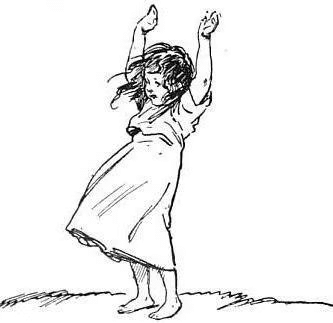
Amanda retreats into imagination as a defence against constant instructions. She pictures a calm green sea (described as "emerald") where she alone exists, free of rules or reprimand. The mermaid image suggests bodily ease and graceful movement; "drifting blissfully" shows how comforting solitude would feel to her. This daydream contrasts sharply with the controlling voice of the parent and shows that Amanda seeks peace rather than conflict.
Did you finish your homework, Amanda ?
Did you tidy your room, Amanda ?
I thought I told you to clean your shoes,
Amanda!
Now, Amanda is being questioned about completing her homework, tidying her room, and cleaning her shoes. This series of instructions represents a change from the previous stanza. Her name is called out again, this time with an exclamation mark, indicating that her parents are becoming increasingly frustrated and agitated. The shift in tone suggests that their patience is wearing thin, and they are troubled by Amanda's apparent neglect of her responsibilities. This escalation in their tone and manner of addressing Amanda reflects their growing frustration and perhaps a sense of urgency for her to comply with their demands.
I am an orphan, roaming the street.
I Pattern soft dust with my hushed, bare feet.
The silence is golden, the freedom is sweet.'
Don't eat the chocolate, Amanda !
Remember your acne, Amanda !
Will you please look at me when I'm speaking to you
Amanda !

Amanda is again lost into her own world. After getting a fresh list of instructions from her parents, she wishes to be away from this daily routine life. Amanda perceives herself as an orphan roaming on the streets, moving aimlessly without any purpose. She seems happy as she draws patterns using her bare feet. Amanda is stopped by her parents from eating a chocolate as previously it caused her ache. Amanda is still lost in her own thoughts and doesn't care enough to look up to her scolding parents. This carelessness further angers the parents and they ask for her attention when she is being scolded.
I am Rapunzel, I have not a care;
life in a tower is tranquil and rare;
I'll certainly never let down my bright hair!
Amanda remains lost in her reverie, envisioning herself as Rapunzel, the golden-haired princess isolated in her castle. She romanticizes Rapunzel's life, perceiving it as serene and enchanting. However, Amanda hesitates to let down her hair, symbolizing her reluctance to engage with others. She desires solitude, believing that the presence of another person would impose expectations and constraints on her behavior. Amanda yearns for freedom and happiness, longing to live on her own terms without the influence or interference of others.
Stop that sulking at once, Amanda !
You're always so moody, Amanda !
Anyone would think that I nagged at you,
Amanda !
Despite her parents' continual instructions, Amanda remains absorbed in her own fantasies. Her parents interpret her lack of response as annoyance, which worries them. They fear that Amanda's behavior reflects poorly on them, causing them to feel anxious about their reputation in society. They are concerned about how others will perceive them if their child consistently appears to be in a bad mood. This preoccupation with societal judgment adds to their distress and exacerbates their attempts to control Amanda's behavior.
Also read: Short Answer Questions: Amanda! |
Theme/Message
Theme
The poem "Amanda" highlights the conflict between control and freedom, showing Amanda's desire for independence against her mother's strictness. It also reflects the challenges of parenting and the balance between guidance and a child's autonomy.
Message
The poem stresses the importance of balancing guidance and freedom in parenting. Overbearing control can lead to frustration and hinder emotional growth while nurturing and understanding foster healthy development. Parents should encourage independence while offering support and love, allowing children to grow and express their individuality.
 | Attention! Sale expiring soon, act now & get EduRev Infinity at 40% off! | Claim Offer |
Literary Devices
- Rhyme scheme - aaba ccc .
- Anaphora - repetition of a word at the beginning of sentences.
'Don't bite your nails, Amanda!
Don't hunch your shoulders, Amanda!'
'Did you finish your homework, Amanda?
Did you tidy your room, Amanda?' - Metaphor- (Indirect comparison)
Emerald sea - the green colour of sea is indirectly compared to an emerald
Mermaid - she compares herself to the imaginary water being
Orphan - she likens herself to an orphan living by herself
Silence is golden - the value of silence is indirectly compared to the value of gold
Freedom is sweet - the taste of freedom is as pleasant as taste of sweet things - Alliteration- (repetition of same sound in proximity)
Stop that slouching and sit up straight - 's' sound is repeated
Stop that sulking - 's' sound is repeated - Repetition- (repeating words for emphasis)
The use of the word 'Amanda' - Allusion - referring to some other well known person or thing to draw connections
Rapunzel - She refers to the confined fairy tale character Rapunzel who lived in a tower cut off from the rest of the world. It was only her hair which enabled the witch to climb up to the tower. - Imagery - describing things or creating images with the help of words
'There is a languid, emerald sea,... drifting blissfully'
'I pattern soft dust with my hushed, bare feet'
- It contrasts Amanda, who symbolizes the desire for freedom, with her parents, who represent strict control.
- Amanda's parents constantly give her instructions, limiting her freedom, which leads to feelings of confusion and disconnection.
- The poem suggests that a balance between guidance and freedom is crucial for a child's well-being, as excessive control can hinder their emotional growth and cause frustration.
- Therefore, the poem emphasizes the importance of providing nurturing, understanding, and love to children, rather than overly restricting them.
Also read: Short Answer Questions: Amanda! |
Difficult Words
- Hunch: to bend
- Slouching: sitting in a lazy way
- Languid: relaxed
- Emerald: a green color
- Inhabitant:a resident
- Drifting: carried slowly by the water
- Blissfully: happily
- Orphan: a child whose parents are dead
- Hushed: a quiet and still place
- Acne: pimples
- Rapunzel: a girl in the fairy tale by the Brothers Grimm
- Tranquil: calm, quiet
- Rare: Uncommon
Short Answer Questions: Amanda!
Q1: What could Amanda do if she were a mermaid?
Ans: Amanda is a young girl who feels controlled by constant parental instructions. If she were a mermaid, she would happily float on the sea, playing and drifting on the waves, free from rules and the duties of everyday life.
Q2: What does Amanda yearn for?
Ans: Amanda yearns for freedom from constant directions and nagging. She wishes to be left alone to play, daydream, and enjoy herself without being told what to do at every moment.
Q3: Who was Amanda? What idea do you form of her through the poem?
Ans: Amanda is a schoolgirl who loves fairy tales such as Rapunzel and stories of mermaids. She dislikes being given too many instructions or being nagged, which often leads her to sulk and feel moody. When this happens, she becomes inattentive to her mother and starts to daydream.
Q4: What instructions were given to Amanda about her homework, room, and shoes?
Ans: Amanda is told to finish her homework, keep her room tidy and clean her shoes. These are ordinary household duties that her mother expects her to follow.
Q5: What made Amanda sulk and become moody?
Ans: Amanda sulks and becomes moody because she feels overwhelmed by continual instructions from her mother. She dislikes being told what to do, and this makes her withdraw into sulking and daydreaming instead of cooperating.
Q6: What does Amanda's mother ask Amanda not to do in the poem 'Amanda'?
Ans: Amanda's mother asks her not to bite her nails and not to hunch her shoulders; she wants Amanda to sit up straight and be clean. The mother also warns her against eating chocolate because it may affect her skin.
Q7: Why does she dream of being an orphan?
Ans: Amanda imagines that orphans are free from parental control and thus lead care-free lives. In her daydream, she thinks orphans can roam the streets, play in the dust with bare feet and need not bother with chores or homework, which seems very attractive to her.
Q8: Don't eat that chocolate Amanda! Remember your acne, Amanda! Why is Amanda forbidden to eat chocolate?
Ans: Amanda is told not to eat chocolate because her mother believes it will worsen her acne. Although Amanda loves chocolate, her mother forbids it in the interest of keeping her skin healthy.
Q9: What is the role/ importance of punctuation marks in language? Why has the poet used the exclamation mark after Amanda? Comment on the title of the poem.
Ans: Punctuation marks give clarity and rhythm to written language; they show pauses, tone and the speaker's attitude. The exclamation mark after "Amanda!" shows an emphatic address - it catches attention and conveys the speaker's concern or impatience when calling the girl. The title "Amanda" focuses attention on the character herself and invites the reader to notice her feelings and behaviour.
Q10: Is the purpose of someone constantly giving instructions to Amanda being fulfilled? Explain.
Ans: No, the purpose is not fulfilled. Constant instructions make Amanda resentful and lead her to sulk and daydream rather than to change her behaviour. Rather than improving her conduct, excessive nagging pushes her away emotionally and reduces her willingness to listen.
Q11: What is the theme of the poem - 'Amanda'?
Ans: The theme of "Amanda" is the clash between a child's need for freedom and an adult's habit of constant instruction. It shows how nagging can stifle a child's spirit and drive them into daydreams as an escape.
Q12: Do you think that Amanda doesn't like to be controlled and instructed not to do one thing or the other? Give a reasoned answer.
Ans: Yes. Amanda clearly dislikes being controlled; she resents the constant telling and prefers to do as she wishes. Her daydreams about being a mermaid or an orphan, and her sulking when instructed, provide evidence that she values independence and freedom from directions.
Q13: List the things which Amanda's mother doesn't want her to do.
Ans: Amanda's mother does not want her to bite her nails, hunch or slouch, eat chocolate that may harm her skin, or be untidy; she also expects Amanda to keep her room tidy, clean her shoes, and complete her homework.
Q14: How does Amanda behave when the poem starts? What does the speaker ask her not to do?
Ans: At the beginning, Amanda is seen biting her nails and sitting with her shoulders hunched in a sulky posture. The speaker asks her not to bite her nails or hunch her shoulders and urges her to sit up straight and behave properly.
Q15: In her daydreaming, Amanda reaches the sea. What does she imagine herself to be?
Ans: In her daydream, Amanda imagines that she is a mermaid, alone and happy in the sea, drifting on the waves and enjoying complete freedom from rules and duties.
Q16: What message does the poet want to give through the poem - 'Amanda'?
Ans: The poet's message is that constant nagging and excessive control can stifle a child and push them into resentment or fantasy. Parents should balance guidance with understanding and allow children some freedom so that they do not withdraw into daydreams as a form of escape.
Q17: What does the speaker tell Amanda in the end? What is the speaker afraid of?
Ans: The speaker perceives Amanda as sulking and moody, suggesting that this behaviour is typical for her. He urges her to stop sulking, expressing his concern that others might think he is nagging her. This fear indicates his desire to maintain a positive image in front of others.
Long Answer Questions: Amanda!
Q1. Bringing up teenagers can be both a challenge and fun. How far do you agree? Express your views with reference to Amanda's life.
Ans: I agree that bringing up teenagers is both challenging and, at times, enjoyable. In Amanda's case the challenge arises because she is trying to establish her independence while her mother treats her as a child who must be constantly corrected. The mother's continual instructions about posture, food and behaviour make Amanda feel controlled and misunderstood. This pushes Amanda into daydreams where she imagines herself as a mermaid, an orphan or Rapunzel - all figures who represent freedom or escape. The fun side of parenting appears when an adult learns to join a teenager's world: listening, allowing small freedoms, and using gentle humour. If her mother had shown more understanding and relaxed authority, she might have guided Amanda without driving her into lonely fantasies. In short, parenting teenagers needs patience, clear limits and warmth; when these are balanced, the relationship can be both rewarding and enjoyable.
Q2. What impression do you form of Amanda's mother after reading the poem "Amanda"?
Ans: Amanda's mother comes across as overprotective and anxious about appearances. She treats Amanda as if she were much younger, giving constant orders about how to sit, stand and what to eat. Her concern about pimples and her warnings about eating chocolate show that she focuses on outward behaviour and looks. Although her intentions may be to protect and correct, her repeated nagging leaves Amanda feeling stifled and withdrawn. The mother fails to recognise Amanda's need for space and independence, and so the girl avoids eye contact and retreats into imagination. In short, the mother's controlling manner, even if well meant, increases the distance between them rather than helping Amanda to grow confidently.
Q3. Why does Amanda escape into the dreamy world of mermaids, orphans, and Rapunzel? Does she find solace there?
Ans: Amanda is a teenager who, like many others her age, values her freedom. She wants to live her life on her own terms, without being overly protected or controlled by her parents. Amanda believes she should have the right to decide what she wants to do, without her mother constantly telling her what's right or wrong. Her mother's nagging pushes Amanda away, leading her to create a world of her own. This world isn't based on reality but is an imaginary place filled with fairies and mermaids. In this fantasy, Amanda finds comfort, imagining herself as a mermaid wandering happily on a lonely island. She dreams of the freedom to roam the streets like an orphan and wishes to live in a quiet tower, like Rapunzel, enjoying a peaceful life. Amanda distances herself from her mother because she dislikes the nagging, even avoiding eye contact when her mother talks to her.
Q4. Amanda did not agree with the restrictions placed on her. Give two reasons to support this statement.
Ans: Amanda disagrees with the restrictions for two clear reasons.
(i) The constant nagging and instructions make her feel controlled and unhappy; she is told how to sit, what to eat and how to behave, which leaves her with little freedom to act or to make simple personal choices. This makes her feel stifled rather than guided.
(ii) Amanda's disagreement with the restrictions is further highlighted by her frequent daydreams. She imagines herself as a mermaid in a tranquil, emerald sea, where she is the only inhabitant, completely free from the burdens of the real world. In another instance, she envisions herself living in a tower like Rapunzel, where she can enjoy solitude and peace without anyone to disturb her. These fantasies reveal Amanda's deep desire to escape from the controlling environment created by her parents. Her imagination serves as a refuge, where she can live the life she wants, free from the constant demands and expectations placed upon her.

Q5. How does the repeated use of the name "Amanda" influence the overall tone of the poem?
Ans: The repeated use of the name "Amanda" in the poem contributes to a tone of authority and control, as it feels like someone in a position of power, possibly a parent, is directly addressing Amanda.
(a) The repeated use of the name 'Amanda' throughout the poem creates a sense of authority and control.
(b) As the name 'Amanda' is repeated throughout the poem, it conveys a commanding tone, as if someone in a position of authority, such as a parent, is speaking directly to Amanda.
(c) Since the name 'Amanda' is repeated numerous times, followed by instructions or directions, it also creates a tone of frustration or annoyance.
(d) The repetition of the name also adds a sense of familiarity to the tone. It suggests a close relationship between the speaker and Amanda, indicating that the instructions and restrictions come from a place of care and concern.
Q6. In the poem "Amanda," what lesson could the adult learn from Amanda? Write a letter from Amanda to her mother expressing her feelings.
Ans:
Dear Mother,
I know you want the best for me and that rules are meant to keep me safe. Still, I often feel that your constant instructions leave me little room to breathe and grow. When you correct me every minute, I begin to feel small and I withdraw into my own world of dreams. Those moments of imagining are where I feel free and calm.
I would like you to trust me a little more and to speak to me as someone learning to make choices. Please try to listen when I say how I feel, and give me small freedoms so I can learn by doing. If we talk more and argue less, I think we will both understand each other better.
Thank you for caring for me. I only ask for a little space to find myself.
Yours lovingly,
Amanda
Q7. Write a diary entry from Amanda's perspective, describing how she feels after a day filled with commands and restrictions.
Ans:
Dear Diary,
Today felt heavy with commands. From the moment I sat down, I was told how to hold myself, what to eat and where to look. Every move seemed measured and criticised. I felt small and misunderstood. No one asked how I was feeling; they only corrected me.
So I escaped into my head. I imagined being a mermaid in a vast green sea, or an orphan walking alone through quiet streets, or even Rapunzel in her tower where no one told her what to do. Those images made me breathe easier and remember that I have a world inside that is free. I wish someone would meet me there sometimes and understand that I need a little trust and room to grow.
Yours,
Amanda
Worksheet Solutions: Amanda!
Q.1. Does the title 'Amanda' suit the poem?
The poem revolves around the little girl whose name is 'Amanda'. Her life is full of childhood struggle with no freedom at all. She wants to experience calmness, away from her nagging parents. So we can say that the title is justified.
Q.2. Who was Amanda? What idea do you form about her through the poem?
Amanda was a little school going, girl. She loved fairy tales like Rapunzel and mermaids. She did not like too many instructions or nagging that made her sulk and become moody. So she did not listen to her mother attentively and started daydreaming.
Q.3. Who is the sole inhabitant of the sea ? What does she want to do ?
Amanda is the mermaid who is the sole inhabitant of the green sea. Amanda sees a day dream. She wants to drift blissfully with the soft- moving waves of the sea.
Q.4. What can you depict of Amanda's nature ?
Amanda is a moody girl. She is nagged most of the time. She often escapes from reality, which makes her moody and uninterested.
Q.5. What does Amanda yearn for?
Amanda yearns for freedom. She wants to lead a life without any restrictions. Off late, she has been getting instructions from her mother on every single thing which she does not appreciate at all. So, she wants to feel free and live a life on her own.
Q.6. What is the theme of the poem - 'Amanda'?
Too many instructions and too much control are resented by children. They get bored and fed up. Then, they listen to their parents half-heartedly and indulge in daydreaming.
Q.7. How does Amanda tackle the nagging nature of her parents? Explain with examples from the poem. What values does it portray about Amanda?
Amanda is a small girl who is termed as moody for her careless behaviour. Amanda's parents are upset over her behaviour and casualness, but she stays in her own world. But it is very surprising to know that this is her defence mechanism to shield herself from her nagging parents. Amanda's response to her parents' nagging is her world of imagination where she is a mermaid drifting effortlessly by the languid sea. Further, she is asked to clean her room and finish her homework to which she reacts being an orphan roaming in the street and making patterns with her bare feet. Amanda then faces the heat for eating chocolate, which had once caused her acne. She takes the form of Rapunzel and wishes to live on top of a tower away from everyone in her imagination. All these portray Amanda in a positive light and her parents in a negative light.
Q.8. What do you leam from the poem 'Amanda' ?
The poem 'Amanda' teaches us that children tend to learn bad habits, Any child can not be taught in one day. It is natural for a child like Amanda to seek freedom. Parents who are judging their children every time would do more harm than good. She is corrected every time by her parents we witness miserable failure of parents when Amanda wishes to be an orphan so that she could be free.
Q.9. What is the age of the girl in the poem ? How do you come to know her age ?
Amanda is 9 -10 years old school going girl. This fact is known because her parents are trying to inculcate good habits in her, but she is very innocent and immature.
Q.10. Amanda imagines herself to be Rapunzel, yet would not like to do what all she did. Identify and state the reasons for her decision.
Amanda wants to be Rapunzel to live a peaceful life in a tower, where no one gives any instruction and she doesn't have to do any work. She doesn't want to escape with a prince like Rapunzel.
NCERT Solutions: Amanda!
Q1: How old do you think Amanda is? How do you know this?
Ans: Amanda is about five to six years old, because she behaves like a young child. The instructions given to her - such as not to bite her nails and to sit properly - are typical directions for small children. Her imaginative wishes, for example, to be a mermaid or Rapunzel, also reflect the innocence and playful fantasy of an early primary-school child.

Q2: Who do you think is speaking to her?
Ans: One of Amanda's parents is speaking to her, most probably her mother. The speaker's tone is caring and instructive, like that of a close caregiver who wishes to teach manners and safety. The range of short, practical instructions suggests a parent who is guiding a young child in daily behaviour.
Q3: Why are Stanzas 2, 4 and 6 given in parentheses?
Ans: Stanzas 2, 4 and 6 are enclosed in parentheses because they represent Amanda's private thoughts and quick replies. These parenthetical lines show her daydreams and reactions to the spoken instructions, and they stand apart from the external parental voice. Using brackets helps the poet show the contrast between the adult's directions and the child's inner imagination, giving the poem a gentle, conversational tone.
Q4: Who is the speaker in stanzas 2, 4 and 6? Do you think this speaker is listening to the speaker in stanzas 1, 3, 5 and 7?
Ans: The speaker of stanzas 2, 4 and 6 is Amanda herself. She is not really listening to the adult who speaks in stanzas 1, 3, 5 and 7. Instead, she drifts into her own imaginary world and pays little attention to the instructions, showing how easily a child's mind wanders from practical adult concerns.
Q5: What could Amanda do if she were a mermaid?
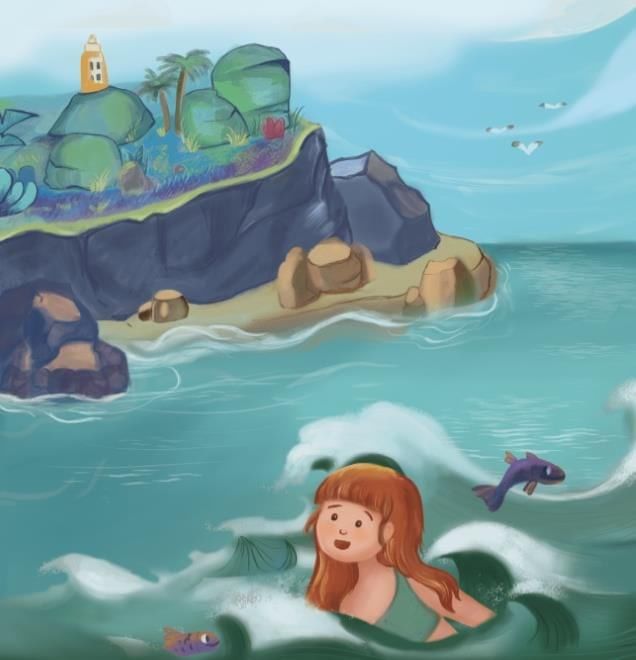
Ans: If Amanda were a mermaid, she imagines she could drift slowly and carelessly on a languid emerald sea. She pictures herself as the only inhabitant of that green sea, moving gently and freely over the water, enjoying peace and a sense of escape from rules and scolding.
Q6: Is Amanda an orphan? Why does she say so?
Ans: No, Amanda is not an orphan, though she speaks as if she wishes she were. She feels overwhelmed by constant instructions from her parents and imagines that being an orphan would give her 'golden' silence and 'sweet' freedom. This wish shows her desire for space and independence when adult care feels too restrictive.
Q7: Do you know the story of Rapunzel? Why does she want to be Rapunzel?
Ans: Rapunzel was kept alone in a high tower by a witch, and she had very long hair, which the witch used to climb the tower. A prince later discovered her, and, after difficulties, they were eventually reunited. Amanda wants to be like Rapunzel because Rapunzel's life suggests solitude and removal from everyday interference. Amanda longs to be away from everyone and to enjoy peace and private freedom; she even says she would not let anyone climb up her long hair, which shows she prefers solitude without disturbance.

Q8: What does the girl yearn for? What does this poem tell you about Amanda?
Ans: Amanda yearns for freedom and personal space. She finds it hard to meet her parents' expectations and prefers to follow her imagination. Amanda represents many children who feel pressured to behave in a particular way from an early age; when adults ignore a child's imaginative needs, the child's freedom to think and create can be stifled.
Q9: Read the last stanza. Do you think Amanda is sulking and is moody?
Ans: No, Amanda is neither merely sulking nor simply moody. She longs for freedom because she is tired of constantly following instructions. She has a strong imaginative power and visualises herself as Rapunzel; her wish for a carefree life reflects a natural desire for some independence, while her parents only want to teach her good manners and to inculcate good habits.
: