

Key Points of the Story
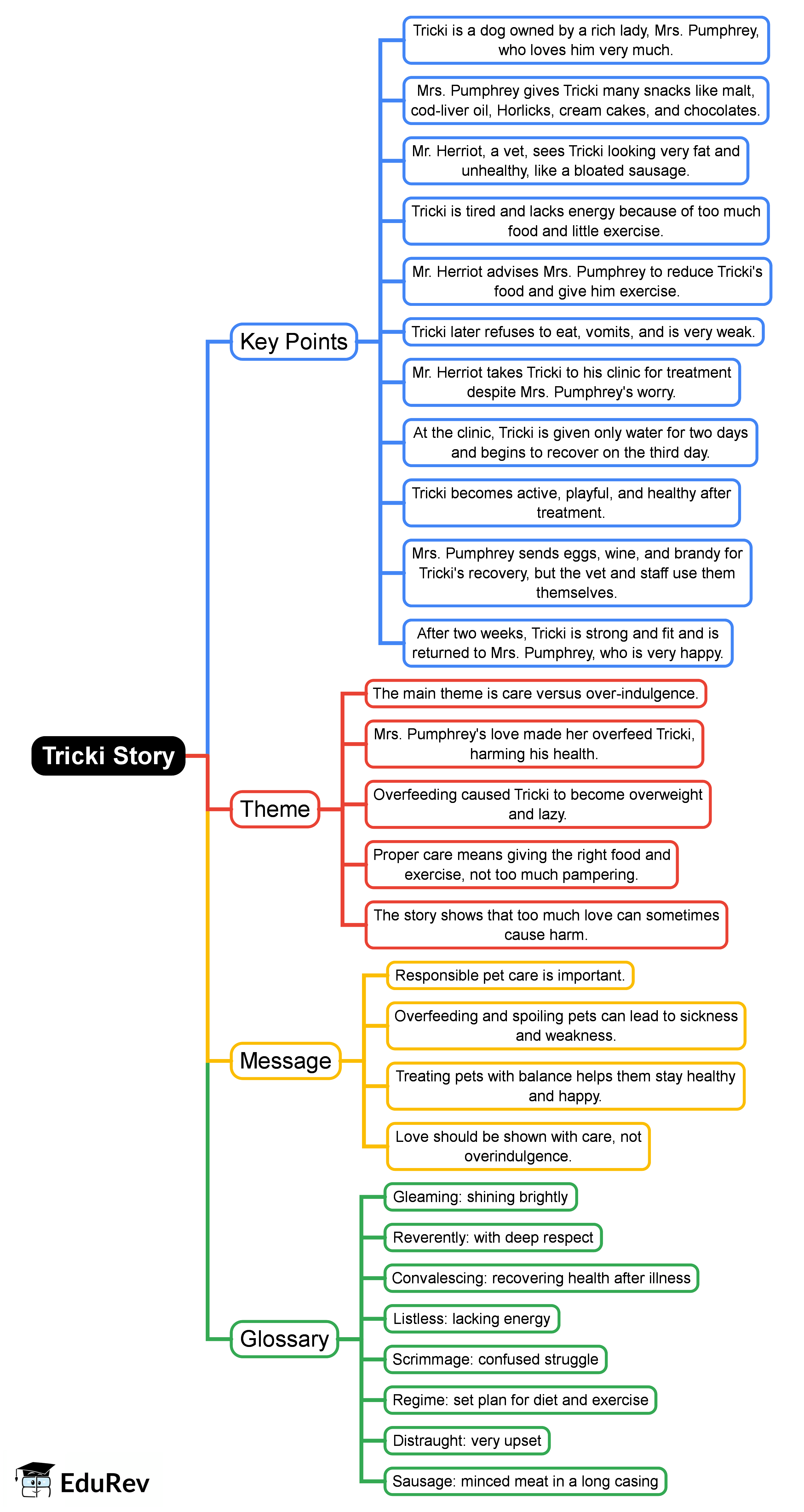
- This story is about Tricki, a dog who is the pet of a rich lady named Mrs. Pumphrey. She loves her dog very much and is unable to refuse him anything he wants.
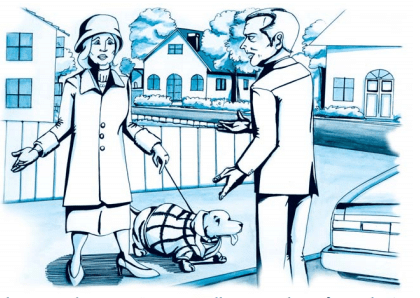
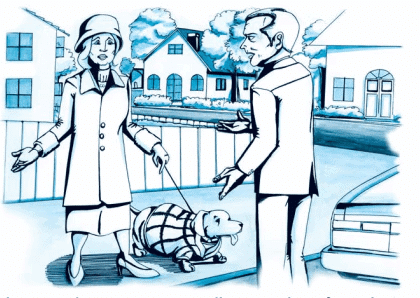
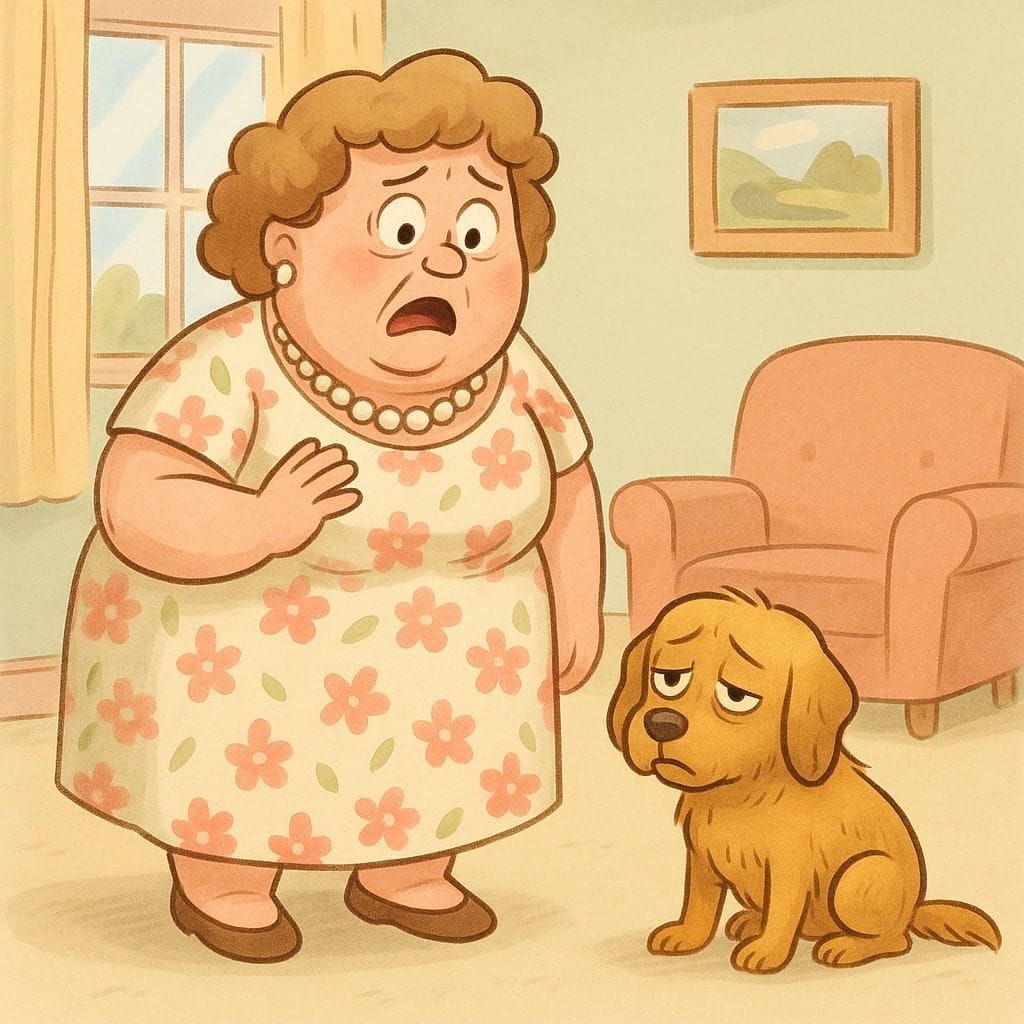
- One day, Mr. Herriot meets her on the street and is shocked to see Tricki's bloated, unhealthy condition, "like a bloated sausage with a leg at each corner." Mrs. Pumphrey explains that Tricki seems tired and lacking energy, so she has been giving him extra snacks like malt, cod-liver oil, Horlicks, and also cream cakes and chocolates.
- Mr. Herriot advises her to cut down Tricki's food and give him more exercise, but she finds it difficult to refuse him treats.
- A few days later, Mrs. Pumphrey calls, distressed that Tricki is refusing food, vomiting, and unwilling to move. Mr. Herriot insists on taking Tricki to his surgery for treatment, despite Mrs. Pumphrey's reluctance.
- At the surgery, Tricki shows no interest in other dogs and is given only water for two days. On the second day, he begins showing interest in his surroundings; on the third day, he joins the other dogs outside and starts eating.
- Tricki's health improves rapidly-he plays, competes for food, and becomes active and energetic.
- Believing Tricki needs "energy foods," Mrs. Pumphrey sends eggs, wine, and later brandy, which Mr. Herriot and his colleagues consume themselves.
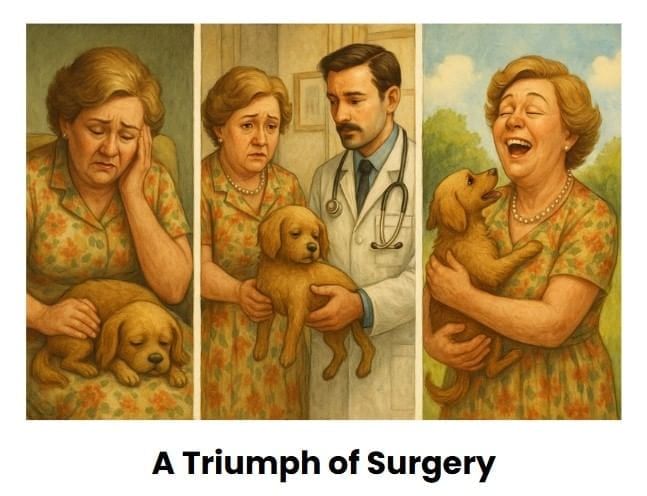
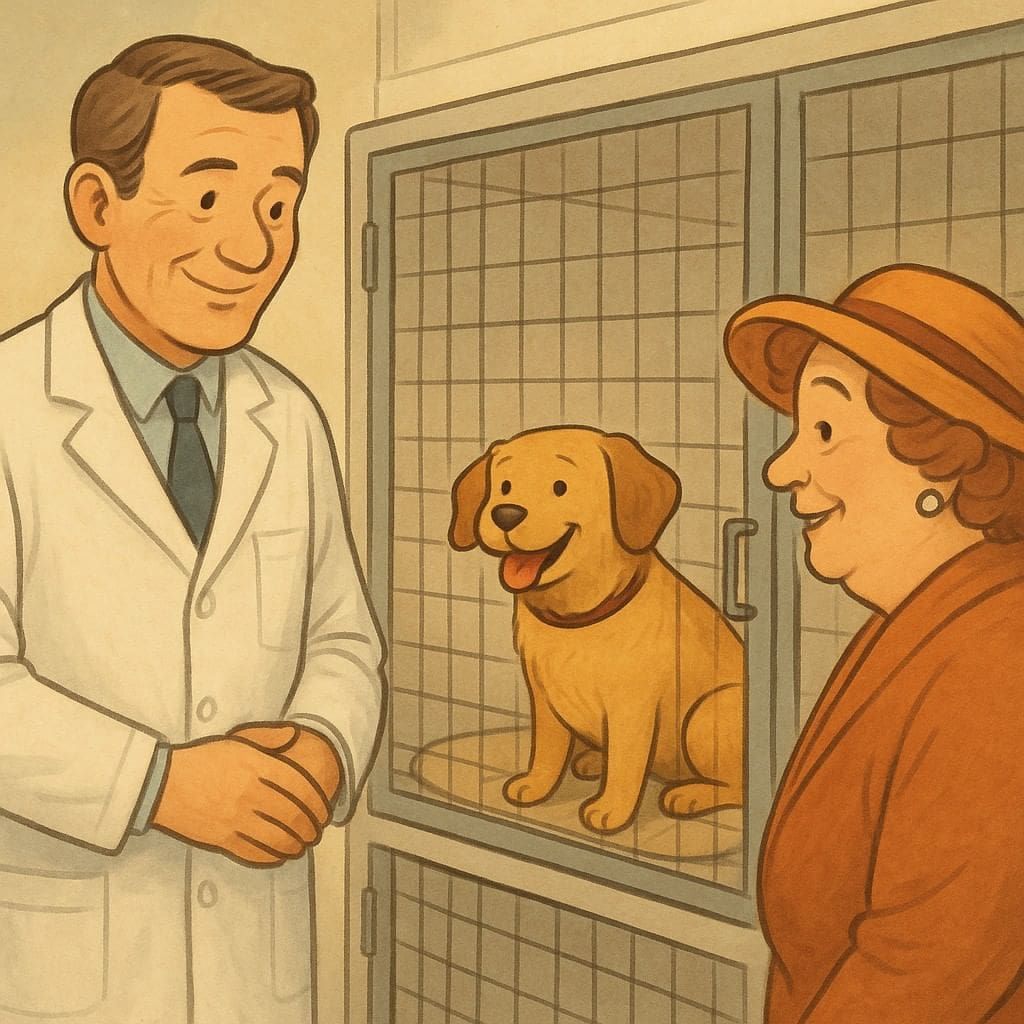
- After two weeks, Tricki is lean, strong, and fit. Mr. Herriot decides to return him to Mrs. Pumphrey. Tricki joyfully leaps into her lap, and Mrs. Pumphrey, overjoyed, calls his recovery "a triumph of surgery."
Mrs. Pumphrey believes that Tricki is tired and lacking nutrients, so she gives him extra snacks. This shows her misunderstanding of what Tricki really needs for better health.
 | Get additional INR 200 off today with EDUREV200 coupon. | Avail Offer |
Detailed Summary
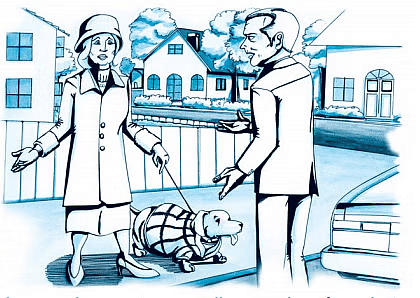
The story begins when Mrs. Pumphrey, a wealthy lady, is out walking her pet dog, Tricki. Mr. Herriot, a veterinary surgeon who knows her, sees Tricki and is shocked to find him hugely overweight, "like a bloated sausage with a leg at each corner." Mrs. Pumphrey explains that Tricki seems listless and lacking energy, so she has been giving him extra snacks like malt, cod-liver oil, and Horlicks, along with cream cakes and chocolates. Mr. Herriot advises her to cut down on his food and give him more exercise, but she finds it difficult to refuse him treats.
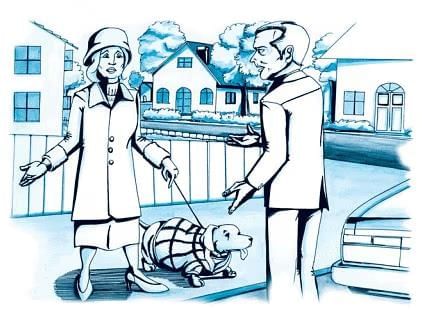
A few days later, Mrs. Pumphrey calls in distress-Tricki is refusing food, vomiting, and unwilling to do anything. Mr. Herriot decides that the only solution is to take him to his surgery for a fortnight. Though reluctant and worried, Mrs. Pumphrey agrees, sending along numerous items for Tricki's comfort.
At the surgery, Tricki shows no interest in the other dogs and lies still in his bed. For two days, he is given only water. By the second day, he starts showing interest in his surroundings; on the third day, he joins the other dogs in the yard and begins eating.
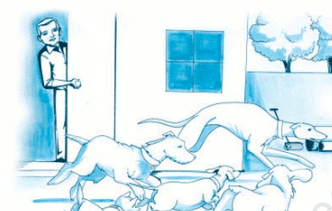
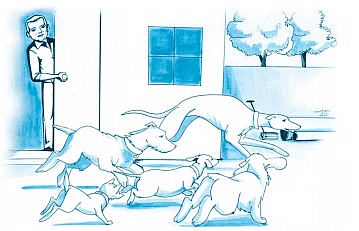
From then on, his recovery was rapid. He plays, joins in scrimmages, competes for food at mealtimes, and becomes active and lively. Hearing that Tricki is convalescing, Mrs. Pumphrey starts sending fresh eggs, then bottles of wine, and finally brandy, thinking these will aid his recovery. Mr. Herriot and his colleagues enjoy these luxuries themselves, with eggs for breakfast, wine at lunch, and brandy in the evenings.
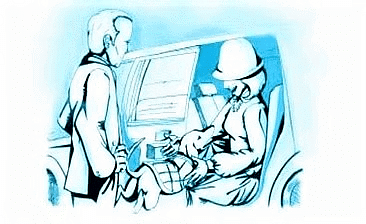
After two weeks, Tricki is transformed into a fit, hard-muscled dog. Mr. Herriot decides it is time to return him. When Mrs. Pumphrey's car arrives, Tricki joyfully leaps into her lap. Overjoyed, she thanks Mr. Herriot and calls the recovery "a triumph of surgery."
- Mrs. Pumphrey loved her dog so much that she couldn't refuse him anything he wanted, including his favorite treats.
- This overfeeding and unhealthy diet eventually led to Tricki becoming overweight and looking like a bloated sausage.
- It was this excessive indulgence in cream cakes and chocolates that contributed to Tricki's health issues and the need for medical intervention.
Also read: Short Answer Questions: A Triumph of Surgery |
Theme
- The major theme of the chapter is Care vs Over-indulgence.
- Mrs Pumphrey loved Tricki. Under the influence of her blind love for her pet, she overfed him.
- Mrs Pumphrey gave him malt, cod-liver oil and a bowl of Horlicks, which she believed would help Tricki regain his strength.
- This made Tricki overweight and lethargic. Mrs Pumphrey's over-indulgence in Tricki's care had, in fact, harmed him.
- After Tricki's treatment, Mrs Pumphrey was elated to see her dog active and playful again.
 | Attention! Sale expiring soon, act now & get EduRev Infinity at 40% off! | Claim Offer |
Message
- The lesson emphasises the importance of responsible pet ownership, cautioning against excessive love that can prove harmful. Mrs. Pumphrey, a wealthy woman, showered her dog Tricky with lavish care and overfeeding.
- Her indulgence led to Tricky's health deterioration, making him lazy and obese. Hospitalised due to his condition, Mrs. Pumphrey continued pampering him with gifts.
- The story highlights the message that excessive love and overindulgence can have adverse effects on the well-being of those we care about.
Also read: Short Answer Questions: A Triumph of Surgery |
Glossary
- Gleaming - shining brightly, usually because it is clean or polished.
- Reverently - with deep respect.
- Roused - awakened from sleep.
- Supper - the main evening meal.
- Tweed -. coarse wool fabric.
- Bouts - short periods of intense activity.
- Ceremonial - related to formal public or religious events.
- Clasped - held tightly in one's hand.
- Convalescing - recovering health after an illness.
- Engulfed - completely surrounded or overwhelmed.
- Entire - whole, or complete.
- Fetch - to go and bring back.
- Flapping - moving in waves.
- Fortnight -. period of two weeks.
- Gang -. group of individuals.
- Gasping - breathing with difficulty.
- Harness -. set of straps used for control.
- Hastened - moved or acted quickly.
- Hovered - stayed in one place in uncertainty.
- Hugely - very much.
- Hurtling - moving quickly and uncontrollably.
- Lolled - relaxed in a lazy manner.
- Lumbago - pain in the lower back.
- Panting - breathing quickly and short.
- Sausage - minced meat in a long casing.
- Rheumy - watery discharge from the nose or eyes.
- Listless - lacking energy.
- Regime -. set plan for diet and exercise.
- Distraught - extremely upset.
- Scrimmage -. confused struggle.
- Lithe - flexible and graceful.
Short Answer Questions: A Triumph of Surgery
Q1: What makes you know that Mrs. Pumphrey was a rich lady?
Ans: Mrs Pumphrey's wealth was shown by her large household staff and the special treatment she gave her pet. She had many servants and maids to wait on Tricki, fed him rich dishes, sweets and snacks, and kept a separate room and wardrobe for him. Such pampering and the provision of servants and special facilities make it clear that she was a rich lady.
Q2: Why did Mrs. Pumphrey call the doctor?
Or
Why did Mrs. Pumphrey take Tricki to the doctor?
Ans: Tricki had stopped eating for several days. He had refused even dishes and had bouts of vomiting. Moreover, he was spending his time lying on a rug, panting. He refused walks and showed little interest in his usual activities. These worrying symptoms made Mrs Pumphrey call the veterinarian for help.
Q3: How does Dr. Herriot treat Tricki?
Ans. Dr Herriot treated Tricki without medicines or an operation. He regulated Tricki's food, gave him plenty of water and made him exercise and play with other dogs at the surgery. By controlling his diet and increasing his activity, Tricki regained his energy and spirit.
Q4: Why were the household dogs not interested in Tricki initially?
Ans: Tricki was a newcomer in the house. Moreover, Tricki was too lethargic to play with them. He was not comfortable there. But after a few days, Tricki started enjoying them. He discovered the joys of being bowled over, tramped on and squashed every few minutes. He became an accepted member of the gang.
Q5: Why was Dr. Herriot confident that Tricki will be in hospital soon?
Ans: When Dr Herriot met Tricki in the road he noticed that the dog was extremely fat and his eyes were red. As a veterinary surgeon he recognised that overfeeding and such a condition would soon lead to serious ill-health. For this reason he was confident that Tricki would need hospital care before long.
Q6: Why was the entire staff of Mrs. Pumphrey at work while Tricki was going to the hospital?
Ans: Tricki was Mrs Pumphrey's beloved pet, so the household staff hurried to prepare everything for his journey. They fetched his day and night beds, favourite cushions, toys, rubber rings and food bowls, and loaded them into the doctor's car, all very upset at his being taken to the hospital.
Q7: What was the cause of Tricki's ailment?
Or
What was the main cause of `Tricki's ill-health'?
Ans: Tricki's ill health was caused by overfeeding and overindulgence. Mrs Pumphrey pampered him with cream cakes, chocolates and hot links, which made him hugely fat, inactive and ill.
Q8: Why did Mr. Herriot ask Mrs. Pumphrey to admit Tricki in a hospital?
Ans: Dr Herriot advised hospitalisation because Mrs Pumphrey kept pampering Tricki instead of reducing his food and making him exercise. In hospital he could control Tricki's diet and activity properly, which was necessary to restore his health.
Q9: Why did Mrs. Pumphrey treat Tricki in a special way?
Ans: Mrs Pumphrey was extremely rich and very indulgent towards Tricki; she treated him like a child. Out of affection she fed him with cream cakes, chocolates and cod-liver oil, and refused to deny him the foods he liked.
Q10: Why was Dr. Herriot worried about Tricki?
Ans: Dr Herriot was worried because Tricki had become excessively fat and inactive through overfeeding. He feared that without a change in diet and exercise the dog's health would deteriorate further, and Mrs Pumphrey was unwilling to follow his advice.
Q11: Why was Tricki sent to the hospital?
Ans:Tricki had become sluggish because he had grown excessively fat due to overfeeding that it became difficult for him to walk. He started panting all the time, kept on vomiting and stopped eating. For careful observation and treatment he was therefore taken to the hospital.
Q12: What was Mrs. Pumphrey's reaction when Tricki showed little enthusiasm for exertion?
Ans: She was shocked and anxious. She believed Tricki must be seriously ill and thought he might be suffering from malnutrition, which led her to give him still more food.
Q13: What did she do to bring him back to normal health? Was she successful?
Ans: Believing him undernourished, she increased his food and gave him rich items such as cakes and malt. This approach failed to restore health; instead it made Tricki slower and lazier, so she was not successful.
Q14: What was Mr. Herriot's strict advice? Did Mrs. Pumphrey heed his advice? What excuses did she make?
Ans: Dr Herriot's strict advice was to cut down on sweet and rich foods and to give Tricki plenty of exercise. Mrs Pumphrey did not follow this advice. She excused herself by saying Tricki was weak and needed treats, and she also blamed the lack of exercise on the gardener being unwell.
Q15: Why did Mrs. Pumphrey make a frantic (anxiety with fear) call to Mr. Herriot?
Ans: She made a frantic call because Tricki had grown seriously ill: he would not eat, refused even his favourite dishes, suffered bouts of vomiting and showed little interest in activity. She was terrified for his life.
Q16: Describe the `parting scene' between Tricki and Mrs. Pumphrey's household.
Ans: Mrs Pumphrey was wailing and the whole staff were upset. Maids rushed about bringing Tricki's beds and bowls and loading them into the doctor's car. When the car drove away, everyone in the house was in tears at the thought of him being away.
Q17: "I think I know a cure for you." What was the `cure'?
Ans: The cure was strict control of Tricki's diet and enforced activity. Dr Herriot gave him no food for two days, plenty of water, and ensured he exercised and played with other dogs. No medicines were needed; the change in routine restored his health.
Q18: The household dogs at the surgery rejected Tricki as an "uninteresting objects." Why?
Ans: When Tricki first arrived at the surgery he looked dull and showed no response to the other dogs. He lay motionless and met their sniffing with dull eyes, so they dismissed him as uninteresting and ignored him.
Q19: How did he become an accepted member of the gang and start enjoying the company of other dogs?
Ans: After two or three days of proper diet and exercise, Tricki's health improved rapidly. He became lively, joined in games, enjoyed rough play and the attention of the other dogs, and so was accepted as a full member of the gang.
Q20: What was Mrs. Pumphrey's reaction when the doctor said that Tricki must be taken to the hospital for a fortnight?
Ans: On hearing that Tricki must stay in hospital for a fortnight she was nearly overcome. She was convinced that he would pine away and possibly die if she was not with him every day.
Q21: How did the gang of the household dogs accept Tricki as their member?
Ans: Once Tricki began to recover he mixed freely with the household dogs, ran about, and enjoyed being bowled over, trampled on and squashed in play. His willingness to join in rough sport led them to accept him as one of their number.
Q22: How did Tricki treat his mistress when she went to collect him?
Ans: When Tricki saw his mistress he leapt from Dr Herriot's arms into Mrs Pumphrey's lap. He swarmed all over her, licked her face and barked with excitement, showing his joy at being reunited.
Q23: What special diet did Mrs. Pumphrey give to build Tricki up?
Ans. Mrs. Pumphrey found that Tricki had become listless. He seemed to have no energy. She thought he must be suffering from malnutrition. She decided to give some little special diet between meals to build him up. She gave him some malt, cod-liver oil and a bowl of Horlicks at night. She couldn't refuse cakes and chocolates to Tricki even after being advised to cut down on the sweet things.
Q24: What was the only fault of Tricki as diagnosed by Dr. Herriot?
Ans: Dr Herriot concluded that Tricki's only fault was his greed for food. He had never learnt to refuse treats; overfeeding combined with lack of exercise made him grossly fat and dull.
Q25: What plans did Dr. Herriot make to get Tricki out of the house?
Ans:
Dr Herriot planned to remove Tricki from Mrs Pumphrey's pampering environment by taking him to the surgery. There he could control Tricki's diet, give him plenty of water and supervised exercise and break the habit of overfeeding.
Q26: How did Mrs. Pumphrey react when she heard from the doctor that Tricki needed to be hospitalised for a fortnight?
Ans: When Dr Herriot told her that Tricki must be kept under his supervision for a fortnight, Mrs Pumphrey almost fainted. She found it unbearable to be apart from him but agreed only when she was told that this was the only way to save his life.
Q27: How was Tricki treated at the surgery?
Ans: At the surgery Tricki received no drugs. Dr Herriot realised that overindulgence and not illness was the problem, so he withheld food for two days while giving plenty of water, placed Tricki in a warm loose box near the other dogs, and ensured he had exercise and companionship.
Q28: Describe the gradual progress of Tricki at the surgery.
Ans: Tricki's main problem was his greed for food. For two days, Dr. Herriot gave no food but plenty of water to the dog. On the first day, Tricki lay motionless on the carpet. On the second day, he started showing some interest in his surroundings. On the third day, he began to whimper when he heard the dogs in the yard. From then on, his progress was rapid. He started for his share of food and hunting rats at night.
Q29: How did the word 'convalescing' (recovering) affect Tricki's mistress, Mrs. Pumphrey?
Ans: The news that Tricki was convalescing delighted Mrs Pumphrey. She became excited and started bringing rich foods such as fresh eggs, and even wine and brandy, hoping to restore his strength quickly. For a few nights brandy was reverently served and consumed as part of her efforts to build him up.
Q30: Why was Dr. Herriot tempted to keep Tricki on as a permanent guest?
Ans: Tricki's presence brought unexpected comforts to Dr Herriot and his partner: they enjoyed extra eggs at breakfast and a steady supply of wine and brandy, which made life pleasantly easy for a while. These comforts tempted Dr Herriot to consider keeping Tricki as a permanent guest.
NCERT Solutions: A Triumph of Surgery
Read and Find Out - Page 1
Q1: Why is Mrs Pumphrey worried about Tricki?
Ans: Mrs. Pumphrey was very concerned and unhappy about Tricki's health because he wasn't eating. He wouldn't eat his favorite foods and kept vomiting. He spent all his time lying on a rug, breathing heavily, and wasn't interested in going for his usual walks either.
Q2: What does she do to help him? Is she wise in this?
Ans: Initially, Mrs Pumphrey thought that Tricki had become listless, as he seemed to have no energy. She assumed that he must be suffering from malnutrition, so she started giving him some little extras between meals to build him up, some malt and cod-liver oil and a bowl of Horlicks at night to make him sleep. She would also indulge him in cream cakes and chocolates unnecessarily and did not give him enough exercise. With all this pampering and indulgence, Tricki became hugely fat, like a bloated sausage with a leg at each corner. It was absolutely not a wise decision on the part of his mistress to overfeed him. Hence, her actions were not wise, as they worsened his condition. Eventually, she seeks help from Dr. Herriot.
Q3: Who does 'I' refer to in this story?
Ans: In this story, 'I' refers to the veterinary surgeon, Mr Herriot.
| Get additional INR 200 off today with EDUREV200 coupon. | Avail Offer |
Read and Find Out - Page 3
Q1: Is the narrator as rich as Tricki's mistress?
Ans: There are some instances in the story that suggest Dr Herriot was not as rich as Tricki's mistress, Mrs Pumphrey. This is evident from the fact that the narrator could not provide a luxurious life such as a cosy bed stuffed with favourite cushions, toys and rubber rings along with bowls for different meals of the day, rather he made up a bed for Tricki in a warm loose box next to the one where the other dogs slept. The doctor also could not afford an entire staff of maids and caretakers just like Mrs Pumphrey to take care of the sole well-being and maintenance of her pet, Tricki.
Q2: How does he treat the dog?
Ans: Dr Herriot did not give Tricki any food for the first two days and kept him only on water. He kept a close watch on him and allowed him to mix with other dogs. Gradually, Tricki became active, started eating normally and recovered without any medicine.
Q3: Why is he tempted to keep Tricki on as a permanent guest?
Ans: Mrs Pumphrey started to bring round fresh eggs, two dozen at a time, to build up Tricki's strength. Later even bottles of wine and brandy began to arrive. The narrator, along with his partners, enjoyed having two eggs each for breakfast, wine and brandy that was meant for Tricki. They were days of deep content, starting well with the extra egg in the morning, improved and sustained by the midday wine and finishing luxuriously around the fire with the brandy. It was indeed a strong temptation for Herriot to keep Tricki on as a permanent guest to enjoy the luxurious inflow of all these food items.

Q4: Why does Mrs Pumphrey think the dog's recovery is "A Triumph of Surgery"?
Ans: Mrs. Pumphrey believed Tricki was seriously ill when she consulted Dr. Herriot, but within two weeks, her pet had fully recovered. She was thrilled to see that he had transformed into a fit and strong dog. When Dr. Herriot returned Tricki to her, the dog made a huge leap and landed in her lap. His recovery without any medicine was remarkable, and Mrs. Pumphrey, grateful and happy, called it "a triumph of surgery" to show her appreciation to the doctor.
Also read: Practice Questions: A Triumph of Surgery |
Think About it - Page 6
Q1: What kind of a person do you think the narrator, a veterinary surgeon, is? Would you say he is tactful as well as full of common sense?
Ans: The narrator, Dr. Herriot, is a wise and tactful person. He skillfully diagnoses Tricki's condition, recognizing that it was caused by overfeeding rather than illness. Instead of opting for surgery, he adjusts Tricki's diet and encourages exercise, leading to a full recovery within two weeks. Dr. Herriot's tact is evident in how he convinces Mrs. Pumphrey to hospitalize Tricki, while his common sense ensures he treats the dog effectively. Though he enjoyed the food items sent by Mrs Pumphrey, he remained responsible and returned Tricki once he recovered.
Q2: Do you think Tricki was happy to go home? What do you think will happen now?
Ans: Tricki was happy to go back home as he really loved his mistress and the comfort of his lavish life. He didn't have any friends at home like in the hospital, but he seemed equally excited at the sight of Mrs Pumphrey. I think that Mrs Pumphrey will now be careful about Tricki's diet and health. She may also give him exercise daily as prescribed by the vet earlier.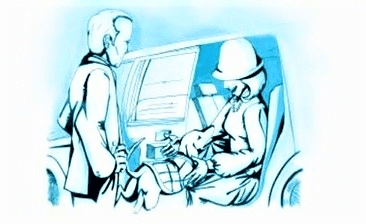
Q3: Do you think this is a real-life episode or mere fiction? Or is it a mixture of both?
Ans: The story seems to be a blend of fiction and a real-life incident. It is quite natural for rich people to overfeed their pets due to love and affection, just like Mrs Pumphrey did. We have observed how due to her pampering, the dog was overeating and became lazy and bulky. Similarly, it isn't unusual for rich people who try to provide a luxurious life for their pets and indulge them often. However, the situation is presented in a humorous way, which gives it a slightly fictional touch.
| Attention! Sale expiring soon, act now & get EduRev Infinity at 40% off! | Claim Offer |
Talk About it - Page 7
Q1: This episode describes the silly behavior of a rich woman who is foolishly indulgent, perhaps because she is lonely. Do you think such people are merely silly, or can their actions cause harm to others?
Ans: Mrs. Pumphrey's misguided actions of overfeeding Tricki had a negative impact on her pet's health. She made Tricki eat too much and gave him fatty foods, thinking it was an expression of love and care. This led to his condition worsening, making him so lazy and overweight that he couldn't even go for short walks. Wealthy people like Mrs. Pumphrey often spoil their pets with excessive food, believing it will improve their health, but this can actually have harmful effects.
Q2: Do you think there are also parents like Mrs. Pumphrey?
Ans: Yes, some parents, like Mrs. Pumphrey, spoil their children by over-indulging and pampering them. They may overfeed their children or pets, even though they know the negative effects of overeating on their health. It is important for parents like Mrs. Pumphrey to monitor and maintain a healthy lifestyle for their family members and pets to avoid such issues.
Q3: What would you have done if you were:
(i) a member of the staff in Mrs Pumphrey's household,
(ii) a neighbour?
What would your life have been like, in general?
Ans:
(i) If I were a member of the staff in Mrs. Pumphrey's household, I would have followed the vet's advice, ensuring Tricki received the proper diet and regular exercise to maintain his health. I would not have blindly followed Mrs. Pumphrey's indulgent habits, such as sending unnecessary luxuries to the hospital. My life would have been busy, balancing household duties while taking care of Tricki's needs.
(ii) If I were Mrs. Pumphrey's neighbor, I would have advised her to keep Tricki on a strict, healthy diet and engage him in physical activities like playing or walking. If his health worsened, I would have encouraged her to consult a vet and strictly follow the advice. I would have offered support and kindness, especially when Tricki needed hospitalization. Living next to Mrs. Pumphrey would have been filled with surprises, as she was generous and loving, often sharing gifts and treats.
Q4: What would you have done if you were in the narrator's place?
Ans: If I were in the narrator's place, I would have treated Tricki in a similar fashion with love and compassion. I would have been vigilant and caring, just like Mr James Herriot was towards Tricki. However, I would have been a little strict while advising Mrs Pumphrey to put Tricki on a balanced diet knowing her love for her dear pet. Besides, I would have also not consumed Tricki's share of eggs, wine and brandy sent by Mrs Pumphrey and resisted my temptation to keep Tricki as my permanent guest in my hospital.
Long Answer Questions: A Triumph of Surgery
Q1: Tricki was more than a dog. He was more like a spoilt child of an overindulgent mistress, Mrs. Pumphrey. Comment.
Ans: Tricki was treated far beyond the normal care given to a pet; he was treated like a spoilt child by his mistress, Mrs Pumphrey. She indulged him with rich foods such as cream cakes and chocolates, gave him many comforts like special beds, cushions and a variety of coats, and maintained a staff ready to attend to his every wish. This constant pampering prevented him from getting ordinary exercise and led to extreme fatness and weakness. When he became ill he was too feeble and listless to recover without outside help. In behaviour and treatment he resembled a child who had never been taught discipline. Dr Herriot's advice to reduce food and increase exercise showed that Tricki's problem was the result of overindulgence rather than an inherent medical defect. In short, Mrs Pumphrey's affectionate but excessive care made Tricki more like a spoilt child than a well-kept dog.
Q2: The chapter shows the silly and negligent behaviour of rich people like Mrs. Pumphrey who may harm their near and dear ones by their extra caring nature. Tricki's declining health was the outcome of Mrs. Pumphrey's over-caring nature. Do you think such people's actions can prove to be fatal for the health of their kind? What values would you suggest to such people to emulate in themselves and why?
Ans: Yes. Overcaring that ignores what is truly good for someone can cause real harm. In Tricki's case, constant feeding of rich food and denying regular exercise caused serious ill health. To avoid such harm, people who tend to overindulge should practise restraint, responsibility and informed care. They should learn to follow expert advice when it comes to health, whether for pets or people. Other useful values are self-discipline, moderation, and respect for routines such as a balanced diet and regular exercise. These values protect health and ensure that affection does not become harmful.
Q3: "He had never been known to refuse food; he would tackle a meal at any hour of the day or night." Herriot believed that Tricki's problem was his greed. Did he lack tolerance? What values would you like Tricky to imbibe? Elucidate.
Ans: Herriot's description points to Tricki's uncontrolled appetite rather than a moral failing of tolerance. As an animal, Tricki could not exercise human self-control; the real responsibility lay with Mrs Pumphrey who allowed him to eat whatever he wanted. The values that would have helped Tricki are moderation and routine, but these must be instilled by his owner. In practice this means: regular, measured meals; limited treats; and daily exercise. Teaching these habits would have kept Tricki healthy and prevented the greed-driven eating that caused his illness.
Q4: How did Herriot save Tricki's life?
Ans: Tricki was seriously ill. He refused food. He had bouts of vomiting. Mrs. Pumphrey was very much worried about him. She called Mr. Herriot who was a vet. Herriot and knew Tricki's disease well. He told Mrs. Pumphrey that the dog must be hospitalized for a fortnight immediately. He carried the dog in his car to his surgery. There he put him in a separate room. He was given no food for two days but plenty of water. After two days the dog felt better. He started enjoying games with other dogs. In this way, Herriot cured Tricki of his illness without any medicine or surgery.
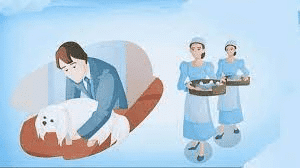
Q5: Mrs. Pumphrey says, "This is 'A Triumph of Surgery'. Why did she say so? Did she know what ', Ticki's ailment was?
Ans: Mrs Pumphrey called it "A Triumph of Surgery" because she was amazed at the dramatic change in Tricki when she collected him from Dr Herriot's clinic. He looked fit, active and healthy, in stark contrast to the flabby, ill animal she had brought in. She did not understand the real cause of his recovery; she believed that Dr Herriot's skill at his surgery had worked a medical miracle. In fact, Herriot had cured Tricki by common-sense measures - hospitalisation, withholding food for a short time, giving plenty of water and exercise - rather than by any operation or complex treatment. Mrs Pumphrey therefore did not know the precise nature of Tricki's ailment or the simple means by which he was cured.
Q6: Dr James Herriot was a competent veterinary surgeon. His practical approach and common sense helped in the rapid recovery of Tricki. Comment.
Ans: Dr James Herriot showed professional competence through a calm, practical approach. He diagnosed that Tricki's problem was not an infection or internal disease but the result of gross overfeeding and lack of exercise. Instead of prescribing complicated treatment, he recommended hospitalisation, a strict diet and increased activity. By following this straightforward plan, Tricki recovered quickly without drugs or surgery. Herriot's common sense, observational skill and firmness with Mrs Pumphrey were the main reasons for the success. His method underlines that simple, well-judged measures are often the best medical response.
Dr Herriot also handled the situation with kindness and tact, which helped Mrs Pumphrey accept the necessary treatment. The quick recovery confirmed his practical competence.
Q7: Why did Dr James Herriot say that he was tempted to keep Tricki on as a permanent guest? Give a reasoned answer.
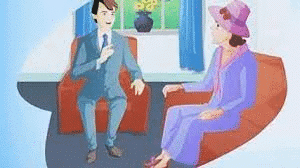
Ans: Dr Herriot was tempted to keep Tricki because the dog's recovery brought pleasure and good cheer to him and his colleagues. Mrs Pumphrey's grateful hospitality - fresh eggs for breakfast, generous lunches and brandy by the fire - made life at the surgery more comfortable and enjoyable during Tricki's stay. The warmth of company and the luxuries offered created an attractive situation that any sensible person would find hard to refuse. Nevertheless, Herriot knew it would be improper to keep Tricki permanently; his remark reflects a human, light-hearted temptation rather than a serious intention to break professional boundaries.
Q8: The foolish indulgence and pampering of the rich mistress, Mrs Pumphrey was the real cause of Tricki's miserable condition. Give a reasoned answer.
Ans: Mrs Pumphrey's indulgence was indeed the chief cause of Tricki's poor health. She allowed constant feeding of rich foods and treats, provided numerous comforts that removed the need for activity, and relied on servants to attend to every whim. This created a lifestyle for Tricki that led to obesity, lethargy and illness. Dr Herriot correctly identified overfeeding and lack of exercise as the root causes and advised strict measures. Only when Mrs Pumphrey agreed to send Tricki to the surgery and follow Herriot's plan did the dog recover. The episode shows that love without limits can be harmful and that sensible care-moderation, routine and following expert advice-is essential for health.
Character Sketch: A Triumph of Surgery
Character Sketch of Mrs Pumphrey
Mrs. Pumphrey is a middle-aged, wealthy, and resourceful woman with many servants and maids. She treats her visitors with warmth and generosity, showing that she has a kind heart. She has a strong emotional attachment to her pet dog, Tricki. She over-pampered Tricki by giving him cakes, chocolates, wine, and eggs, which led to his poor health. Despite knowing that exercise was necessary, she ignored Dr. Herriot's advice, showing her inability to say no to Tricki. When Tricki was taken to the hospital, she was deeply upset and worried, proving that she was tender-hearted and caring. After Tricki recovered, she was grateful and overjoyed, thanking Dr. Herriot for restoring her pet's health.
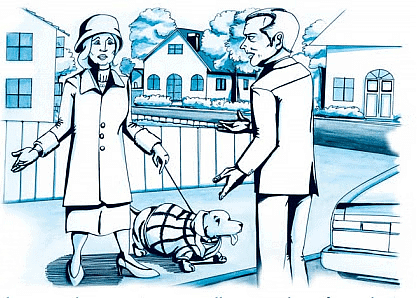
Keywords for Mrs. Pumphrey:
Wealthy, emotional, pampering, kind, silly, grateful, loving, indulgent
Character Sketch of Tricki
Tricki is a small, lovable, and pampered Pekingese dog with a fluffy coat and squashed face. He is overweight and lazy, mostly because of the rich food given by Mrs. Pumphrey. He enjoys being pampered and spoiled, which made him inactive and unwell. Tricki has a mischievous and demanding nature, often wanting things his own way, yet he is also sensitive and emotional. He is loyal and affectionate towards his owner and enjoys being surrounded by people. Despite being spoiled, Tricki has a gentle personality and thrives when given proper care and love.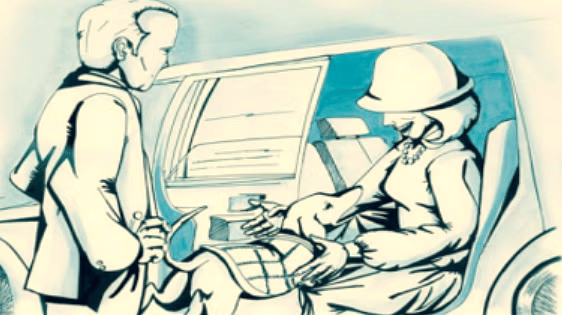
Keywords for Tricki:
Lovable, pampered, overweight, sensitive, loyal, playful, demanding, fluffy
Character Sketch of Dr. Herriot
Dr. Herriot is a kind, compassionate, and dedicated veterinarian who truly cares about the animals he treats. He is intelligent and experienced, able to handle even tough cases like Tricki's. He goes above and beyond to ensure the animals get proper care. He understands animal behavior very well and treats each case with patience and sensitivity. Dr. Herriot also has a great sense of humour and a charming personality, which makes people feel comfortable around him. He listens carefully and deals with people and animals in a calm and friendly manner.
Keywords for Dr. Herriot:
Caring, skilled, humorous, patient, kind, observant, dedicated, friendly
Mind Map: A Triumph of Surgery
Extract Based Questions: A Triumph of Surgery
Passage 1
Read the extract below and answer the questions that follow.
"All the while, Mrs Pumphrey hovered anxiously in the background, ringing a dozen times a day for the latest bulletins. I dodged the questions about whether his cushions were being turned regularly or his correct coat worn according to the weather; but I was able to tell her that the little fellow was out of danger and convalescing rapidly.
The word 'convalescing' seemed to do something to Mrs Pumphrey. She started to bring round fresh eggs, two dozen at a time, to build up Tricki's strength. For a happy period my partners and I had two eggs each for breakfast, but when the bottles of wine began to arrive, the real possibilities of the situation began to dawn on the household. It was to enrich Tricki's blood. Lunch became a ceremonial occasion with two glasses of wine before and several during the meal."
Q1. Why did Mrs. Pumphrey send wine to the narrator's house?
(a) For the other dogs
(b) To thank the narrator
(c) To enrich Tricki's blood
(d) As an apology
Ans. (c) To enrich Tricki's blood
(On hearing that Tricki was convalescing, Mrs. Pumphrey started sending bottles of wine so as to enrich Tricki's blood and help him recover faster.)
Q2. What did Mrs. Pumphrey send after wine?
(a) A dish of pudding
(b) A quart of milk
(c) A basket of cakes
(d) A bottle of brandy
Ans. (d) A bottle of brandy
(After bottles of wine, Mrs. Pumphrey finally sent an expensive bottle of brandy.)
Q3. Why did lunch become a ceremonial occasion?
(a) Mr. Herriot liked to have the brandy.
(b) Mr. Herriot decided to ask Mrs. Pumphrey for another bottle.
(c) Mr. Herriot and his people had wine before and during lunch.
(d) Mr. Herriot gave the wine and eggs to his dogs.
Ans. (c) Mr. Herriot and his people had wine before and during lunch.
(The narrator and his household started enjoying the wine Mrs Pumphrey sent for Tricki during and before lunch, making it a ceremonial occasion.)
Q4. What is the meaning of the word 'convalescing'
(a) To make progress towards recovery
(b) To rebuild something over
(c) To give new life to something
(d) To refresh something old
Ans. (a) To make progress towards recovery
(The word 'convalescing' means the process of recovering from an illness.)
Q5. What does the narrator mean by the phrase 'the real possibilities of the situation'?
(a) The concern that Mrs. Pumphrey showed
(b) The advantages of keeping Tricki
(c) The hospitality of Mrs. Pumphrey
(d) The convalescent condition of Tricki
Ans. (b) The advantages of keeping Tricki
(Mrs. Pumphrey regularly sent food and drinks for Tricki. Since, Tricki was on diet, the narrator and his household enjoyed these goodies. Soon, they realised that keeping Tricki with them was indeed beneficial.)
| Get additional INR 200 off today with EDUREV200 coupon. | Avail Offer |
Passage 2
Read the extract below and answer the questions that follow.
"At the surgery, the household dogs surged round me. Tricki looked down at the noisy pack with dull eyes and, when put down, lay motionless on the carpet. The other dogs, after sniffing round him for a few seconds, decided he was an uninteresting object and ignored him.
I made up a bed for him in a warm loose box next to the one where the other dogs slept. For two days I kept an eye on him, giving him no food but plenty of water. At the end of the second day, he started to show some interest in his surroundings and on the third he began to whimper when he heard the dogs in the yard."
Q1. Why did the other dogs ignore Tricki?
(a) He was a new dog.
(b) He was very violent.
(c) He was uninteresting.
(d) He was of a different breed.
Ans. (c) He was uninteresting.
(Tricki lay motionless and made no attempt to mix with the other dogs. Hence, they found him uninteresting and chose to ignore him.)
Q2. How did Tricki react to the narrator's dogs?
(a) He looked at them with dull eyes.
(b) He rushed to join them in play.
(c) He mingled with them excitedly.
(d) He ignored them.
Ans. (a) He looked at them with dull eyes.
(When the narrator brought Tricki to his clinic, his dogs came running to him and sniffed Tricki curiously. But, Tricki only stared at them with dull eyes.)
Q3. What did the narrator feed Tricki on the first two days?
(a) Plenty of water
(b) Special dog diet
(c) Limited food and water
(d) Balanced diet
Ans. (a) Plenty of water
(The narrator did not give Tricki any food for two days. He only gave him plenty of water.)
Q4. Which of these is the correct meaning of the word 'whimper'?
(a) Barking sound made by dogs
(b) Low sound of pain
(c) Loud noise of anger
(d) A woof of recognition
Ans. (b) Low sound of pain
('Whimper' means to make a series of low and feeble sounds. These sounds are often made by those who are suffering from pain or sorrow.)
Q5. What happened to Tricki once he was denied food?
(a) He started reacting to things around him.
(b) He became increasingly listless.
(c) He lost weight immediately.
(d) His suffering increased.
Ans. (a) He started reacting to things around him.
(After being denied food for two days, Tricki began to show interest in his surroundings. Finally, he started feeling better and mixing with the other dogs.)
Also read: Very Short Questions: A Triumph of Surgery |
Passage 3
Read the extract below and answer the questions that follow.
"The poor lady almost swooned. She was sure he would pine and die if he did not see her every day. But I took a firm line. Tricki was very ill and this was the only way to save him; in fact, I thought it best to take him without delay and, followed by Mrs Pumphrey's wailings, I marched out to the car carrying the little dog wrapped in a blanket.
The entire staff was roused and maids rushed in and out bringing his day bed, his night bed, favourite cushions, toys and rubber rings, breakfast bowl, lunch bowl, supper bowl. Realising that my car would never hold all the stuff, I started to drive away. As I moved off, Mrs Pumphrey, with a despairing cry, threw an armful of the little coats through the window. I looked in the mirror before I turned the corner of the drive; everybody was in tears."
Q1. Why was the narrator taking Tricki?
(a) To give him some medicines
(b) To another owner
(c) To force feed Tricki
(d) To cure him and save his life.
Ans. (d) To cure him and save his life.
(The narrator was taking Tricki to his clinic to keep him under observation and to help him become fitter.)
Q2. How did Mrs. Pumphrey react to the narrator's suggestion?
(a) She refused resolutely.
(b) She was about to faint.
(c) She was grateful.
(d) She was resigned.
Ans. (b) She was about to faint.
(Mrs. Pumphrey was very attached to her pet dog. Therefore, on hearing that Tricki would be taken away from her, she almost passed out.)
Q3. Which of these words is a synonym for 'despairing'?
(a) Anxious
(b) Upset
(c) Suicidal
(d) Miserable
Ans. (d) Miserable
(The word 'miserable' means to be utterly depressed and disconsolate. Mrs. Pumphrey was despairing because her pet was being taken away to a clinic.)
Q4. What, according to Mrs. Pumphrey, would happen to Tricki if she left him at the clinic?
(a) He would get better.
(b) He would attract some other disease.
(c) He would die.
(d)He would get worse.
Ans. (c) He would die.
(Mrs. Pumphrey believed that if Tricki did not see her on a daily basis, he would pine for her and die out of longing.)
Q5. Why did the narrator rush away with Tricki from Mrs. Pumphrey's house?
(a) He wanted to reach the clinic as soon as possible.
(b) His car was too small for Tricki's luggage.
(c) He couldn't bear to see everyone crying.
(d) He did not like Mrs. Pumphrey's company.
Ans. (b) His car was too small for Tricki's luggage.
(As Tricki left his house, the whole staff came forth with an array of items for his comfort. The narrator realised that all this luggage would not fit in his car. So, he speedily drove away.)
| Attention! Sale expiring soon, act now & get EduRev Infinity at 40% off! | Claim Offer |
Passage 4
Read the extract below and answer the questions that follow.
"I watched their progress with growing concern. Tricki was tottering along in his little tweed coat; he had a whole wardrobe of these coats - for the cold weather and a raincoat for the wet days. He struggled on, drooping in his harness. I thought it wouldn't be long before I heard from Mrs. Pumphrey.
The expected call came within a few days. Mrs Pumphrey was distraught. Tricki would eat nothing. Refused even his favourite dishes; and besides, he had bouts of vomiting. He spent all his time lying on a rug, panting. Didn't want to go for walks, didn't want to do anything. I had made my plans in advance. The only way was to get Tricki out of the house for a period. I suggested that he be hospitalised for about a fortnight to be kept under observation."
Q1. Why was Tricki 'drooping in his harness'?
(a) Tricki was flea ridden, with thin fur.
(b) Tricki was hugely fat, like a bloated sausage and so he could barely walk
(c) Tricki has swollen legs
(d) Tricki was a lazy dog.
Ans. (b) Tricki was hugely fat, like a bloated sausage and so he could barely walk
(Tricki was overweight. He just couldn't walk. Plus, he was wearing a tweed coat, which made it more difficult for him to walk.)
Q2. Identify the two reasons why Mrs. Pumphrey was distraught?
(a) Tricki wasn't playing with her.
(b) Tricki spent time on his rug, panting.
(c) Tricki wanted more cake and chocolate.
(d) Tricki was not eating anything.
Ans. (b,d)
(b) Tricki spent time on his rug, panting. (Because of excess indulgence from his mistress, Tricki had become lazy and obese. Tricki was vomiting and feeling unwell. Thus, he sat on his rug, with no energy.)
(d) Tricki was not eating anything. (Tricki was an overfed dog. He was ill and he refused to eat even his favourite dishes.)
Q3. Which quote best suits this extract?
(a) Animals are agreeable friends.
(b) There's nothing greater than the love of a pet.
(c) An overindulgence of anything can intoxicate.
(d) Pets are gifts to mankind.
Ans. (c) An overindulgence of anything can intoxicate.
(Tricki was overfed and pampered. Overindulgence led to this fate of him being unable to move due to obesity.)
Q4. Which word means the same as 'stumbling' in this extract?
(a) Weaving
(b) Stammering
(c) Tottering
(d) Wavering
Ans. (c) Tottering
(The word 'stumbling' means walking unsteadily and losing balance. Tricki was tottering because he could not carry his own weight.)
Q5. What was the narrator's plan?
(a) To get Tricki out of Mrs. Pumphrey's care
(b) To perform a surgery on Tricki
(c) To send Tricki to a dog's gym
(d) To sell Tricki to another owner
Ans. (a) To get Tricki out of Mrs. Pumphrey's care
(The narrator realised that Mrs. Pumphrey's pampering was the main reason behind his deteriorating condition. So, he decided to remove Tricki from the house and keep him in the hospital for a while.)
Very Short Questions: A Triumph of Surgery
Q1. What was Mrs. Pumphrey's reaction when Tricki showed little enthusiasm for exertion?
Ans: Mrs Pumphrey was shocked and deeply worried when Tricki showed little enthusiasm for exertion. She feared he was seriously ill.
Q2. Which two suggestions did Dr. Herriot give to Mrs. Pumphrey at the initial stage? Did she follow?
Ans: Dr Herriot suggested that Mrs Pumphrey reduce the amount of sweet food given to Tricki and give him more exercise. She found these instructions hard to follow and, because she continued to pamper him, did not fully implement the advice.
Q3. What was Mrs. Pumphrey's reaction when the doctor said that Tricki must be taken to the hospital for a fortnight?
Ans: She was almost in shock and greatly distressed at the idea of sending Tricki away. She feared that he would pine for her and might die if he did not see her every day.
Q4. Why did Mr. Herriot ask Mrs. Pumphrey to admit Tricki in a hospital?
Ans: Dr Herriot asked for Tricki to be admitted because Mrs Pumphrey was overindulging him. Her pampering had allowed him to become unfit and ill, and hospitalisation was needed to enforce a strict diet and routine that she could not provide at home.
Q5. What does she do to help him? Is she wise in this?
Ans: She calls the doctor to seek help for Tricki, which is the wise decision. Although she is upset at the suggestion of hospitalisation, she ultimately agrees to let the doctor take Tricki so that he can receive proper care.
Q6. What was the real disease that Tricki was suffering from?
Ans: Tricki did not have a true physical disease; his vomiting and weakness were the result of being overfed and of leading a lazy life without adequate exercise.
Q7. Who has written the story A Triumph of Surgery?
Ans: James Herriot wrote A Triumph of Surgery. He was a British veterinary surgeon and writer.
Q8. What was Mrs. Pumphrey's reaction when Dr. Herriot suggested Tricki's hospitalization?
Ans: She was nearly overwhelmed with distress and protested strongly. She feared that Tricki would pine and might die if she did not see him every day. Despite her protests, Dr Herriot remained firm and explained that hospitalisation was the only way to save Tricki; he then took the dog immediately.
Q9. What step did Dr. Herriot take to save Tricki?
Ans: Dr Herriot hospitalised Tricki for about a fortnight and separated him from his mistress so that he could be put on a strict diet. During this time Tricki was given plenty of water but no food, which allowed him to recover from the effects of overfeeding.
Q10. If Tricki could talk, what would he say about his stay at the vet's surgery?
Ans: He might say, "I had a wonderful time playing with new friends and I feel so much lighter and happier now."
Q11. Imagine Mrs. Pumphrey decides to write a diary entry about Tricki's illness and recovery. What main points would she include?
Ans: She would record her deep worries when Tricki became ill, the painful decision to let him go for treatment, and her relief and joy when he recovered and returned healthier. She would also note that, although it was hard to show tough love, it saved his life.
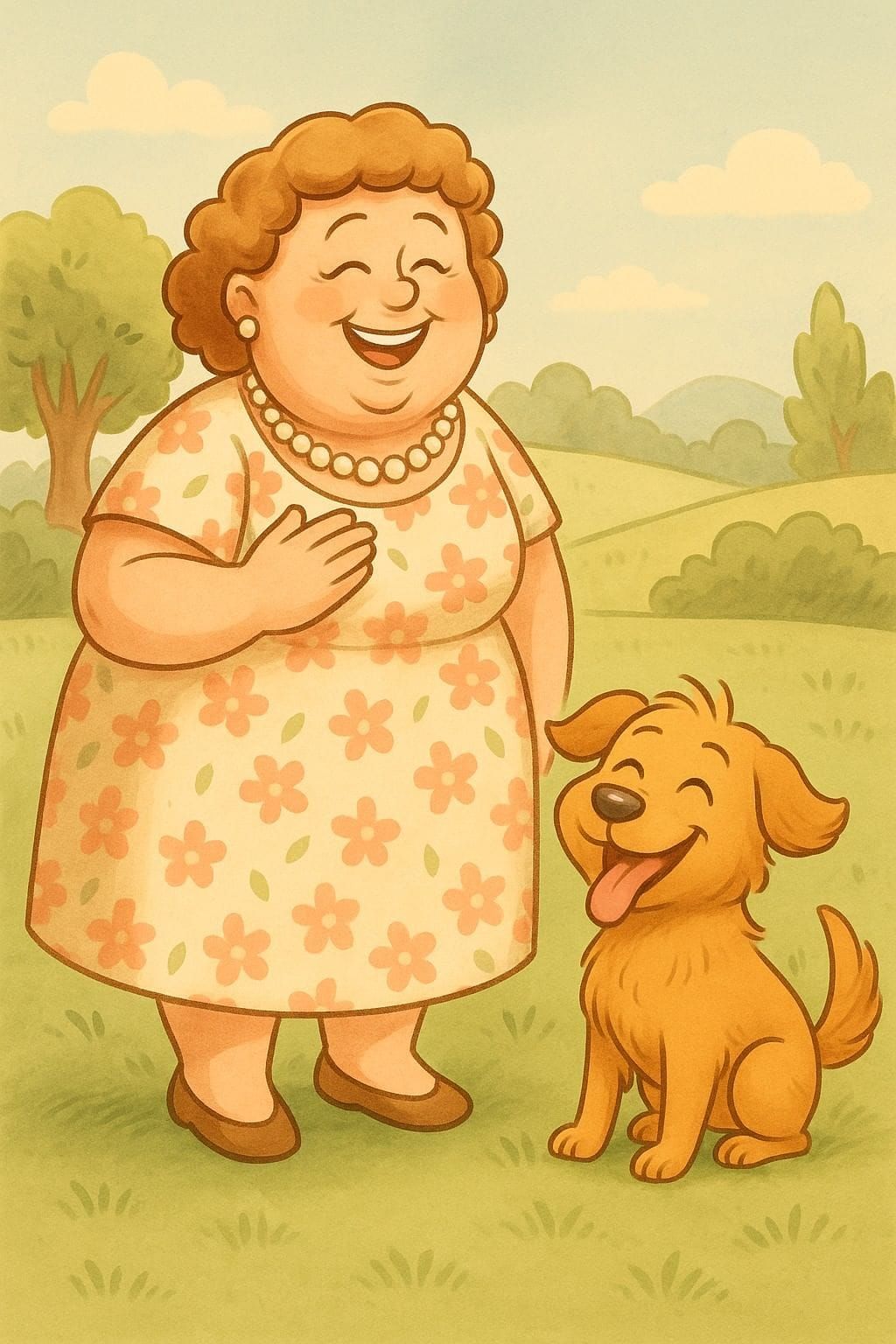
Q12. What advice would Tricki give to other pampered pets if he could?
Ans: It is lovely to play and run about; having too many treats is not as good as regular exercise and play.
Q13. What changes might Mrs. Pumphrey make in her home to keep Tricki healthy?
Ans: She could provide more toys and opportunities for active play to encourage exercise, replace excessive treats with healthier food choices, and ensure a regular routine for walks and activity.
Q14. What is the importance of professional guidance in decision-making?
Ans: Professional guidance offers expert knowledge that helps avoid common mistakes, leads to better outcomes and gives confidence in the choices made. Consulting an expert can prevent harm and improve decision quality.
Q15. How can taking responsibility for another's well-being change our own behaviors?
Ans: Taking responsibility for another person or animal makes us more mindful and disciplined. We become more aware of the consequences of our actions, which encourages better decision-making and a stronger sense of accountability and care.
Word Meaning Practice Questions
Q1: What is the meaning of bloating?
Ans: Swollen
Q2: What is the meaning of sausage?
Ans: Unbaked meat
Q3: What is the meaning of lumbago?
Ans: Backache
Q4: What is the meaning of wardrobe?
Ans: Cupboard
Q5: What is the meaning of totter?
Ans: Stagger
Q6: What is the meaning of regime?
Ans: Rule
Q7: What is the meaning of pant?
Ans: Gasp
Q8: What is the meaning of pine?
Ans: To lament
Q9: What is the meaning of greyhound?
Ans: A hunter dog, usually grey in colour
Q10: What is the meaning of lithe?
Ans: Elastic
Q11: What is the meaning of chauffeur?
Ans: A motor car driver
: